
OpenClaw AI agent goes viral in China
Open-source code bypasses Western model bans, queue outside Tencent shows consumer demand outrunning governance
Images
 AI agent OpenClaw sparked a frenzy in China in March, with users "raising lobsters" - training the tool to suit their needs
bbc.com
AI agent OpenClaw sparked a frenzy in China in March, with users "raising lobsters" - training the tool to suit their needs
bbc.com
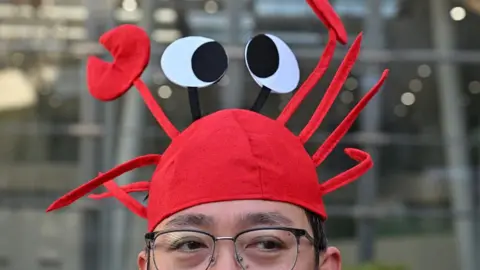 AI agent OpenClaw sparked a frenzy in China in March, with users "raising lobsters" - training the tool to suit their needs
bbc.com
AI agent OpenClaw sparked a frenzy in China in March, with users "raising lobsters" - training the tool to suit their needs
bbc.com
 Ordinary people lined up outside the headquarters of Tencent and Baidu for free customised versions of OpenClaw
bbc.com
Ordinary people lined up outside the headquarters of Tencent and Baidu for free customised versions of OpenClaw
bbc.com
Hundreds of Chinese users queued outside Tencent and Baidu offices in March for customised versions of an AI agent nicknamed “lobster”, after an open-source assistant called OpenClaw became the latest tool to escape the lab and land on ordinary phones.
According to the BBC, the frenzy was sparked by the fact that Western models such as ChatGPT and Claude are not available in China, while OpenClaw’s code can be adapted to run on Chinese AI models. That combination—blocked imports and permissive code—turned an Austrian-built product into a domestic craze almost overnight. Nvidia chief executive Jensen Huang called OpenClaw “the next ChatGPT”, and its developer Peter Steinberger has since joined OpenAI, but the mass adoption story has been written largely inside the Chinese firewall.
One early adopter, a young IT engineer identified only as Wang, told the BBC he modified the code to automate product listings for a TikTok Shop business he runs despite TikTok being banned in China. The work is normally clerical: uploading images, writing titles and descriptions, setting prices and discounts, enrolling in promotions, and messaging influencers. Wang said he could previously manage about a dozen listings a day; his “lobster” could generate up to 200 listings in two minutes while scanning competitors’ prices in real time.
The speed is the headline, but the economics sit underneath. A tool that can draft copy, compare prices and manage outreach turns a one-person online shop into something closer to a small operation, without hiring staff. For the platforms, it also means a flood of listings and marketing messages produced at near-zero marginal cost, shifting the burden to whoever has to moderate, rank and police them. The BBC notes that some users claim their “lobsters” help trade stocks, analysing entry points and even executing orders—an attractive promise until a model makes an error at scale.
The social side of the boom is also revealing. Users talk about “raising” their lobster—training it to their needs—language normally reserved for pets or children. Comedian and author Li Dan told followers on Douyin he was so immersed he spoke to his lobster in his dreams. Fu Sheng, the chief executive of Cheetah Mobile, posted relentlessly about his own, while ordinary people from secondary school students to retirees lined up for bespoke versions.
China’s leadership has spent years pushing artificial intelligence as a strategic sector, and the BBC frames the OpenClaw moment as the consumer-facing expression of that policy drive. The earlier breakout of DeepSeek—also open-source and built by Chinese engineers—helped normalise the idea that domestic models could compete even under export controls. OpenClaw then supplied a usable interface and a cultural meme.
Outside Tencent’s headquarters, the line for a free customised “lobster” moved slowly. The assistant, users said, was meant to save time.