
Heriot-Watt team makes low-saturated-fat vegan cheese
Oleogelation turns rapeseed and sunflower oils into solid-like slices, product still awaits real-world tasting panel
Images
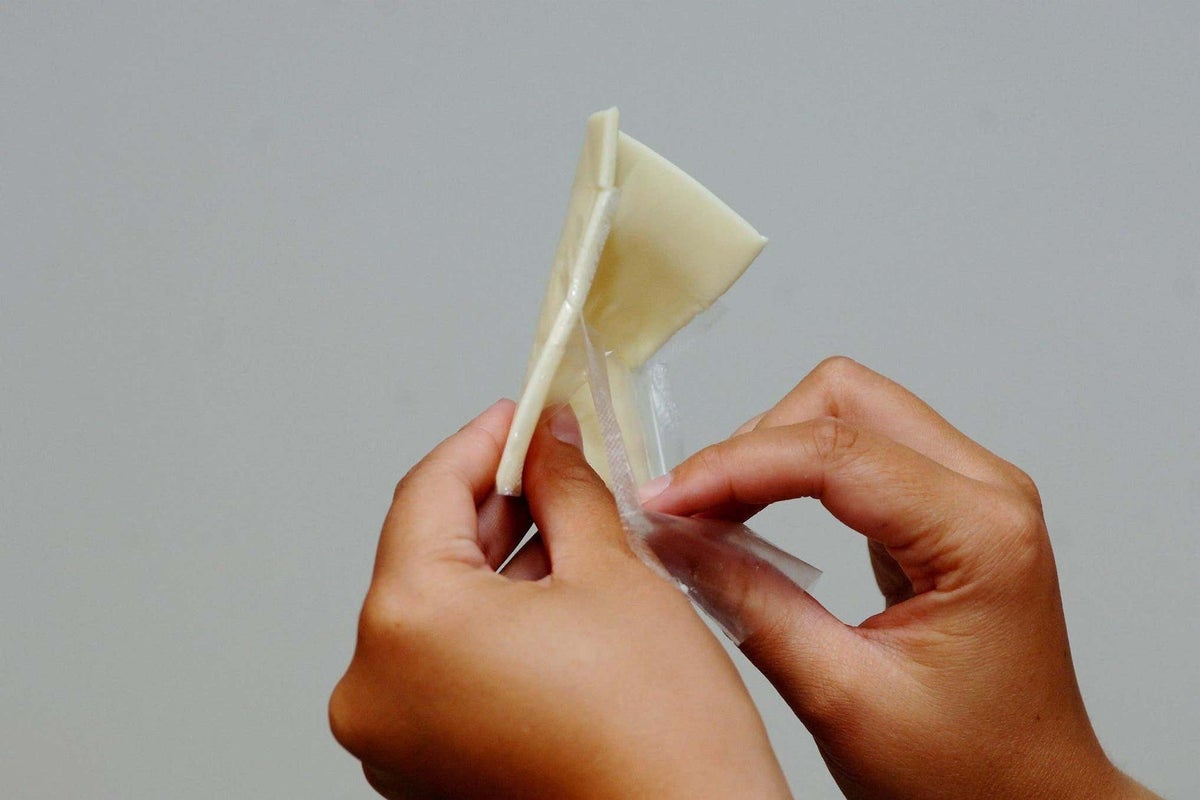 Scientists find way to make healthier and ‘oozier’ vegan cheese
independent.co.uk
Scientists find way to make healthier and ‘oozier’ vegan cheese
independent.co.uk
Heriot-Watt researchers say they can make vegan cheese slices with far less saturated fat by turning liquid rapeseed and sunflower oils into a solid-like gel, using a technique called oleogelation. The work, led by Prof Stephen Euston and published in Food Chemistry, reports formulations that cut saturated fat content to as low as 3% while improving meltability compared with several coconut-oil-based products, according to The Independent.
Vegan cheese has largely converged on a simple architecture: starch for bulk and solid fats—typically coconut or palm oil—for the “sliceable, meltable” behavior consumers expect. That choice solves a physics problem but creates a nutrition and sourcing problem. Euston told The Independent that conventional dairy cheese is “mostly protein”, while many vegan slices contain none, leaving manufacturers to chase texture with fats that can push saturated fat to “up to 25%”. Palm and coconut oils also carry reputational and supply-chain baggage, with deforestation concerns shaping consumer demand.
Oleogelation aims to keep the functional properties of solid fat without relying on naturally solid tropical oils. In the Heriot-Watt approach, “oleogelator” molecules are added to a liquid vegetable oil; they self-assemble into microscopic structures that trap the oil in a three-dimensional network. The resulting oleogel behaves like a solid fat in processing and in the mouth, but its fatty-acid profile reflects the underlying oil. The team says it is prioritising oils that can be grown “at scale” in the UK to reduce food miles and avoid imported commodity inputs.
The results, as presented, are still laboratory-facing. Euston describes the current milestone as proving the recipe “theoretically and in our lab”, with the next step being to move “to the kitchen and onto a plate”. The project is funded by the UK Research and Innovation Engineering and Physical Sciences Research Council (EPSRC), and the team expects a tasting panel within about 10 months.
That timetable matters because the remaining bottleneck is not just chemistry but consumer acceptance and manufacturing practicality. A vegan slice that melts better can still fail if it tastes like starch and colouring, or if its production requires specialty additives that do not scale cheaply. For now, the claim is narrower: the new structure should be “more heart healthy and greener” even if it “won’t taste any better or worse” than today’s products, as Euston put it.
In the lab, the researchers can make a vegetable-oil cheese slice behave like a solid-fat product while cutting saturated fat from roughly a quarter of the product to low single digits. The first real test will be whether that gel survives a commercial kitchen and a consumer palate.