
Toddler injured after reaching into wolf enclosure at ZooAmerica
Hersheypark operator says child crawled under perimeter fence, layered safety fails at ground level
Images
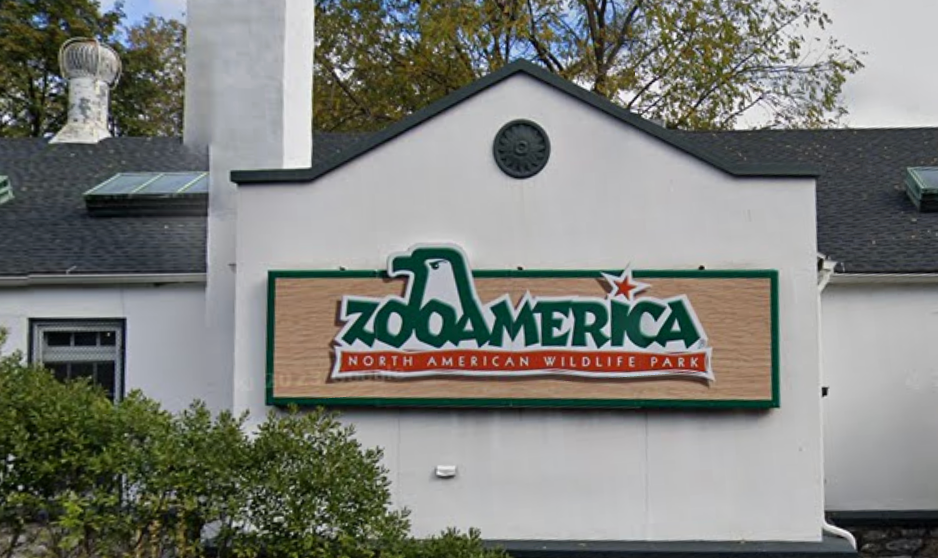 A toddler was injured Saturday after sticking their hand into the wolf enclosure at ZooAmerica, part of Hersheypark in Pennsylvania (Google Maps)
Google Maps
A toddler was injured Saturday after sticking their hand into the wolf enclosure at ZooAmerica, part of Hersheypark in Pennsylvania (Google Maps)
Google Maps
 ZooAmerica is part of Hersheypark in Hershey, Pennsylvania, and is home to animals found in North America (Getty/iStock)
Getty/iStock
ZooAmerica is part of Hersheypark in Hershey, Pennsylvania, and is home to animals found in North America (Getty/iStock)
Getty/iStock
An 18-month-old child was injured at ZooAmerica in Hershey, Pennsylvania after crawling under an exterior perimeter fence and reaching through a second metal barrier into a wolf habitat, the park’s operator Hershey Entertainment and Resorts said, according to The Independent.
The company said the toddler was “unsupervised” and was able to move from the outer fence to the primary enclosure barrier before a wolf “made contact” with the child’s hand. The child was never inside the wolf enclosure and the injuries were described as minor. ZooAmerica, an 11-acre North American wildlife zoo attached to Hersheypark, is accredited by the Association of Zoos & Aquariums.
The incident lands in the gap between design assumptions and visitor behaviour. Modern zoo exhibits rely on layered containment—setback fencing, sightlines, signage, and a final physical barrier—because the experience being sold is proximity. But the last layer is often the least controllable: parents and guardians. When the operator’s own statement foregrounds that the child was unsupervised, it is also signalling why liability arguments tend to turn on foreseeability and supervision rather than on the animal.
Hershey’s spokesperson told local media the wolf’s response was “consistent with natural animal behavior” and “not a sign of aggression,” language that implicitly rejects the idea that the enclosure itself failed. That distinction matters because wolves do not need to be “aggressive” to injure a small child; exploratory mouthing, a snap at movement, or a defensive reaction can all produce harm. In practice, it is the human perimeter—how easily a toddler can get under or through it—that determines whether an animal’s normal behaviour ever becomes a medical event.
The zoo’s wolf pack includes one male and two females, according to ZooAmerica’s own descriptions cited by The Independent. Facilities that keep charismatic predators typically accept higher construction and staffing costs in exchange for visitor draw. The economic pressure is to make the viewing area feel open and immersive, while the safety pressure is to make it hard for a child to reach any point where fingers can enter mesh or bars.
Hershey said the habitats are designed with “multiple layers of protection” and that guests are expected to remain in designated areas and closely supervise children. The outcome, however, was a toddler low enough to the ground to treat the perimeter fence as a crawl space.
The child’s injury was described as minor, and the wolf remained behind its barrier. The physical distance between the public walkway and the enclosure did not prevent contact.