
Explosives found near TurkStream pipeline in Serbia
Orbán convenes Hungary defence council one week before election, opposition alleges staged threat as gas route becomes political leverage
Images
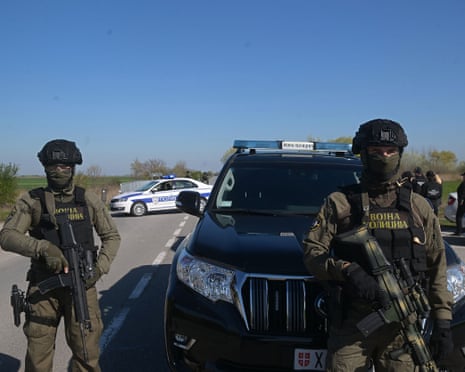 Police officers block a road near Kanjiža in Serbia, after explosives were reported to have been found near the TurkStream pipeline. Photograph: Ministry Of Defence Republic Of Serbia/EPA
theguardian.com
Police officers block a road near Kanjiža in Serbia, after explosives were reported to have been found near the TurkStream pipeline. Photograph: Ministry Of Defence Republic Of Serbia/EPA
theguardian.com
 Péter Magyar in Budapest last month. Photograph: Bernadett Szabó/Reuters
theguardian.com
Péter Magyar in Budapest last month. Photograph: Bernadett Szabó/Reuters
theguardian.com
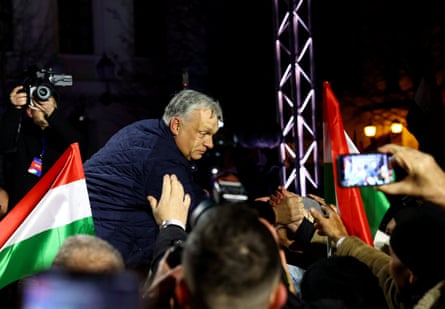 Viktor Orbán greets supporters at a campaign rally in Győr last month. Photograph: Bernadett Szabó/Reuters
theguardian.com
Viktor Orbán greets supporters at a campaign rally in Győr last month. Photograph: Bernadett Szabó/Reuters
theguardian.com
Two backpacks containing what Serbia called “explosives of devastating power” were found within a few hundred metres of the TurkStream gas pipeline extension in the northern municipality of Kanjiža, according to Serbian president Aleksandar Vučić. Hungary’s Viktor Orbán said he was briefed by Vučić and convened an emergency meeting of Hungary’s defence council a week before Hungary’s parliamentary election.
The discovery has immediately spilled into Hungarian campaign politics. Péter Magyar, the opposition challenger and a former Fidesz insider, said he had been warned by multiple sources that an incident involving a Serbian pipeline could occur around Easter and alleged it could be staged with Serbian and Russian help. Orbán, who has framed the election as a choice between stability and war-risk, has not presented evidence about who placed the devices; Vučić said there were “certain traces” but offered no public details.
TurkStream is not just another piece of energy infrastructure. With Nord Stream out of service and much of Europe trying to reduce exposure to Russian gas, the remaining routes that still deliver Russian molecules into the EU have become both commercially valuable and politically sensitive. Hungary has leaned heavily on pipeline gas via the Balkans, presenting it as a pragmatic necessity while Brussels and several member states argue that dependence is itself a strategic vulnerability.
That makes the incentives around any “threat” unusually tangled. A successful attack would raise physical supply risk and, in practice, increase the value of whichever volumes still flow—through higher prices, tighter contracts, and more leverage for transit states. A failed attack, or a publicised disruption that stops short of actual damage, can still deliver political value by shifting attention from inflation and public services to security and external enemies.
The episode also highlights how energy security has become a domestic political asset. Orbán has repeatedly argued that Hungary’s priority is keeping energy cheap and avoiding entanglement in the Ukraine war; Magyar has tried to pull the debate back to corruption allegations and stagnation. A pipeline scare allows the government to speak in the language of emergency meetings, intelligence services and critical infrastructure—domains where incumbents typically control the information.
Serbia said its army and police found detonators alongside the explosives and described the incident as a threat to “critical gas infrastructure”. Hungary’s election is next Sunday, and the pipeline that triggered the political storm runs underground, unchanged, while the campaign runs above it.