
US commandos rescue second F-15E crew member in Iran
Trump threatens strikes on power plants and bridges over Hormuz access, extraction reportedly leaves destroyed transport aircraft behind
Images
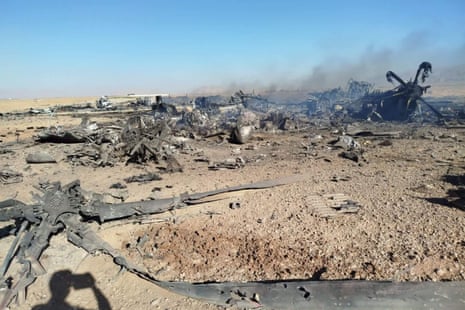 The wreckage of an aircraft in central Iran. Photograph: Sepah News/AFP/Getty Images
theguardian.com
The wreckage of an aircraft in central Iran. Photograph: Sepah News/AFP/Getty Images
theguardian.com
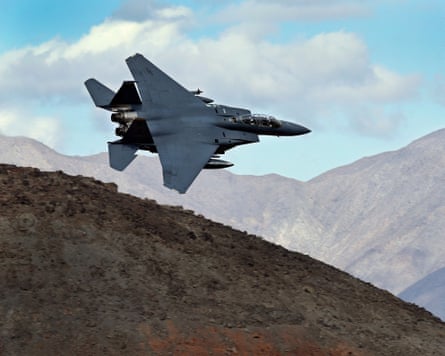 An F-15E Strike Eagle. It was not clear exactly how the jet had been downed, but Iran said it had shot it down. Photograph: Ben Margot/AP
theguardian.com
An F-15E Strike Eagle. It was not clear exactly how the jet had been downed, but Iran said it had shot it down. Photograph: Ben Margot/AP
theguardian.com
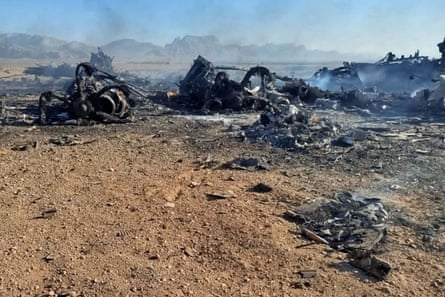 The wreckage of an aircraft in central Iran. Photograph: Sepah NewsAFP/Getty Images
theguardian.com
The wreckage of an aircraft in central Iran. Photograph: Sepah NewsAFP/Getty Images
theguardian.com
US special forces have rescued the second crew member of a downed F-15E Strike Eagle from Iran, ending a two-day search after the aircraft came down in the country’s south-west. According to The Guardian, the weapons systems officer—described by President Donald Trump as a colonel—was extracted overnight with injuries, after reports that he had been hiding in mountainous terrain.
Trump framed the operation as a historic success and immediately used it to raise the stakes. In posts cited by The Guardian, he threatened to bomb Iranian power plants and bridges unless Tehran reopens the Strait of Hormuz to merchant shipping. Iran, meanwhile, claimed the rescue effort had been “foiled” and said it had destroyed three US aircraft involved in the search, publishing images of wreckage—claims that are hard to verify independently in a war zone where both sides are broadcasting for effect.
The details that have emerged point to the kind of operational fragility that rarely makes it into presidential victory laps. The Guardian reports that at least one C-130 Hercules transport aircraft had to be destroyed inside Iran after becoming stuck, and additional planes were flown in to complete the extraction. Iranian officials highlighted the alleged cost of the lost aircraft, with the speaker of parliament Mohammad Bagher Ghalibaf saying that “three more victories like this” would ruin the US.
That exchange captures the deeper contest: not only over airspace and pilots, but over who pays for risk. Hormuz is a narrow insurance chokepoint as much as a naval one; if underwriters and banks refuse to cover voyages, shipping stops even without a formal blockade. Trump’s threat to hit bridges and power stations signals that Washington is willing to target civilian-adjacent infrastructure to force a commercial outcome—reopening a route that private actors may already treat as uninsurable.
Israel’s prime minister Benjamin Netanyahu publicly congratulated Trump, linking the raid to Israeli rescue lore, including Entebbe. But the rescue also underlines how quickly tactical incidents can become strategic commitments: once the White House ties national prestige to recovering downed aircrew, every shootdown becomes a test of resolve, and every extraction becomes a potential escalation.
The first crew member was recovered on Friday. By Sunday night, the second was out—leaving behind at least one burned-out transport aircraft in Iranian territory and a president promising to decide the Strait of Hormuz with bombing targets rather than convoy schedules.