
Jason Okundaye says Maga influencers break with Trump over Iran
Decentralised media coalition resists White House discipline, war turns campaign slogan into a billing dispute
Images
 Joe Rogan, one of the podcasters who was instrumental to Donald Trump’s second election win. Photograph: SYFY/NBCU Photo Bank/NBCUniversal/Getty Images
theguardian.com
Joe Rogan, one of the podcasters who was instrumental to Donald Trump’s second election win. Photograph: SYFY/NBCU Photo Bank/NBCUniversal/Getty Images
theguardian.com
 Jason Okundaye
theguardian.com
Jason Okundaye
theguardian.com
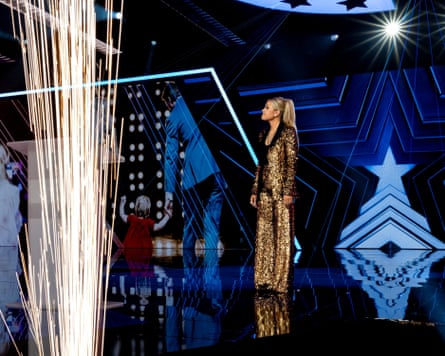 Erika Kirk takes to the stage at the first Turning Point USA summit after the death of her husband, Charlie Kirk, in December 2025. Photograph: Cheney Orr/Reuters
theguardian.com
Erika Kirk takes to the stage at the first Turning Point USA summit after the death of her husband, Charlie Kirk, in December 2025. Photograph: Cheney Orr/Reuters
theguardian.com
In the weeks after the first US F-15E went down over Iran, the Trump White House tried to keep the story narrow: a rescue, a firefight, a recovered airman. Outside the administration’s perimeter, the argument has expanded into something harder to control. Joe Rogan told his audience that “a lot of people feel betrayed” by a war launched after a campaign built on ending “stupid, senseless wars”, while other right-wing media personalities have echoed the same complaint, according to The Guardian.
Jason Okundaye, writing in The Guardian, treats the Iran escalation as a stress test for the coalition that delivered Trump’s return: a decentralised ecosystem of podcasters, streamers and online brands that can mobilise attention but cannot be whipped like a party caucus. Influencers who helped make “America First” into a mass identity are now defending their own audience relationships, not the White House’s message discipline. Their incentives are transparent: viewers reward consistency and punish perceived betrayal, and the revenue stream arrives daily, not at election time.
That market logic cuts both ways. The same personalities who can turn against a president can also turn on each other, and Okundaye argues that the movement has been struggling with a leadership vacuum since the assassination of Charlie Kirk, previously the public face of Turning Point USA. His widow, Erika Kirk, was quickly installed as CEO as a continuity play, but her theatrical public appearances have become meme fuel across the right, and critics are not confined to liberals. Nick Fuentes has mocked her; Candace Owens, once part of the Turning Point orbit, amplifies ridicule. The result is a coalition that looks large on social media but fragmented where it matters: who sets priorities when foreign policy collides with the brand promise.
The Iran war exposes a second fracture line: the gap between a governing apparatus that can commit forces and a media movement that cannot be compelled to launder the rationale. The White House can brief, threaten access, or rally donors, but it cannot easily sanction a podcaster with a direct line to millions of listeners. When the administration’s policy clashes with the product these personalities sell — anti-intervention, anti-establishment authenticity — their business model points toward dissent.
For Trump, that creates a familiar asymmetry. Wars are paid for in budgets, casualties and oil prices, but defended in slogans. If the slogan breaks, the cost becomes politically legible. And if the coalition that carried him is now arguing in public about what “America First” actually meant, the next campaign message will have to compete with the archive of what was said on the way in.
At Turning Point’s events, pyrotechnics and arena staging can still manufacture unity for a night. The Iran debate is happening on platforms that do not share the stage manager.