
Projectile hits near Bushehr nuclear plant
Iran reports guard killed and IAEA cannot verify, war’s risk premium shifts from missiles to radiological fear
Images
 The Oracle logo is displayed on a building at an Oracle campus on March 10, 2025 in Redwood Shores, California. (Getty Images)
Getty Images
The Oracle logo is displayed on a building at an Oracle campus on March 10, 2025 in Redwood Shores, California. (Getty Images)
Getty Images
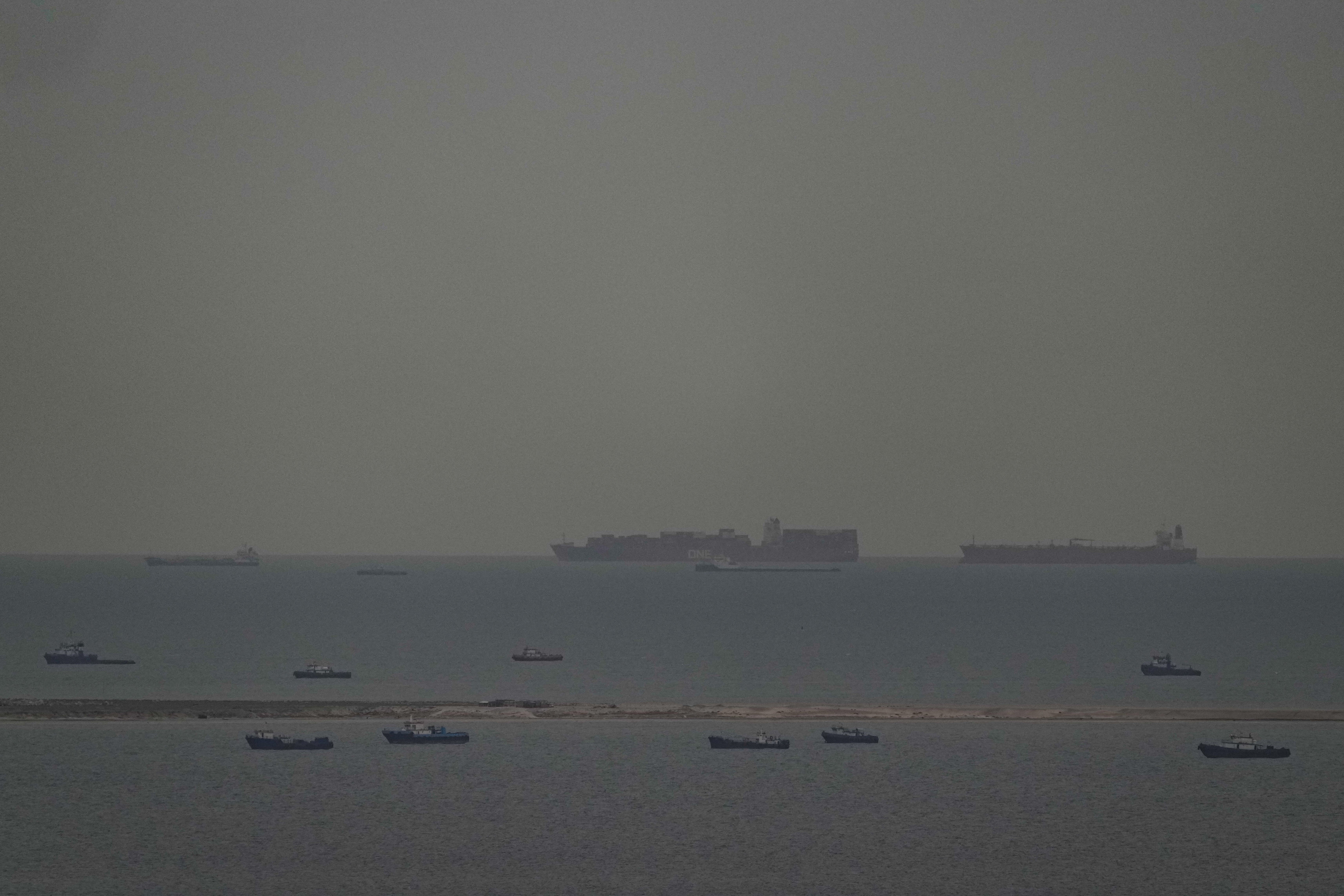 Fishing boats dot the sea as cargo ships, in the background, sail through the Arabian Gulf toward the Strait of Hormuz off the United Arab Emirates, Friday, March 27, 2026. (AP Photo) (Copyright 2026 The Associated Press. All rights reserved.)
independent.co.uk
Fishing boats dot the sea as cargo ships, in the background, sail through the Arabian Gulf toward the Strait of Hormuz off the United Arab Emirates, Friday, March 27, 2026. (AP Photo) (Copyright 2026 The Associated Press. All rights reserved.)
independent.co.uk
A projectile hit near Iran’s Bushehr nuclear power plant on Saturday, killing a member of the country’s security forces, according to reporting by The Independent citing Associated Press. Iran said the strike landed close to the reactor complex on the Gulf coast, while the International Atomic Energy Agency has not been in a position to independently verify the claim.
Bushehr is not an enrichment site. It is Iran’s only operating nuclear power reactor, built with Russian assistance and fuelled with Russian-supplied uranium that is typically returned to Russia after use. That distinction matters because the worst-case risk is less about a bomb programme than about a conventional war drifting into a radiological incident: a hit on auxiliary systems, spent-fuel handling, or power supply could create a crisis even if the core is not breached.
Attacks around nuclear facilities have become a recurring feature of the conflict. Earlier reports in recent days described projectiles striking the premises of Bushehr, and Iran has repeatedly accused the US and Israel of widening the target set beyond missile bases and air defences. The US and Israel have argued that the campaign is aimed at degrading Iran’s ability to wage war and, in Washington’s framing, forcing Tehran back to a deal—an argument complicated by the absence of detailed public reporting from the Pentagon on specific incidents.
The practical consequences of even ambiguous strikes near a reactor are immediate. Shipping and insurance markets treat nuclear-adjacent incidents as a different category of risk: not just the probability of attack, but the tail risk of contamination, port closures, and emergency restrictions along the Gulf. In a war already defined by chokepoints—Hormuz for oil and Bab al-Mandab for Red Sea trade—Bushehr adds a second kind of bottleneck, one that cannot be cleared by convoying tankers.
The incident also lands in the middle of a credibility contest. Iran has made claims during the war about downing advanced aircraft and repelling strikes that later proved exaggerated or unverified. US officials, for their part, have limited public confirmation of losses and operational details, leaving state media footage and social media geolocation to fill gaps. That vacuum invites escalation by misinterpretation: a near-miss can be spun as a direct attack, and a direct hit can be downplayed until it is too late to reassure neighbouring states.
Bushehr sits on a coastline shared by the Gulf’s energy exporters and within reach of dense civilian infrastructure. A single strike that forces a precautionary shutdown would not need to destroy the reactor to impose costs; it would only need to make continued operation politically or technically untenable.
Iran said the projectile killed a guard near Bushehr. The IAEA’s ability to confirm what happened depends on access and monitoring—both of which have been narrowed as the war has intensified.