
Netflix open-sources VOID video editor
Framework removes objects and rewrites their physical effects, a production tool that also makes manipulation harder to spot
Images
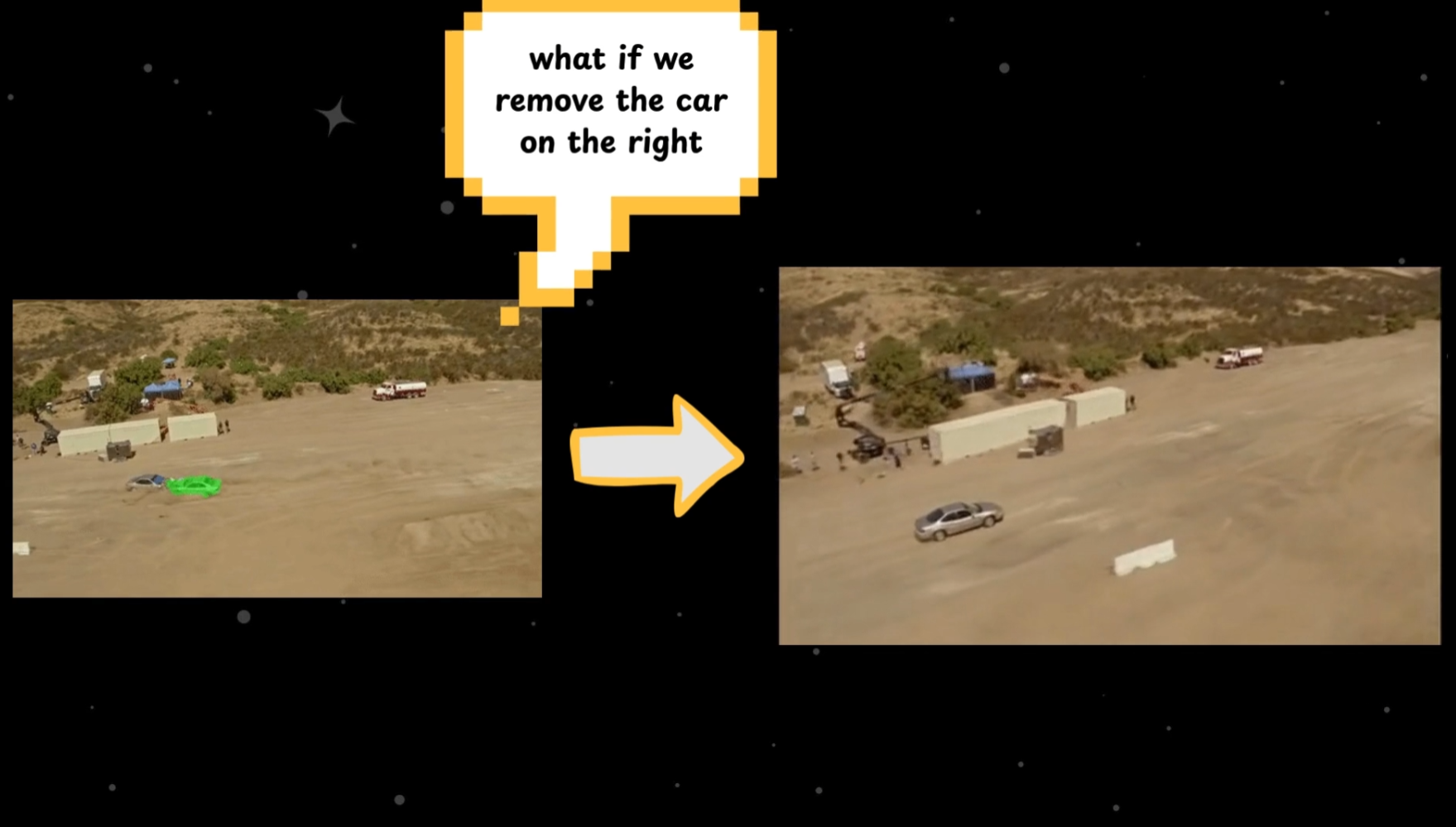 Netflix open-sources VOID, an AI framework that erases video objects and rewrites the physics they left behind
the-decoder.com
Netflix open-sources VOID, an AI framework that erases video objects and rewrites the physics they left behind
the-decoder.com
Netflix has released the code for VOID, a video-editing system that does more than remove an object from a clip — it also tries to erase the physical consequences the object caused in the scene.
According to The Decoder, VOID (“Video Object and Interaction Deletion”) is designed to handle the awkward second-order artifacts that usually give AI edits away: a ball that should have bounced off a deleted chair, a person whose movement should have been blocked by an erased obstacle, or a collision that leaves no trace once the colliding object disappears. Instead of treating inpainting as a cosmetic patch, VOID attempts to re-simulate the downstream interaction footprint and rewrite the affected pixels so the scene remains internally consistent.
The system is a composite of today’s leading building blocks rather than a single model. The Decoder reports that VOID is built on Alibaba’s CogVideoX video diffusion model, fine-tuned using synthetic data from Google’s Kubric and Adobe’s HUMOTO for interaction detection. Google’s Gemini 3 Pro is used to analyse the scene and identify regions influenced by the to-be-removed object, while Meta’s Segment Anything Model 2 (SAM2) performs segmentation. An optional second pass uses optical flow to reduce shape distortions.
Netflix’s decision to open-source the framework under the Apache 2.0 licence means commercial reuse is explicitly permitted, lowering the barrier for post-production houses, ad agencies, and independent creators to integrate “physics-aware” object deletion into their workflows. It also makes the capability easier to industrialise: a toolchain that can remove brand marks, bystanders, or unwanted props without obvious continuity breaks is valuable in everything from localisation to compliance edits to repackaging old footage.
The same mechanics that clean up a shot can also clean up evidence. When edits can plausibly preserve causality — not just pixels — the line between correction and fabrication becomes harder to audit after the fact. Provenance systems, watermarking proposals, and platform policies are all built on the assumption that manipulation leaves detectable seams; VOID’s stated goal is to remove those seams.
The project was developed by Netflix researchers with INSAIT at Sofia University, and the company has published code, a paper, and demos via GitHub, arXiv, and Hugging Face, The Decoder reports.
VOID is not a new camera or a new codec; it is a new kind of eraser, one that tries to delete the footprint as well as the object.