
US weighs Hormuz shipping insurance backstop
Proposed 40 billion dollar guarantee targets war-risk premiums and oil price spikes, private danger pricing replaced by taxpayer reinsurance
Images
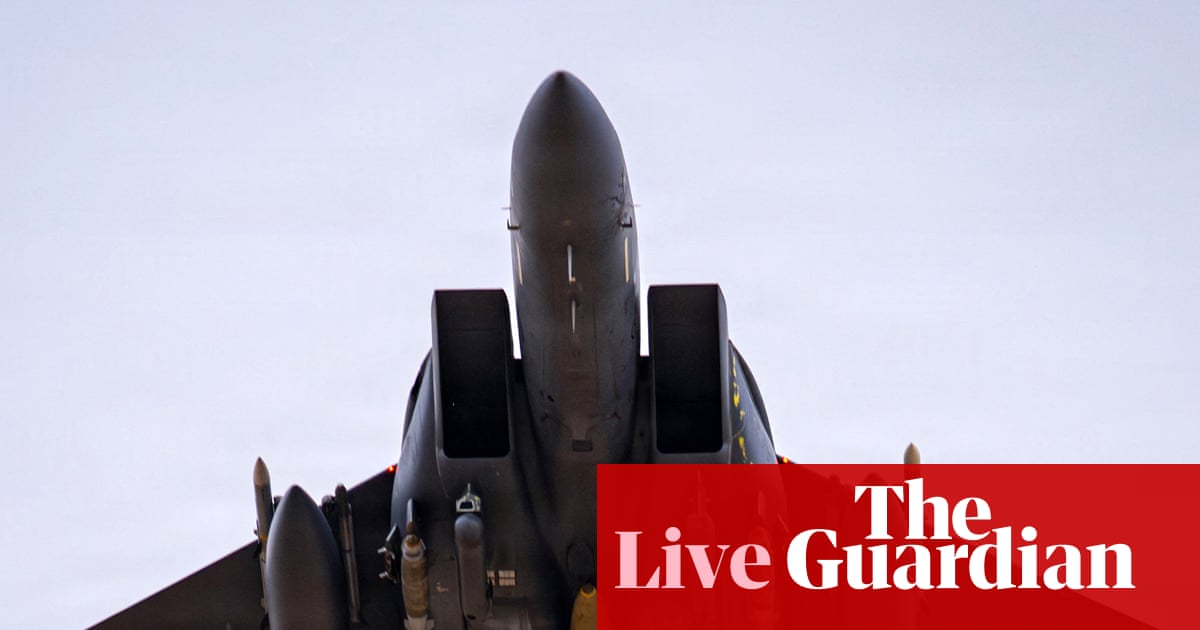 Middle East crisis live: US and Iran race to recover missing pilot from downed jet; another ship passes through strait of Hormuz
theguardian.com
Middle East crisis live: US and Iran race to recover missing pilot from downed jet; another ship passes through strait of Hormuz
theguardian.com
The Trump administration is weighing a roughly $40 billion federal backstop to keep commercial ships moving through the Strait of Hormuz, according to The Guardian. The strait carries about a fifth of the world’s oil, and since the Iran war began on 28 February, traffic has slowed to a “trickle” as war-risk premiums and security constraints make routine sailings uneconomic.
The immediate problem is not navigation but pricing. When insurers and shipowners believe a route can be closed, mined, or hit by missiles, premiums rise sharply, and many operators simply stop booking voyages. That market response is the system working as designed: higher prices ration scarce safe passage, force cargoes onto alternative routes, and transmit risk into oil and shipping markets in real time. A state guarantee reverses that signal. If Washington caps insurance losses, the private premium no longer reflects the full downside, and more ships will sail than would under purely commercial underwriting.
The Guardian’s live coverage notes that some vessels have passed after obtaining permission from Iran, including a CMA CGM container ship described as the first Western-line-owned vessel to transit since the war began. Turkish transport minister Abdulkadir Uraloglu said two Turkish-owned ships have left the strait and that Turkey is coordinating with its foreign ministry to move nine more. Those details underline how “open” shipping is now being negotiated ship-by-ship, with governments acting as traffic managers and diplomatic brokers.
A US insurance backstop would formalise that shift. The central questions become mechanical: what counts as a covered loss (hull damage, cargo loss, crew injury, delay, rerouting), which voyages qualify, and whether coverage is limited to US-linked cargoes and carriers or extended to allied and third-country operators. Each boundary line creates a queue. If access is restricted, shippers have an incentive to restructure ownership, flags, and contracts to fit the eligibility rules. If access is broad, the US taxpayer becomes a de facto reinsurer for global energy logistics.
The second-order effect is political. Once the state is guaranteeing outcomes—stable flows, lower prices, fewer disruptions—it inherits the blame when the guarantee proves insufficient or when a subsidised transit ends in a loss. The backstop also changes bargaining dynamics: if shipowners can sail with capped downside, they have less reason to push for ceasefire terms or alternative sourcing, and more reason to lobby for the guarantee to be renewed.
For now, the strait is neither fully closed nor commercially “normal.” The Guardian reports that vessels are moving only in limited numbers and often after explicit clearance.
A $40 billion guarantee would not reopen Hormuz so much as reprice it—by moving a portion of war risk from balance sheets in shipping and insurance to the federal ledger.