
US F-15E shot down over Iran
Tehran claims capture as rescue helicopters refuel on camera, first confirmed US fighter loss in five-week war
Images
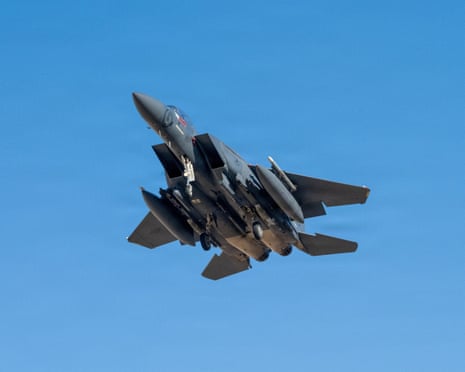 A US air force F-15E aircraft, the same model that has been brought down over Iran. Photograph: Us Air Force/Reuters
theguardian.com
A US air force F-15E aircraft, the same model that has been brought down over Iran. Photograph: Us Air Force/Reuters
theguardian.com
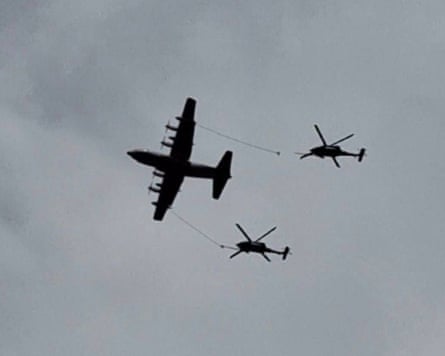 Images taken from Iran showing helicopters refuelling. Photograph: Iran state media
theguardian.com
Images taken from Iran showing helicopters refuelling. Photograph: Iran state media
theguardian.com
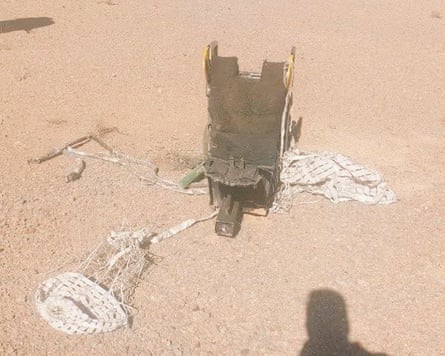 Picture of an ejector seat posted by Revolutionary Guards. Photograph: X @IRGCIntelli
theguardian.com
Picture of an ejector seat posted by Revolutionary Guards. Photograph: X @IRGCIntelli
theguardian.com
Iranian state media on Friday published images of aircraft wreckage it said came from a US stealth fighter, but US officials and independent aviation analysts identified the debris as a US Air Force F-15E Strike Eagle and said the jet had been shot down over Iran. The Guardian reports the incident is the first confirmed loss of a US fighter aircraft over Iran since the current war began five weeks ago, and has triggered a US combat search-and-rescue effort for the two-person crew.
According to the Guardian, Iranian outlets initially claimed an F-35 had been hit by a “new air defence system” in central Iran and suggested the pilot was killed. Analysts cited by the paper pointed to a tail fin and other components consistent with an F-15E, including markings linked to the US Air Force’s 494th Fighter Squadron based at RAF Lakenheath in the UK. US officials familiar with the situation later confirmed, off the record, that an F-15E had been brought down and that the Pentagon was scrambling to locate the crew, while the US military had not issued an on-the-record statement.
The episode matters less as a single airframe loss than as a test of whether the US can recover downed aircrew inside Iranian territory without widening the war further. Footage aired from Iran showed a US C-130 Hercules and HH-60 Pave Hawk helicopters flying low and refuelling, which Justin Bronk of the Royal United Services Institute told the Guardian suggested a dedicated combat search-and-rescue mission. A social media account claiming ties to Iran’s Revolutionary Guards posted an image of an ejection seat lying in desert terrain; Bronk said it appeared consistent with the ACES II seat used on F-15Es, implying at least one crew member may have ejected.
Iranian messaging has been inconsistent in ways that reflect the incentives of wartime propaganda and domestic control. A presenter on Iranian television urged residents to hand over any “enemy pilot” to police and promised a reward. Tasnim, a semi-official outlet, later reported that the pilot—still described as an F-35 pilot—had been taken into custody, contradicting the earlier claim that the pilot was probably dead. For Washington, acknowledging a shootdown can invite pressure to retaliate; for Tehran, claiming a stealth kill can signal deterrence even if the hardware does not match.
The shootdown also lands amid a growing list of incidents showing how quickly the conflict spills into third countries and critical infrastructure. The Guardian notes that three F-15Es were previously shot down on 1 March by Kuwaiti air defences in a friendly-fire incident, and that an F-35 reportedly made an emergency landing after taking ground damage. Separately, a US E-3 Sentry airborne warning and control aircraft was destroyed at Prince Sultan Air Base in Saudi Arabia on 27 March in an Iranian strike.
Friday’s images from Iran showed wreckage, refuelling helicopters, and an ejection seat in the sand. The unresolved detail is where the two crew members are—and who reaches them first.