
Myanmar junta leader Min Aung Hlaing set to become president
First parliament since 2021 coup convenes under military-dominated rules, civilian titles arrive after five years of emergency government
Images
 For many in Myanmar, little will change because the country remains in the grip of its military leaders
bbc.com
For many in Myanmar, little will change because the country remains in the grip of its military leaders
bbc.com
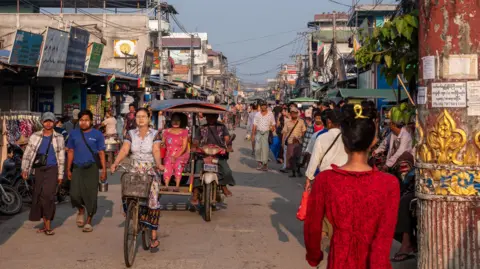 For many in Myanmar, little will change because the country remains in the grip of its military leaders
bbc.com
For many in Myanmar, little will change because the country remains in the grip of its military leaders
bbc.com
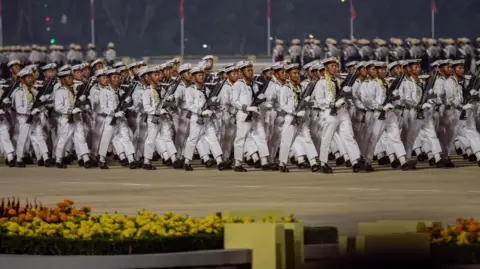 Even with a civil war raging across the country, Myanmar's junta has held a grand military parade every year
bbc.com
Even with a civil war raging across the country, Myanmar's junta has held a grand military parade every year
bbc.com
Myanmar’s military leader Min Aung Hlaing is set to become president after a parliament convened for the first time since the 2021 coup voted in a process the BBC describes as effectively preordained.
According to the BBC, Min Aung Hlaing has resigned as commander-in-chief to satisfy constitutional requirements, while a legislature stocked with loyalists—backed by the military’s guaranteed quarter of seats and an election result heavily skewed toward the military-aligned USDP—moves to formalise his rule. He has also overseen the appointment of a hardline successor, General Ye Win Oo, and created a new “consultative council” intended to sit above both civilian and military affairs.
The move is less a handover than a change of packaging. After five years of emergency rule, the junta’s problem is no longer seizing power but keeping it without paying the full political price of perpetual martial law. A parliament and a presidency offer a way to routinise coercion: orders can be issued as “policy”, arrests can be justified as “law enforcement”, and foreign governments can be invited back into the normal rituals of diplomacy.
For Myanmar’s opposition, the incentives shift just as sharply. When power is exercised through an openly illegal emergency, resistance can plausibly argue it is fighting a temporary interruption. Once the same actors are seated inside constitutional forms—however stage-managed—opponents face a choice between boycotting and becoming a permanent insurgency, or entering a controlled political arena where participation can be used as proof of legitimacy. The BBC’s reporting captures the resulting exhaustion among activists: one former student protester describes torture and imprisonment and says he is now planning to leave the country to find work abroad.
The regional calculus becomes more transactional too. Neighbours and ASEAN have struggled to influence the junta during the civil war, which has killed thousands, displaced millions and wrecked the economy, according to the BBC. But a regime that can point to a parliament and a president creates more openings for deals: limited sanctions relief, selective aid, cross-border trade arrangements, or quiet understandings about refugees and armed groups. China and Russia’s role—described by the BBC as supporting the junta and helping it recapture some ground—fits this model: external backing buys leverage, and leverage is cashed out in access, contracts and security cooperation.
The war itself is not paused by a new title. The BBC notes the military has relied on air power and “four cuts” tactics—attacks designed to devastate communities supporting insurgents—while large parts of the country remain contested. A presidency does not change the aircraft available to the junta or the incentives to use them; it changes the paperwork surrounding the decision.
Min Aung Hlaing promised elections within a year of the February 2021 coup. Five years later, he is taking office as president, and the new parliament is sitting for the first time since the takeover.