
Iran claims strike on Oracle Dubai data centre
IRGC expands target list to US tech and finance brands, cloud concentration turns drones into economy-wide leverage
Images
 zerohedge.com
 zerohedge.com
Iran’s Revolutionary Guards say they have targeted an Oracle data centre in Dubai, a claim circulated by Reuters reporter Phil Stewart and picked up by Zero Hedge. The reported strike follows earlier attacks on US-linked cloud infrastructure in the Gulf, including an IRGC claim on Wednesday that it hit Amazon’s cloud operations in Bahrain.
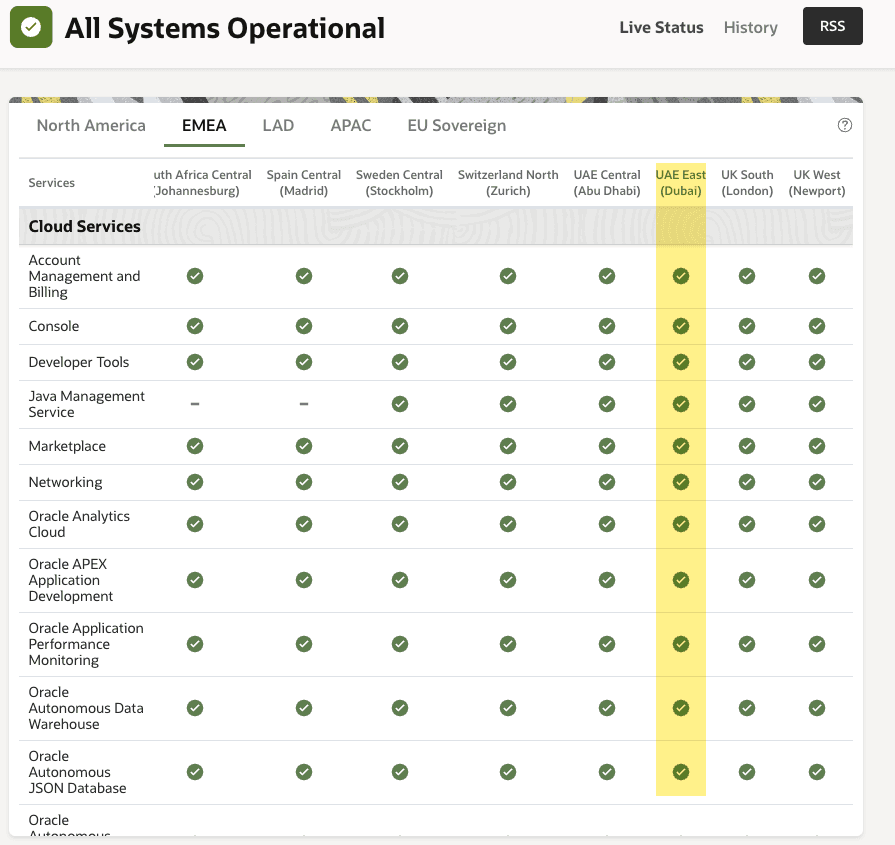
The immediate question is whether the facility is actually down. Oracle’s public status page showed no operational issues in Dubai or globally at the time of publication, Zero Hedge notes, and there has been no independent damage assessment. But the strategic signal is clear: when air defences and missile inventories are finite, civilian infrastructure becomes the cheapest way to impose costs and demonstrate reach. A warehouse, a bridge, or a server hall is easier to hit than a hardened military target, and the downstream disruption can be priced into commerce faster than any battlefield gain.
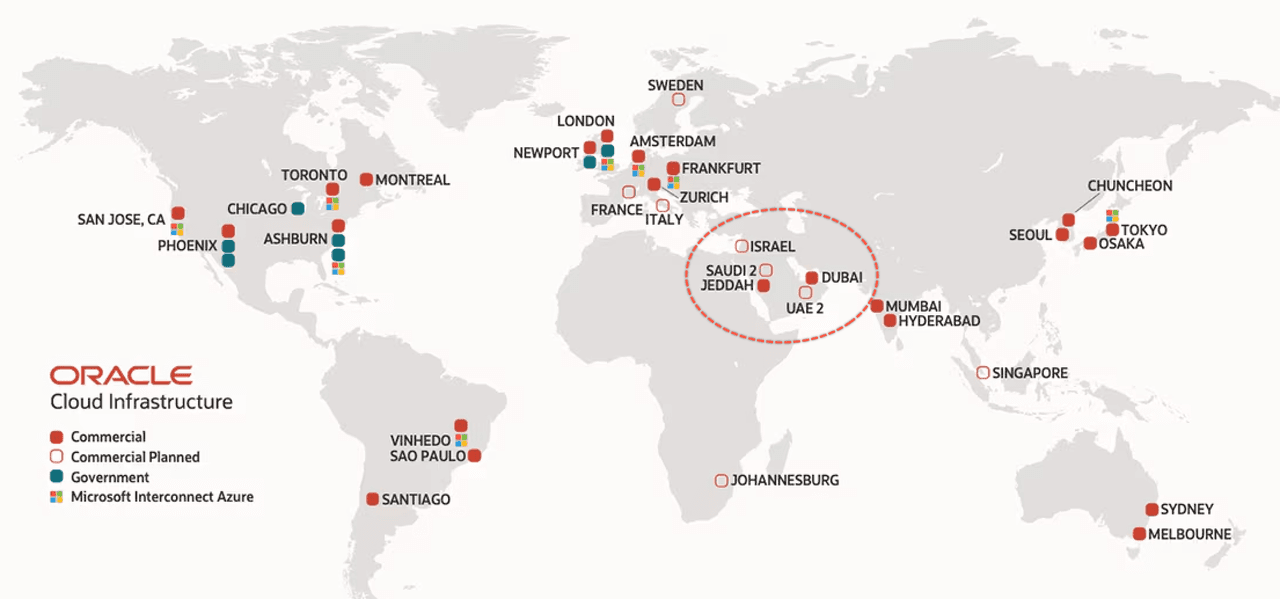
Oracle’s Dubai site is the company’s “Oracle Cloud UAE East” region, identified as me-dubai-1, with another UAE region in Abu Dhabi. These cloud regions are not just corporate real estate; they are shared plumbing for banks, logistics firms, retailers, and government services that rent compute rather than owning it. A successful strike does not need to destroy every server to matter. If customers believe a region is vulnerable—whether to drones, sabotage, or political escalation—they can be forced into costly migration, redundancy spending, or downtime that shows up as missed payroll runs, delayed shipments, and breached service contracts.
Iran has been explicit about the target set. Zero Hedge cites Sepah News, an IRGC-affiliated outlet, naming 18 US companies with Middle East operations as “legitimate targets,” including Cisco, HP, Intel, Oracle, IBM, Dell, Palantir, JPMorgan, Tesla, GE, Boeing and the UAE AI firm G42. The message is that corporate brands can be treated as proxies for state power—and that retaliation can be routed through assets that are insured, financed, and contractually entangled across borders.
The Gulf’s pitch as a “neutral” hosting location has rested on physical security, political stability and predictable insurance. Data centres concentrate value in a small footprint: power feeds, cooling systems and fibre links are single points of failure. If cheap drones can credibly threaten those nodes, the risk premium migrates into everything built on top of them, from cloud credits to airline bookings.
In the Iran war, the cost of disruption is increasingly transmitted through insurers, lenders and service-level penalties rather than through front lines. A cloud region can stay green on a status page and still become uninsurable in the next renewal cycle.