
Crisis team finds hoarded bodies and mismanaged ashes at Hull funeral home
BBC reports 35 bodies removed and ashes linked to 167 people, disaster-response contractor ends up cataloguing love letters and baby clothes
Images
 Humberside Police removed 35 bodies and a quantity of ashes from Legacy Independent Funeral Directors on Hessle Road in March 2024
bbc.com
Humberside Police removed 35 bodies and a quantity of ashes from Legacy Independent Funeral Directors on Hessle Road in March 2024
bbc.com
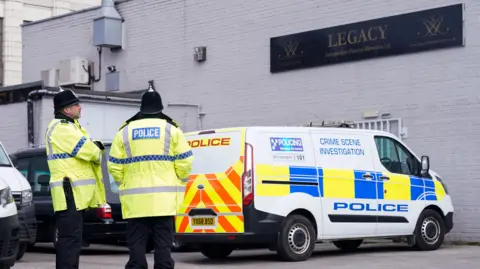 Humberside Police removed 35 bodies and a quantity of ashes from Legacy Independent Funeral Directors on Hessle Road in March 2024
bbc.com
Humberside Police removed 35 bodies and a quantity of ashes from Legacy Independent Funeral Directors on Hessle Road in March 2024
bbc.com
 Kevin Curreri says his team tried to offer a small measure of comfort to affected families
bbc.com
Kevin Curreri says his team tried to offer a small measure of comfort to affected families
bbc.com
When police entered Legacy Independent Funeral Directors on Hessle Road in Hull in March 2024, they removed 35 bodies and a quantity of ashes later linked to 167 people. Crisis staff brought in afterward described what they found as “an unforgivable scene of entirely human making”, according to the BBC.
The undertaker, Robert Bush, has admitted offences including preventing burials and theft, and is due to be sentenced on 27 July, the BBC reports. The same reporting says Bush not only mishandled remains and gave families the wrong ashes; he also retained more than 1,000 personal items—love letters, baby clothes and other possessions that should have been placed with the deceased or returned to relatives.
Hull City Council appointed Kenyon Emergency Services in April 2024 after the police released the premises. The firm is usually deployed to natural disasters and mass-casualty events, but in this case its task was administrative and intimate: recover, clean, photograph and catalogue personal effects so families could identify what belonged to them. Kevin Curreri, the company’s managing director and a former police officer, told the BBC the building resembled a hoarder’s house, with garbage bags and possessions thrown into corners or mixed with rubbish.
The case exposes a structural weakness in the funeral market: the customer is buying under stress, often within days of a death, with little ability to inspect workmanship. Ashes are a credence good; so is the chain of custody for jewellery, clothing and letters. A funeral director can cut corners—delaying cremations, mislabelling remains, stockpiling bodies—until the operation collapses under its own backlog. In the meantime, families interpret silence as process.
Even for an emergency-services team accustomed to Grenfell and the Manchester Arena bombing, Curreri said the Hull assignment was uniquely disturbing because the disrespect was deliberate rather than accidental. Some staff declined to work on the project after encountering baby clothes that reminded them of their own families.
Kenyon transported the recovered items to its headquarters in Reading, cleaned and photographed them, and built a catalogue for families to claim what they recognised. The BBC says the team worked against the clock so possessions could be returned before families held second funerals.
Humberside Police removed 35 bodies from a single funeral home. The council then had to call in a disaster-response contractor to sort through bags of letters and clothing like evidence.