
Tiger Woods bodycam video circulates after DUI arrest
Florida crash footage becomes instant entertainment format, court timetable moves slower than the clip economy
Images
 Police body camera video shows Tiger Woods during a sobriety test after his crash last week. Photograph: AP
theguardian.com
Police body camera video shows Tiger Woods during a sobriety test after his crash last week. Photograph: AP
theguardian.com
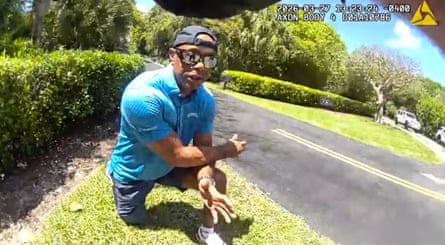 In this image taken from police body camera video, Tiger Woods speaks with sheriff’s deputies. Photograph: AP
theguardian.com
In this image taken from police body camera video, Tiger Woods speaks with sheriff’s deputies. Photograph: AP
theguardian.com
Body-worn camera video from Tiger Woods’ DUI arrest was published this week, showing the golfer performing roadside sobriety tests after a crash in Florida and reacting as a Martin County sheriff’s deputy handcuffs him. Woods has pleaded not guilty and requested a jury trial, according to The Guardian, and the footage includes officers finding hydrocodone pills in his pocket.
The release is routine in the sense that many US police departments now treat bodycam not only as evidence but as a product: a file that can be packaged, distributed, and monetised indirectly through attention. In Woods’ case, the video captures intimate, confused moments—hiccups during questioning, repeated instructions to keep his head still—and turns them into a shareable narrative with a clear protagonist and a clear arc. The legal process, meanwhile, moves at its own pace: a breath test showed no alcohol, police said Woods refused a urine test, and the case returns to court on 5 May for a hearing on trial readiness.
What changes is not the existence of public records but the default audience. A court transcript is technically public; a bodycam clip is designed for instant consumption, stripped of context and primed for replay. It also shifts the practical burden of privacy onto the individual at the worst possible moment: the person being arrested must now assume that any stumble, medical detail, or medication list may become a clip in the day’s news cycle. The Guardian notes Woods told officers he had taken “a few medications” and said he looked down at his phone while changing the radio station before the crash—details that may be relevant in court, but are also catnip for social media.
For police agencies, bodycam publication can serve several masters at once. It can pre-empt accusations of misconduct, demonstrate “transparency”, and build institutional credibility—while also generating a steady stream of content that local outlets and platforms will distribute for free. For media organisations, the footage reduces reporting costs: the video delivers characters, dialogue, and visuals without a reporter at the scene. For the public, it normalises a lower threshold for what counts as “public interest”, especially when the subject is famous.
In the footage, Woods asks a simple question—“I’m being arrested?”—and is told yes. Eight hours later he was released on bail, and on Tuesday he said he would step away from golf to seek treatment.