
Trump fires Attorney General Pam Bondi
Deputy Todd Blanche becomes acting head at Justice Department, Epstein files and enemy-prosecution demands trigger loyalty purge
Images
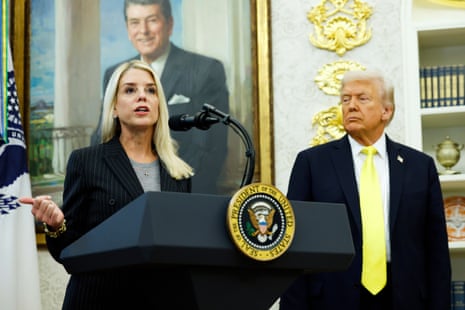 Pam Bondi and Donald Trump at the White House in October 2025. Photograph: Kevin Dietsch/Getty Images
theguardian.com
Pam Bondi and Donald Trump at the White House in October 2025. Photograph: Kevin Dietsch/Getty Images
theguardian.com
Donald Trump has fired US Attorney General Pam Bondi, ending the tenure of a loyalist who had overseen a rapid political remaking of the Justice Department. Trump announced the dismissal on Truth Social on Thursday, praising Bondi’s “massive crackdown” on crime and saying she would move to an unspecified private-sector role. Deputy attorney general Todd Blanche will serve as acting attorney general, and, according to The Guardian, Environmental Protection Agency administrator Lee Zeldin is among the leading contenders to replace her.
Bondi’s departure lands in a department that had already been put through a deliberate shake-up. According to The Guardian, she presided over purges of career staff, redirected emphasis away from traditional criminal prosecutions toward immigration-related work, and became the administration’s central legal defender as courts reviewed a large number of executive orders. That combination—personnel churn, shifting priorities, and constant litigation—creates a Justice Department that functions less as a stable prosecutor’s office and more as an extension of the White House’s daily agenda.
The firing also underscores the risks for officials hired primarily for loyalty: loyalty does not protect against being blamed when a politically sensitive problem becomes a liability. The Guardian reports that Trump’s frustration focused on two fronts: Bondi’s handling of the Jeffrey Epstein files and her failure to prosecute the president’s political enemies to his satisfaction. Yet Bondi’s record suggests she had already pushed the department into overtly political terrain. The Guardian notes that during her tenure federal prosecutors indicted former FBI director James Comey and New York attorney general Letitia James within weeks of Trump publicly demanding charges. It also reports indictments of former national security adviser John Bolton and an unsuccessful attempt to persuade a grand jury to charge six members of Congress after Trump accused them of “seditious behavior.”
The Epstein files have become a separate test of control: releasing material in the name of transparency can expose the administration to unpredictable headlines, while withholding it fuels suspicion and internal pressure from supporters. The Guardian describes Bondi as making contradictory statements about the files, and says Trump had grown increasingly impatient as the issue continued to dog the White House. In Washington, the attorney general is expected to manage not only prosecutions but also the timing, framing, and containment of controversies that can spill into elections, fundraising, and coalition politics.
For now, the Justice Department will be run by an acting attorney general while the White House weighs a replacement. Bondi’s final public legacy may be that she carried out the department’s politicisation—and was still fired for not doing it cleanly enough.