
Iran demands codes and yuan payments for Hormuz transit
IRGC-linked intermediaries vet ships and price passage per barrel, shipping risk shifts from navies to insurers and compliance
Images
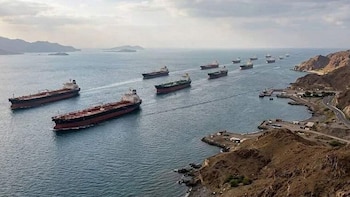 Barcos en el estrecho de Ormuz
infobae.com
Barcos en el estrecho de Ormuz
infobae.com
 Miembros de la Guardia Revolucionaria iraní
infobae.com
Miembros de la Guardia Revolucionaria iraní
infobae.com
 Un carguero en el golfo Pérsico, cerca del Estrecho de Ormuz, visto desde el norte de Ras al-Jaima, EAU. REUTERS/Stringer
infobae.com
Un carguero en el golfo Pérsico, cerca del Estrecho de Ormuz, visto desde el norte de Ras al-Jaima, EAU. REUTERS/Stringer
infobae.com
Iranian officials and shipping intermediaries are now offering something that looks less like a naval standoff and more like a checkout lane. Vessel operators seeking to transit the Strait of Hormuz are being asked to submit ownership and voyage details, obtain a “permission code,” and pay a per‑cargo fee—often quoted at about $1 per barrel for oil—settled in yuan or in stablecoins, according to a Bloomberg-sourced report published by Infobae.
The mechanics described by industry sources are bureaucratic rather than kinetic: a ship’s flag, cargo, destination, crew and AIS data are routed through an intermediary linked to Iran’s Islamic Revolutionary Guard Corps (IRGC), then screened for ties to Israel, the United States or other “enemy” states. If the vessel clears, the transaction becomes negotiable. Countries are reportedly ranked from one to five for pricing and treatment, and some ships are asked to reflag—temporarily or formally—to a state that has negotiated passage. Pakistan, Infobae reports, has been contacting major commodity traders to find large tankers that could transit under a Pakistani flag after Iran agreed to let a limited number of Pakistani-flagged vessels through.
This is what sanctions and war risk do to trade: they push enforcement away from courts and toward chokepoints where paperwork can be turned into leverage. A toll that is framed as “security coordination” functions like a tariff, but one administered by a military organization with its own vetting criteria and its own preferred payment rails. The choice of settlement—yuan or stablecoins—matters because it is harder to freeze, harder to reverse, and easier to route through offshore intermediaries than dollar payments through Western correspondent banks.
The second-order effect is that the Strait’s “closure” does not require a physical blockade. Shipping is already governed by a private veto: insurers, shipowners, classification societies, banks financing cargoes, and compliance departments that decide whether a voyage is insurable and bankable. Once the risk premium becomes unpriceable, the rule becomes “no cover, no voyage.” A toll regime adds a new layer: even ships willing to take the risk must now buy a code, accept monitoring, and potentially alter their registration to fit a political category.
That creates a predictable sorting mechanism. Large listed shippers and oil majors—those most exposed to sanctions enforcement, reputational risk and lender scrutiny—have the least room to improvise. Traders and operators already accustomed to “grey” logistics—flag switches, layered ownership, alternative payment channels—are the ones best placed to keep cargo moving when the formal system freezes.
The Strait of Hormuz normally carries roughly a fifth of global oil and LNG flows. Under the described system, passage begins with a dossier and ends with a payment confirmation.