
Trump schedules prime-time Iran war address
White House signals no major announcement and touts military gains, polling and pump prices tighten the timeline
Images
 On Tuesday, Trump said he believed the US would "leave" Iran soon, even without a deal.
bbc.com
On Tuesday, Trump said he believed the US would "leave" Iran soon, even without a deal.
bbc.com
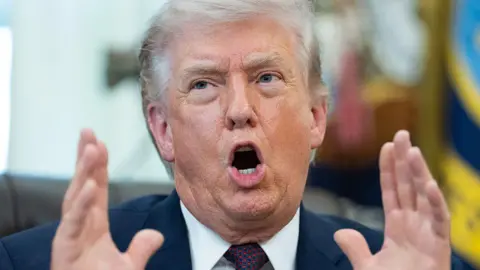 On Tuesday, Trump said he believed the US would "leave" Iran soon, even without a deal.
bbc.com
On Tuesday, Trump said he believed the US would "leave" Iran soon, even without a deal.
bbc.com
US President Donald Trump is set to deliver a prime-time televised address on the war with Iran, a hastily arranged appearance that the BBC says will come as questions swirl over Washington’s next move. The speech follows weeks of US and Israeli strikes on Iranian targets and comes as Tehran has linked any pause to reopening the Strait of Hormuz, a chokepoint whose disruption has already rippled into energy prices.
The White House has tried to lower expectations, briefing that the remarks will focus on military “successes” such as degrading Iran’s navy, missile capabilities and nuclear programme, according to the BBC. Yet the very act of scheduling a national address signals that the administration is managing not only the battlefield but also a domestic political clock. Reuters polling cited by the BBC found roughly two-thirds of Americans want the US to wrap up its involvement quickly even if stated military objectives are not fully accomplished—an unusually explicit preference for exit over victory conditions.
That pressure is sharpened by the most visible wartime tax: fuel. The BBC notes US petrol prices have moved above $4 a gallon on average for the first time in years, a reversal for a president who routinely marketed low pump prices as a performance metric. The war’s costs are therefore landing in a place voters notice daily, while the benefits—deterrence, nuclear latency, regional signaling—are harder to measure and easier to dispute.
Trump’s own public messaging has shifted across that gap. He has moved from demanding “unconditional” Iranian surrender to hinting the US could “leave” Iran soon even without a deal, then back to threatening to blast Iran “back to the Stone Ages,” the BBC reports. On Wednesday morning he wrote on Truth Social that Iran’s president had sought a ceasefire, but that the US would not consider it until Hormuz is open. The sequence leaves the administration room to declare success at a chosen moment while keeping escalation options on the table.
Analysts quoted by the BBC argue the ambiguity is not accidental. Imran Bayoumi, a former US defence department policy adviser now at the Atlantic Council, said the war’s domestic unpopularity and economic fallout could become a midterm-election problem if fighting drags on. The same flexibility that allows a rapid “mission accomplished” also blurs what an exit would mean in practice—especially if objectives include harder tasks like securing highly enriched uranium or guaranteeing shipping through Hormuz.
The White House says the address will emphasise battlefield gains and reiterate Trump’s claim the operation could be over within two to three weeks. Americans will be watching for an endpoint.