
SpaceX files confidentially for IPO
Nasdaq index-rule change could pull passive billions into thin free float, strategic infrastructure becomes retail risk
Images
 SpaceX finally files for IPO, targets $1.75 trillion valuation
arstechnica.com
SpaceX finally files for IPO, targets $1.75 trillion valuation
arstechnica.com
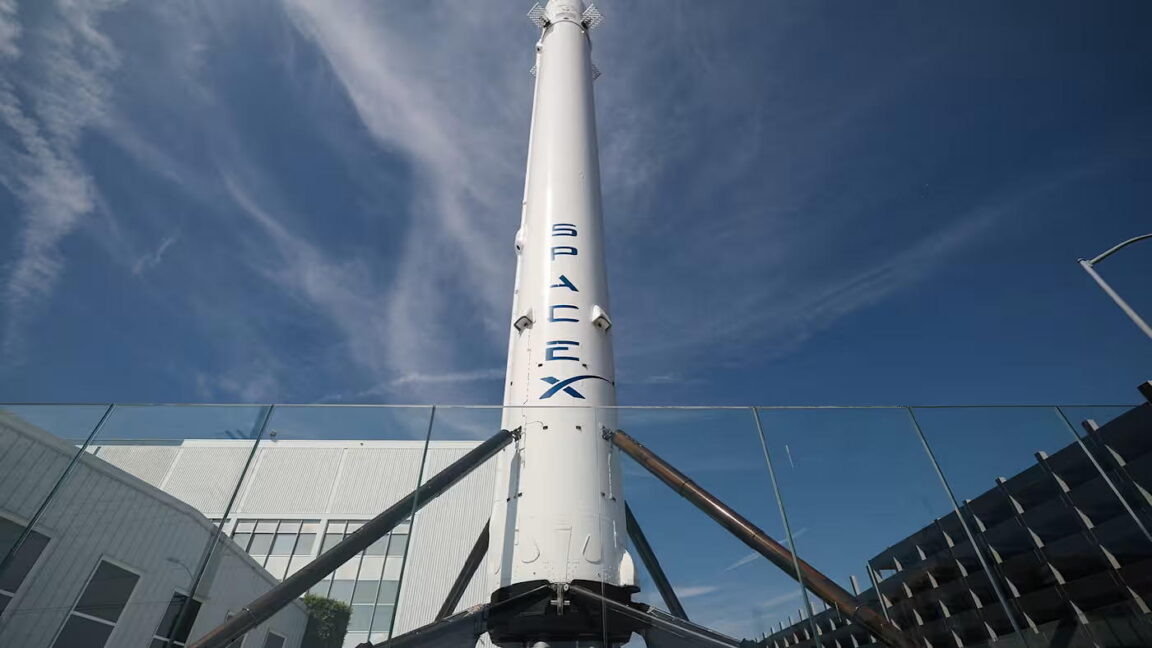
 A SpaceX Falcon 9 rocket is displayed outside a Space Exploration Technologies Corp facility in Hawthorne, California, last month. Photograph: Patrick T Fallon/AFP/Getty Images
theguardian.com
A SpaceX Falcon 9 rocket is displayed outside a Space Exploration Technologies Corp facility in Hawthorne, California, last month. Photograph: Patrick T Fallon/AFP/Getty Images
theguardian.com
SpaceX has confidentially filed for an initial public offering and is targeting a valuation of about $1.75 trillion, according to the Financial Times. The company is expected to list as early as June, in what would be the largest IPO on record, and it plans to float less than 5% of its equity.
The timing matters because Nasdaq has just changed how quickly newly public companies can enter the Nasdaq 100, the FT reports. The exchange removed a requirement that at least 10% of shares be publicly available and shortened the waiting period for eligibility to 15 days from three months. Exchange-traded funds tracking the index manage roughly $520 billion, meaning index inclusion can redirect large passive inflows into a stock before the market has had much time to settle on a price.
SpaceX’s business is unusually entangled with state demand and state constraint. It is a dominant launch provider and runs Starlink, a satellite network that has become infrastructure for commercial connectivity and, in some theatres, military communications. That combination produces a familiar outcome in markets where public procurement and security policy loom large: private investors are invited to own the cash flows, while governments retain leverage through export controls, licensing, security reviews, and the ability to steer contracts.
The FT notes SpaceX last month acquired Elon Musk’s loss-making AI startup xAI for $250 billion, tightening the link between space infrastructure and the current compute boom. The Guardian reports SpaceX has discussed orbital data centres as a way to supply power and computing capacity beyond terrestrial constraints. Whether those ambitions are near-term or not, the IPO would turn a strategic supplier into a benchmark asset held through index funds and pension products, broadening who bears the volatility of launch setbacks, regulatory shocks, and geopolitical disputes.
A small free float paired with fast index eligibility can also change the mechanics of price discovery. If a thinly traded stock is pulled into passive benchmarks quickly, incremental demand arrives regardless of valuation, while insiders remain largely locked into control. The FT reports SpaceX has considered allowing some existing shareholders to sell on day one, potentially bypassing the typical 180-day lock-up that limits early exits.
For Europe, the listing underlines a dependency problem that is financial as much as technical. When critical communications and launch capacity sit inside a US-listed company, access is shaped by Washington’s rules and by the risk tolerance of global capital markets. The prospectus will disclose numbers. The dependence will show up later, in procurement decisions and outage contingency plans.
SpaceX has not commented publicly on the filing. Nasdaq’s new index rules are already in force.