
Texas prosecutors use rap lyrics in capital sentencing
James Broadnax faces April execution after future dangerousness finding, creative writing becomes courtroom confession
Images
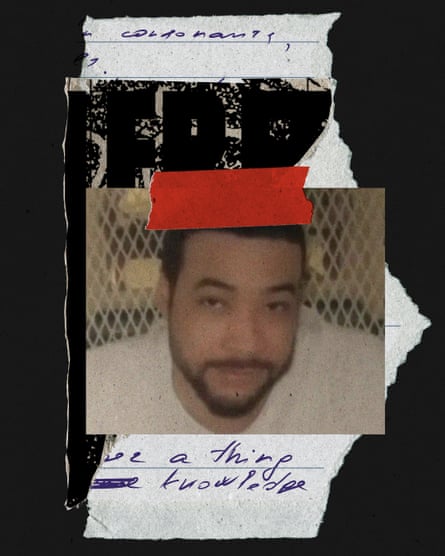 Composite: Rita Liu/The Guardian/Getty Images/Freeourart/GoFundMe
theguardian.com
Composite: Rita Liu/The Guardian/Getty Images/Freeourart/GoFundMe
theguardian.com
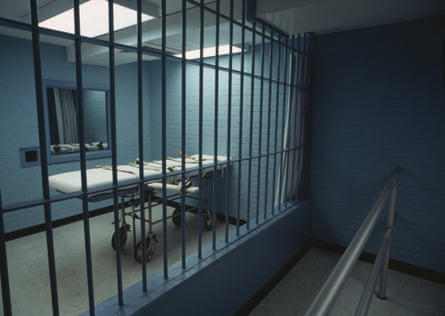 The Walls unit in Huntsville prison, Texas, where lethal injections are carried out on inmates. Photograph: Jerry Cabluck
theguardian.com
The Walls unit in Huntsville prison, Texas, where lethal injections are carried out on inmates. Photograph: Jerry Cabluck
theguardian.com
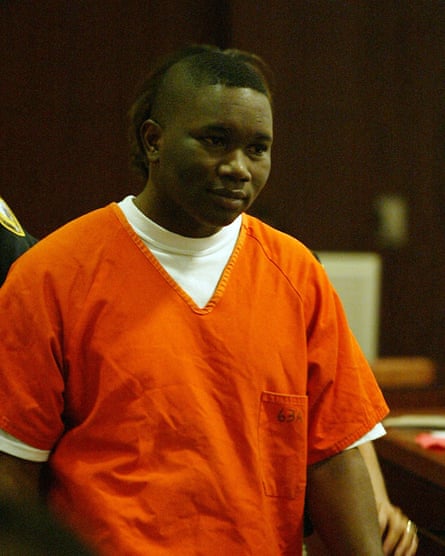 Dominique Green leaves court after having his death warrant signed by Judge Mike Anderson in Houston, Texas, on 30 June 2004. Photograph: Houston Chronicle/Hearst Newspapers/Special to the Chronicle
theguardian.com
Dominique Green leaves court after having his death warrant signed by Judge Mike Anderson in Houston, Texas, on 30 June 2004. Photograph: Houston Chronicle/Hearst Newspapers/Special to the Chronicle
theguardian.com
Texas prosecutors used a defendant’s rap lyrics as evidence to help secure a death sentence by arguing they proved he would be dangerous in the future, according to a Guardian investigation by Ed Pilkington. James Broadnax, now 37, has spent more than 16 years on death row and is scheduled to be executed in Huntsville on 30 April by lethal injection of pentobarbital. During the penalty phase of his 2009 capital trial, the state presented 40 pages from notebooks seized after his arrest, selecting violent passages while downplaying lyrics about redemption and love.
The case turns on a procedural hinge unique to capital sentencing in Texas: jurors must find “future dangerousness” to impose death. That standard invites character evidence that would be marginal in an ordinary guilt trial, and it rewards material that feels like a shortcut to motive and intent. Lyrics are cheap to present, require no forensic chain of custody beyond authorship, and arrive pre-packaged as narrative. A prosecutor can read a line about “fade ’em” and let jurors supply the rest.
Broadnax was convicted with a cousin for the robbery murders of two white men in Garland, Texas, when he was 19. The Guardian reports that Dallas County prosecutors initially struck all Black jurors, until the trial judge reinstated one. At sentencing, the state described Broadnax’s writing as “gangsta rap” and treated it as a literal plan rather than stylized performance. In closing arguments, prosecutors called him a “psychopathic killer” and compared him to predators “we like to watch on Animal Planet,” language that collapses a cultural genre into a confession and then into a threat.
The defense presented mitigating evidence—youth, an abusive childhood, and a limited criminal record beyond a marijuana possession conviction—but the jury focused on the notebooks. Jurors asked to review them twice during deliberations, an indication of what carried persuasive weight when the legal question shifted from what happened to what kind of person the defendant is.
Once lyrics are admitted as predictive proof, the rule does not stay confined to rap; it becomes a template for treating any creative output as evidentiary self-incrimination. In practice, it lands where prosecutors think it will work: on genres coded as violent, and on defendants who lack the resources to fight character framing with expert testimony.
Broadnax has written spoken-word poetry in his cell for years. Next month, the state plans to treat his earlier writing as the most reliable witness against him.