
Iran threatens 18 tech and industrial firms
IRGC names Google Microsoft Apple Nvidia and Tesla in retaliation warning, corporate continuity plans hinge on cloud identity and shared dependencies
Images
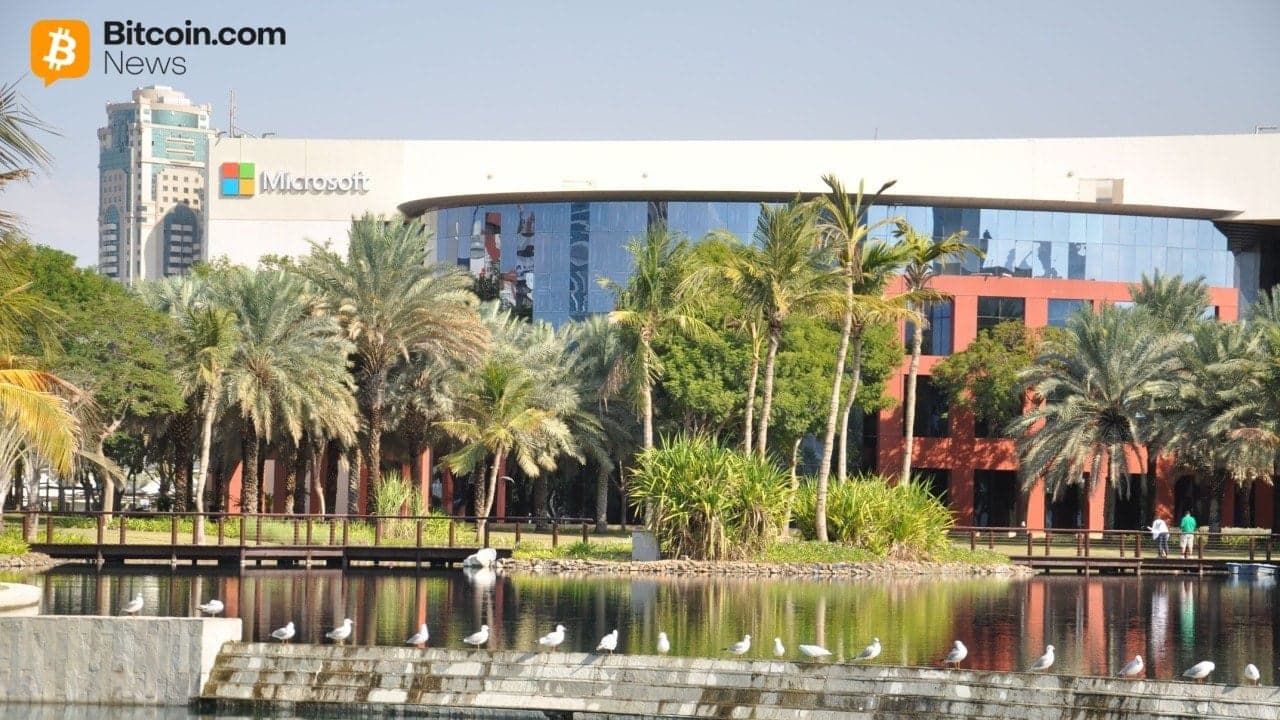 Iran Targets Google, Microsoft, Tesla, and More Tech Companies in Retaliation Threat
news.bitcoin.com
Iran Targets Google, Microsoft, Tesla, and More Tech Companies in Retaliation Threat
news.bitcoin.com
 Global Markets Rise as Trump and Iran Signal End to Military Operations
news.bitcoin.com
Global Markets Rise as Trump and Iran Signal End to Military Operations
news.bitcoin.com
 Global Markets Rise as Trump and Iran Signal End to Military Operations
news.bitcoin.com
Global Markets Rise as Trump and Iran Signal End to Military Operations
news.bitcoin.com
Iran’s Islamic Revolutionary Guard Corps said on March 31 it would “target” 18 global companies—including Google, Microsoft, Apple, Meta, Nvidia, Oracle, Cisco and Tesla—and urged staff to evacuate before an 8 p.m. Tehran time deadline on April 1, according to Bitcoin.com. The message also warned residents within roughly one kilometre of the named firms’ sites in the Gulf to move to “safe areas,” citing alleged Western and Israeli “terrorist operations” and claiming the companies provide tracking data used in assassinations.
Even if the threat is largely rhetorical, it lands on a part of the economy that is unusually exposed to signalling and copycat action. Naming specific vendors turns a geopolitical dispute into an operational security problem: it invites opportunistic actors to dress routine cybercrime up as national retaliation, and it gives defenders a list of brands to be phished, impersonated, or targeted through suppliers. The most likely first-order risk is not missiles hitting office parks in Dubai, but online disruption—DDoS against public endpoints, ransomware attempts against regional subsidiaries and contractors, and “wiper” malware aimed at making recovery slow and political. Identity systems are a particularly soft underbelly: cloud admin accounts, single sign-on providers, and privileged access tooling are the choke points that let an attacker turn one compromised credential into a broad outage.
The second-order issue is concentration. Corporate continuity plans often assume that a hyperscaler outage is rare and short; they are less prepared for a scenario where a state-linked campaign tries to keep services degraded for days while exploiting the same dependencies across many targets. If many firms rely on the same DNS providers, BGP routes, CI/CD pipelines, and identity platforms, a campaign does not need to breach each company directly to create correlated failures. Supply-chain compromises—of MSPs, open-source dependencies, or widely deployed network appliances—scale faster than bespoke intrusions, and they let attackers hit “the list” indirectly.
For companies with Gulf exposure, the practical response looks mundane: rehearse incident response with the assumption that primary cloud consoles and corporate email may be inaccessible; keep offline, immutable backups and test bare-metal restores; segment networks so a compromised workstation cannot reach identity or backup infrastructure; and pre-stage alternate communications channels that do not depend on the same vendors. The more the region’s digital infrastructure is built on a small number of global platforms, the more a political threat—credible or not—turns into a stress test of shared plumbing.
The IRGC message did not describe specific capabilities or targets beyond a one-kilometre evacuation warning and an April 1 deadline. It did, however, publish a ready-made list of brand names for anyone looking to turn geopolitics into a cover story.