
US journalist Shelly Kittleson kidnapped in Baghdad
Iraqi police arrest suspect linked to Kataib Hezbollah, State Department says it warned her of specific threats
Images
 Shelly Kittleson has covered conflicts in Afghanistan, Iraq and Syria
bbc.com
Shelly Kittleson has covered conflicts in Afghanistan, Iraq and Syria
bbc.com
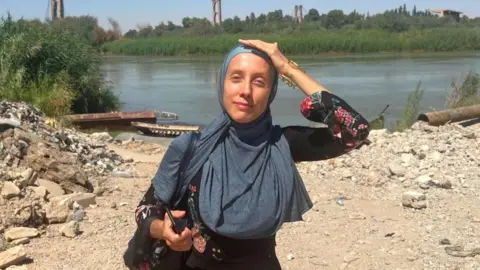 Shelly Kittleson has covered conflicts in Afghanistan, Iraq and Syria
bbc.com
Shelly Kittleson has covered conflicts in Afghanistan, Iraq and Syria
bbc.com
 An American journalist has been kidnapped in Baghdad. Photograph: Léo Corrêa/AP
theguardian.com
An American journalist has been kidnapped in Baghdad. Photograph: Léo Corrêa/AP
theguardian.com
An American freelance journalist, Shelly Kittleson, was kidnapped in Baghdad on Tuesday evening, Iraqi and US officials told the BBC. Iraq’s interior ministry said security forces pursued the abductors, leading to a crash in which one of the kidnappers’ vehicles overturned and one suspect was arrested. A US State Department official said the detained suspect has ties to Kataib Hezbollah, an Iranian-aligned Iraqi militia.
According to the BBC, Kittleson was taken near a hotel in central Baghdad; The Guardian reports police believe four men in civilian clothes seized her and drove east across the capital. The State Department confirmed an American journalist had been abducted but did not publicly name her, with assistant secretary Dylan Johnson saying Washington had previously warned her about threats and was coordinating with Iraqi authorities and the FBI to secure her release. A CNN analyst cited by CBS, and relayed by the BBC, said Kittleson had been told Iran-backed paramilitaries were plotting to kidnap or kill female journalists and that her name was on a list.
The case lands in a city where kidnappings have fallen sharply since the mid-2000s, but never disappeared; The Guardian notes the 2023 abduction of Israeli-Russian academic Elizabeth Tsurkov, who was held for two years before being released last year. The timing also matters. Both the BBC and The Guardian place the incident against a backdrop of deteriorating regional security after recent US-Israeli strikes on Iran, a context in which Iranian-linked armed groups in Iraq have more leverage than the Iraqi state wants to advertise.
For Baghdad, the immediate incentive is to demonstrate control: a rapid pursuit, a public arrest, and a promise to “track down the remaining perpetrators” are meant to show that militias cannot abduct foreigners with impunity. For Washington, the incentives run in the opposite direction: highlighting prior warnings and travel advisories limits political liability if negotiations drag on, while naming Kataib Hezbollah ties puts the incident inside the broader Iran confrontation rather than treating it as ordinary crime.
The commercial and diplomatic consequences can arrive faster than any rescue. A kidnapping of a US journalist pushes insurers, security contractors and foreign employers to reprice Iraq risk overnight, and it gives militia networks a bargaining chip that does not require battlefield success. Even if Kittleson is released quickly, the episode reinforces that access to Baghdad can still depend on which armed group chooses not to interfere.
Iraq’s interior ministry says one suspect is in custody and the search is focused on the eastern part of Baghdad. The State Department says it has “nothing further to share” beyond efforts to secure her release.