
Italy blocks US aircraft access to Sigonella base
Corriere della Sera says landing request filed without authorisation, Europe’s logistics become a veto point when war risk is local
Images
 newsweek.com
 Gas Prices Rise Above $4 as Trump’s Approval Rating Collapses
newsweek.com
Gas Prices Rise Above $4 as Trump’s Approval Rating Collapses
newsweek.com
 Hasan Piker Divides Democrats as Party Grapples With Young Male Voters
newsweek.com
Hasan Piker Divides Democrats as Party Grapples With Young Male Voters
newsweek.com
 Fidel Castro’s Grandson Would Welcome Deal With Trump
newsweek.com
Fidel Castro’s Grandson Would Welcome Deal With Trump
newsweek.com
 Michigan Synagogue Attack was Hezbollah-Inspired Terrorism, FBI Says
newsweek.com
Michigan Synagogue Attack was Hezbollah-Inspired Terrorism, FBI Says
newsweek.com
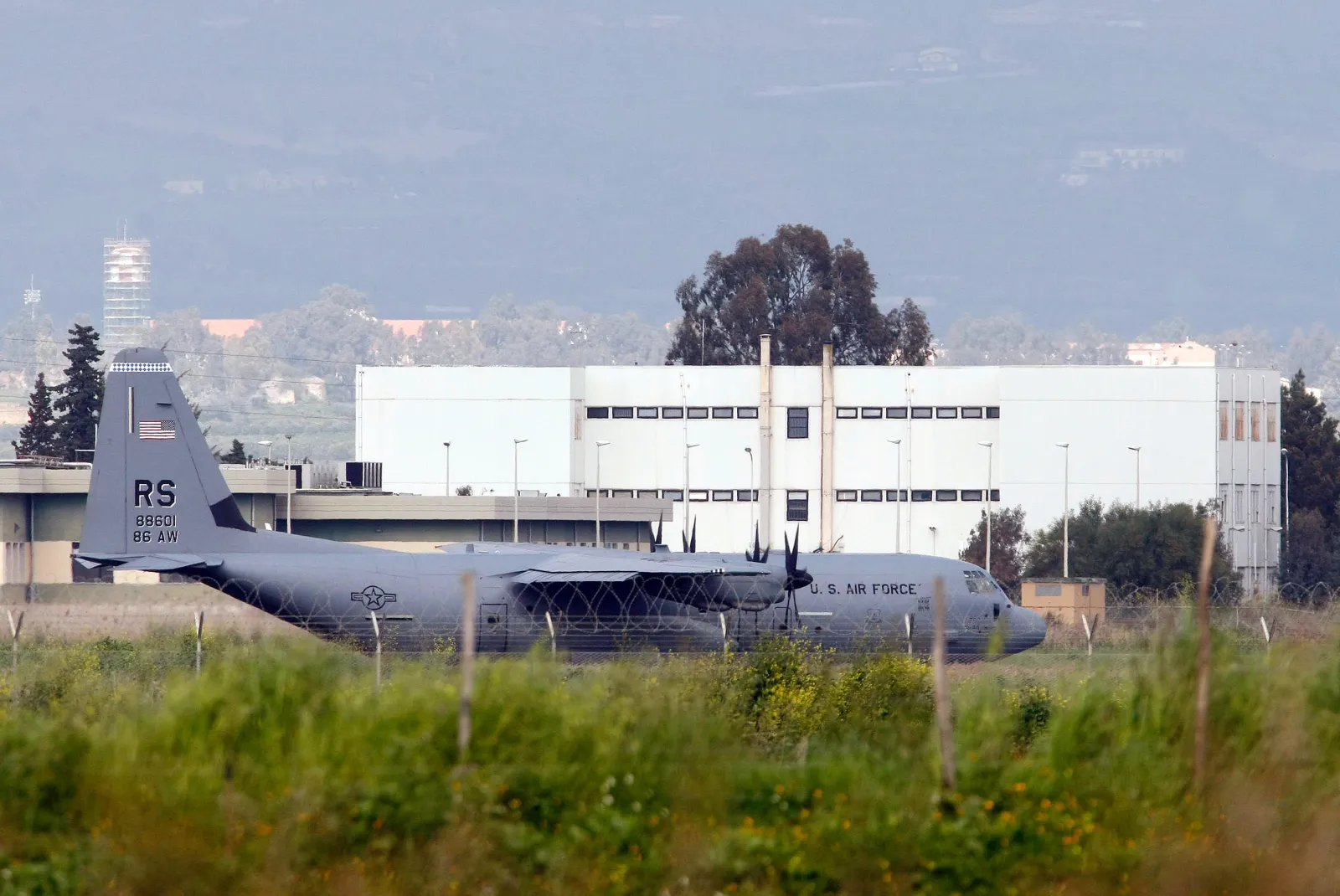
Italy blocked a US request for its aircraft to use the Sigonella air base in Sicily as a stopover on the way to the Middle East, according to Newsweek citing Corriere della Sera. The Italian paper reported that a US flight plan covering “several bombers” was filed without authorisation and without consulting Italy’s military leadership, and that it was submitted while the aircraft were already in the air.
The episode lands in a week when European governments are learning what “alliance” looks like once a regional war starts to spill into shipping lanes, insurance pricing and domestic politics. Bases are not abstract pieces of NATO infrastructure; they are concrete nodes that create local exposure. If an adversary wants to signal escalation, it does not need to hit Washington. It can hit the logistics—ports, fuel depots, runways—and let the economic aftershocks travel through energy markets and tourism receipts.
For Italy, Sigonella is not just a runway. It is a political liability and a risk concentration: a fixed target on national territory that can be linked, in public perception, to decisions taken elsewhere. The costs of that linkage are mostly local—security measures, disruption risk, higher insurance premia for nearby commercial activity, and the domestic fallout if Italy is seen as being dragged into a conflict it did not choose. The benefits, by contrast, are diffuse and long-term: alliance goodwill, deterrence signalling, and the promise that the same network might be available to Italy in another contingency.
That mismatch is why access disputes tend to surface at the worst possible moment: when the risk becomes immediate and the political value of “saying no” rises. A landing permission is a small administrative act, but it is also a veto point. Once a war becomes operational—air corridors, refuelling stops, maintenance slots—every host country along the chain can slow it down or raise its price.
The Corriere report also points to a second friction: process. Filing a plan “without authorisation” while aircraft are already airborne shifts the decision from policy to crisis management. It compresses time, reduces room for parliamentary or cabinet-level debate, and effectively asks the host government to accept responsibility for a fait accompli.
Sigonella remained in Sicily after the request was denied. The question is how many other European bases discover, mid-flight, that access is not automatic when the bill is paid in local risk.