
Gunmen kill dozens in Jos Nigeria
Plateau state imposes curfew after Palm Sunday attack, recurring Middle Belt violence again outpaces investigations
Images
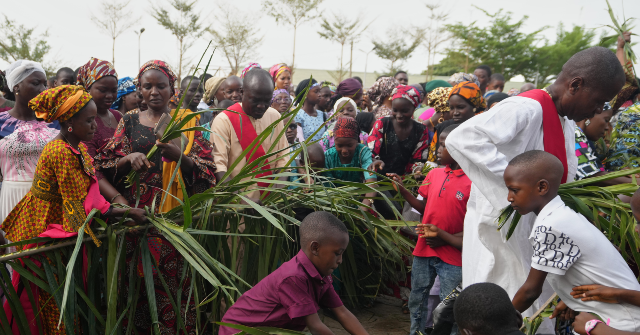 Palm Sunday Massacre: 30 Killed as 'Gunmen' Open Fire in Nigeria
breitbart.com
Palm Sunday Massacre: 30 Killed as 'Gunmen' Open Fire in Nigeria
breitbart.com
Thirty people were killed on Sunday evening in Angwan Rukuba, a community on the outskirts of Jos in Nigeria’s Plateau state, after attackers on motorcycles opened fire on residents, according to International Christian Concern and local accounts cited by Breitbart. Police figures reported by Nigeria’s Vanguard put the death toll lower, at 14, while local leaders said the number was closer to 27. Plateau’s governor, Caleb Mutfwang, visited the area the next day in an armoured vehicle, announced a 48-hour curfew and said the state would cover medical bills for the wounded.
The immediate dispute in the reporting is over labels: Nigerian outlets described “gunmen”, while witnesses and advocacy groups argued the attack fits a recurring pattern of violence around Christian holidays in the Middle Belt, where the country’s Muslim-majority north meets its Christian-majority south. That argument is not only about religion; it is about incentives. If attacks are treated as anonymous criminality, the political cost of failing to prevent them falls. If they are treated as organised ideological violence, the question becomes why security forces repeatedly arrive after the fact.
Plateau has lived for decades with cycles of reprisal killings, raids on villages, and attacks on travellers. The mechanics are familiar: thin policing, slow investigations, and few prosecutions make violence cheap. Communities respond by organising their own protection, which can blur into militia structures and collective punishment. Local politicians then have reason to promise crackdowns and curfews—visible actions that signal control—while the hard work of building investigative capacity and credible deterrence remains underfunded and politically unrewarding.
Even when arrests are made, the chain from attacker to organiser is rarely established in public. That leaves room for competing narratives—Boko Haram, Islamic State affiliates, “Fulani terrorists”, banditry—each carrying different implications for federal strategy, inter-communal relations and international attention. The result is a security market where budgets expand, emergency measures proliferate, and civilians remain the residual claimant.
On Monday, Mutfwang said those responsible would not go unpunished. By then, residents were already under curfew, and the attackers were gone.