
BYD earnings miss signals China EV price war
Domestic demand softens as exports become profit centre, battery breakthroughs arrive as margins compress
Images
 zerohedge.com
 Fluorine-based electrolyte could improve EV and drone battery efficiency.
zerohedge.com
Fluorine-based electrolyte could improve EV and drone battery efficiency.
zerohedge.com
Chinese EV leader BYD is warning investors that the domestic market has entered a “knockout stage” while showing, in its own numbers, what that means.
BYD reported quarterly results that missed expectations on both earnings and revenue, and its shares fell at the Hong Kong open, according to Zero Hedge, citing Bloomberg. Chairman Wang Chuanfu described competition in China’s electric-vehicle market as having “reached a fever pitch”. The company still sells enormous volumes and has overtaken Tesla in unit sales, but the latest figures point to a business being pushed from subsidy-era growth into margin-era survival.
The pressure is visible in the mix. Demand in China has softened, and BYD has been overtaken domestically by Geely, according to the same report. New entrants with consumer-electronics brands and software marketing—Xiaomi is singled out—are forcing incumbents into price and feature wars at the same time as costs rise. Revenue growth has continued, but profitability has not: margins narrowed and overall earnings declined, a classic sign that the industry is producing more cars than it can sell at yesterday’s prices.
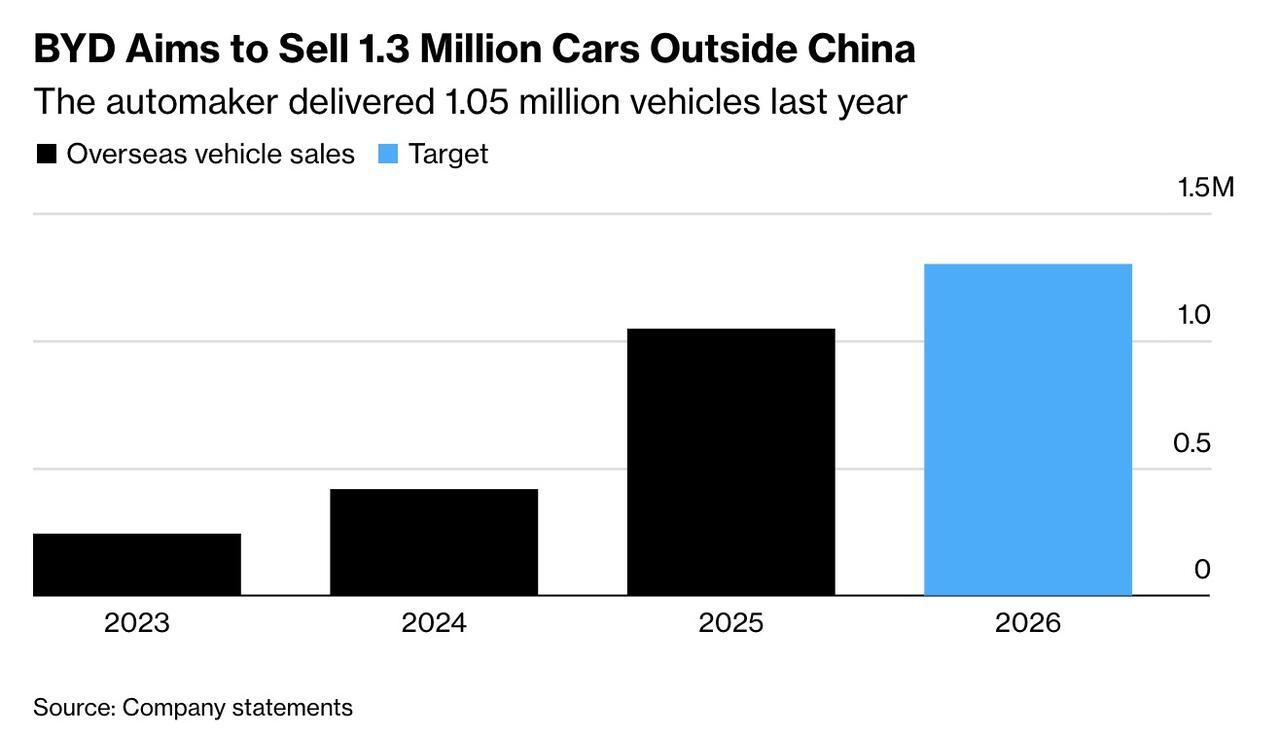
In that environment, exports become the profit centre rather than the expansion story. Analysts cited by Bloomberg argue that BYD’s domestic car business could turn unprofitable, leaving overseas sales—where prices are higher and competition is less saturated—as the main source of earnings. BYD’s stated goal of selling more than a million vehicles abroad underlines how much the company now depends on foreign demand. But exporting at scale is not just shipping cars; it is building factories and supply chains outside China, tying up capital at a moment when cash generation is weakening.
The narrative pivot matters. As software features become a liability—BYD’s “God’s Eye” driver-assistance system has drawn user complaints—management is shifting attention to tangible engineering improvements such as faster charging and battery efficiency. In parallel, Chinese battery research continues to generate headlines. Zero Hedge highlights a Nature paper on a hydrofluorocarbon-based electrolyte developed by researchers linked to Nankai University and the Shanghai Institute of Space Power-Sources, reporting large gains in energy density and cold-weather performance, though with acknowledged limits at high temperatures.
Breakthroughs can be real and still serve as cover. When an industry is trapped in overcapacity, technology announcements buy time: they keep lenders engaged, justify new capex, and help firms argue that today’s losses are the price of tomorrow’s dominance. The harder question is what happens when the state has to decide whether to keep credit flowing to preserve jobs and supplier networks, or let weaker manufacturers fail so prices can rise again.
BYD’s chairman is calling the market a knockout stage.
The company’s latest quarter suggests the punches are landing on margins first.