
DHS shutdown enters record stretch
Republicans split over partial funding bills and filibuster math, airport queues become the enforcement backdrop
Images
 nbcnews.com
After 40 days without full funding the US Department of Homeland Security is still operating under a shutdown that has turned airport security and border enforcement into bargaining chips on Capitol Hill.
According to NBC News the Senate passed a bill that would fund DHS while excluding Immigration and Customs Enforcement and Customs and Border Protection, only for House Speaker Mike Johnson to reject it and refuse a vote. The split has hardened into a public blame game: House Republicans accuse Senate Republicans of leaving Washington without forcing the issue, while Senate Republicans point to the filibuster and the need for Democratic votes. President Donald Trump has urged Republicans to abolish the 60‑vote threshold, but Senate Republicans have repeatedly signalled they will not.
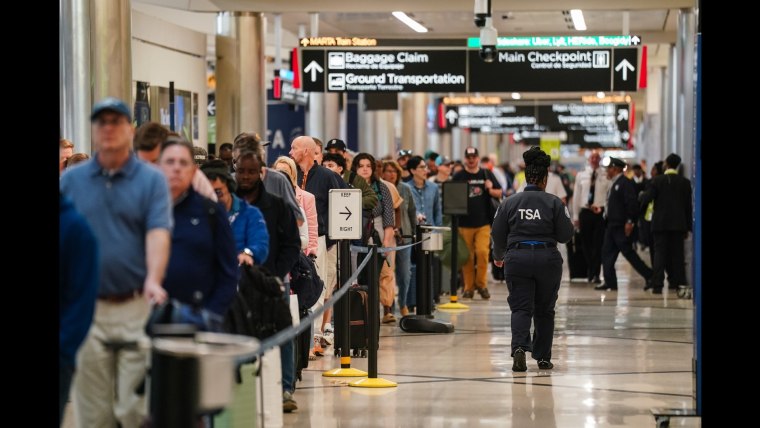
The immediate impact is most visible at airports, where long lines and delays have become the public face of a budget fight. The shutdown has not meant the state stops working so much as it works unevenly. Some functions continue by legal necessity or political choice, while others degrade until they become leverage. For travellers the distinction is academic: the service they experience is a queue.
NBC reports that the lack of a clear White House strategy has widened the rift inside the Republican Party. Both Johnson and Senate Majority Leader John Thune appear to have advanced competing plans believing they had Trump’s backing, only to find the president largely absent until he returned to a single demand: end the filibuster. With no path to 60 votes and no agreement to change Senate rules, Republicans are left arguing over tactics while Democrats frame the episode as a “Republican shutdown,” in the words of a spokesperson for Senate Minority Leader Chuck Schumer.
The shutdown also exposes how “emergency” staffing can become policy by other means. Border czar Tom Homan has said ICE agents will remain at airports until TSA officers can resume normal operations, effectively shifting enforcement personnel into roles created by administrative scarcity. That kind of substitution keeps the system running while changing what the system is doing: agents trained and incentivised for immigration enforcement become a stopgap for passenger screening, and the public gets a blurred line between border control and domestic travel.
In Washington the shutdown is discussed as a negotiating tool; in airports it is experienced as a service failure with a political timetable. The longer it lasts, the more it resembles a managed shortage where the pain is distributed across travellers and frontline staff, and relief is handed out selectively as lawmakers search for a deal.
On Monday the Senate returned only for a pro forma session, and no vote was held to reopen the department.