
Ukraine signs 10-year defence production deal with Bulgaria
Kyiv also authorises private firms to run air-defence units for critical infrastructure, wartime capability shifts into contracts and liability
Images
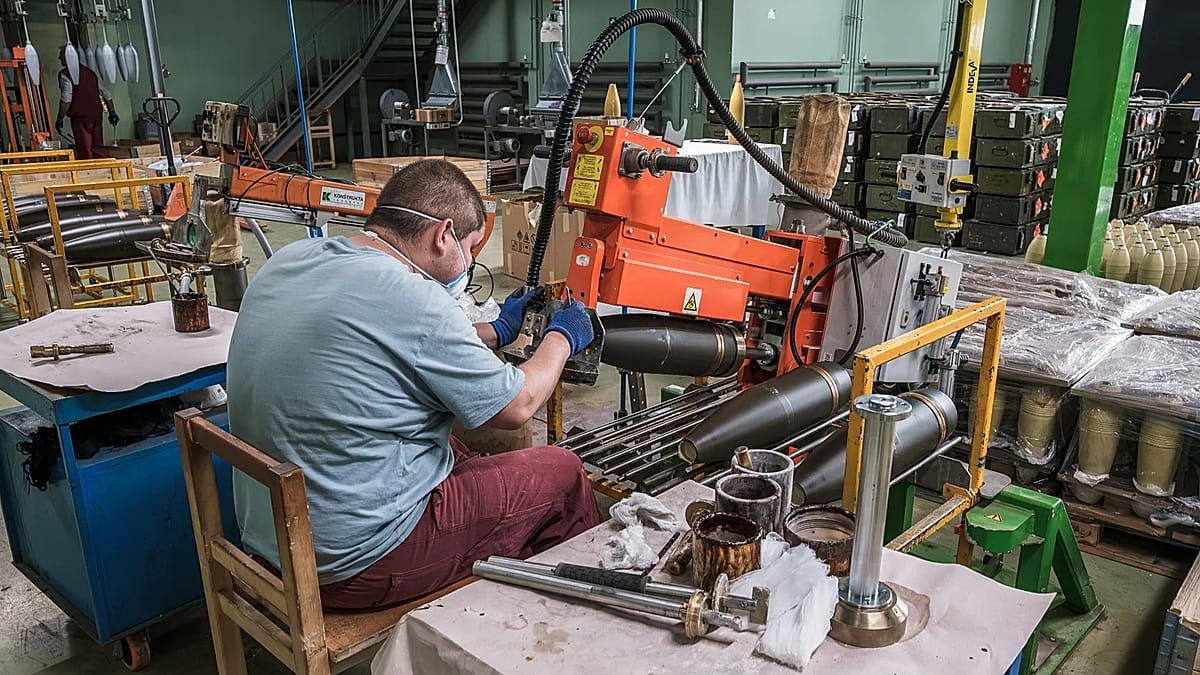 Ukraine inks defence deal with major arms producer Bulgaria
euronews.com
Ukraine inks defence deal with major arms producer Bulgaria
euronews.com
 Ucrania anunció la incorporación de empresas privadas a su defensa antiaérea para reforzar infraestructuras críticas (REUTERS/Thomas Peter/Archivo)
infobae.com
Ucrania anunció la incorporación de empresas privadas a su defensa antiaérea para reforzar infraestructuras críticas (REUTERS/Thomas Peter/Archivo)
infobae.com
 Un integrante de una unidad antiaérea ucraniana prepara un dron interceptor FPV P1-Sun durante su turno de combate en la región de Kharkiv (REUTERS/Valentyn Ogirenko)
infobae.com
Un integrante de una unidad antiaérea ucraniana prepara un dron interceptor FPV P1-Sun durante su turno de combate en la región de Kharkiv (REUTERS/Valentyn Ogirenko)
infobae.com
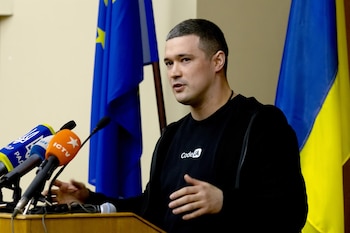 El ministro de Defensa de Ucrania, Mijailo Fedorov, confirmó que el proyecto piloto ya permitió derribar drones enemigos en la región de Kharkiv, una de las zonas más golpeadas por los ataques rusos
infobae.com
El ministro de Defensa de Ucrania, Mijailo Fedorov, confirmó que el proyecto piloto ya permitió derribar drones enemigos en la región de Kharkiv, una de las zonas más golpeadas por los ataques rusos
infobae.com
 Imagen de archivo de un dron interceptor FPV P1-Sun despega durante un turno de combate de una unidad de defensa aérea en la región de Kharkiv (REUTERS/Valentyn Ogirenko)
infobae.com
Imagen de archivo de un dron interceptor FPV P1-Sun despega durante un turno de combate de una unidad de defensa aérea en la región de Kharkiv (REUTERS/Valentyn Ogirenko)
infobae.com
Ukraine has signed a 10-year defence agreement with Bulgaria covering joint production of drones and other weapons, President Volodymyr Zelenskyy said after talks in Kyiv with Bulgaria’s interim prime minister Andrey Gyurov, according to Euronews. The deal adds a long-duration industrial anchor in south-eastern Europe, where Bulgaria’s defence sector—built around Soviet-standard ammunition and systems—already supplies equipment compatible with Ukraine’s armed forces.
Bulgaria’s government data puts defence industry output at nearly 4% of GDP, a share that has risen since Russia’s full-scale invasion began in 2022, Euronews reports. For Kyiv, the attraction is not only volume but continuity: a decade-long framework allows procurement and co-production to be planned as the drone war evolves quickly, rather than as a sequence of emergency purchases.
The agreement also highlights how Ukraine is trying to buy capacity it cannot reliably generate inside its own borders. The same logic appears in a separate move to widen the air-defence workforce beyond the regular military. Infobae reports that Ukraine has authorised 13 private technology firms to develop and operate air-defence capabilities to protect critical infrastructure, with a pilot already active in the Kharkiv region and credited with downing Russian drones.
That kind of outsourcing solves one bottleneck while opening several others. Private groups operating under a unified air-force command can add sensors, software, and trained operators faster than the state can mobilise and retain them. But the state still owns the political consequences: rules on the use of force, accountability for mistakes, and the question of who pays when a private operator’s action causes collateral damage. In peacetime, those uncertainties are handled through licensing and insurance; in wartime, the boundaries are tested in real time.
Bulgaria becomes a useful node in that broader system. It carries manufacturing capacity, EU and NATO membership, and a geographic position that links Black Sea security with Balkan logistics. It also carries political risk: any industrial hub supplying Ukraine becomes a target for sabotage, pressure campaigns, and domestic controversy over escalation.
Zelenskyy framed the Bulgarian deal as a way to “systematise” cooperation over a decade, Euronews reports. The next test will be whether long contracts and private air-defence units can be integrated without turning every procurement decision into a liability dispute.