
Costa Rica agrees to receive more US deportees
Deal deepens Chaves alignment with Trump before May handover, text of agreement still not public
Images
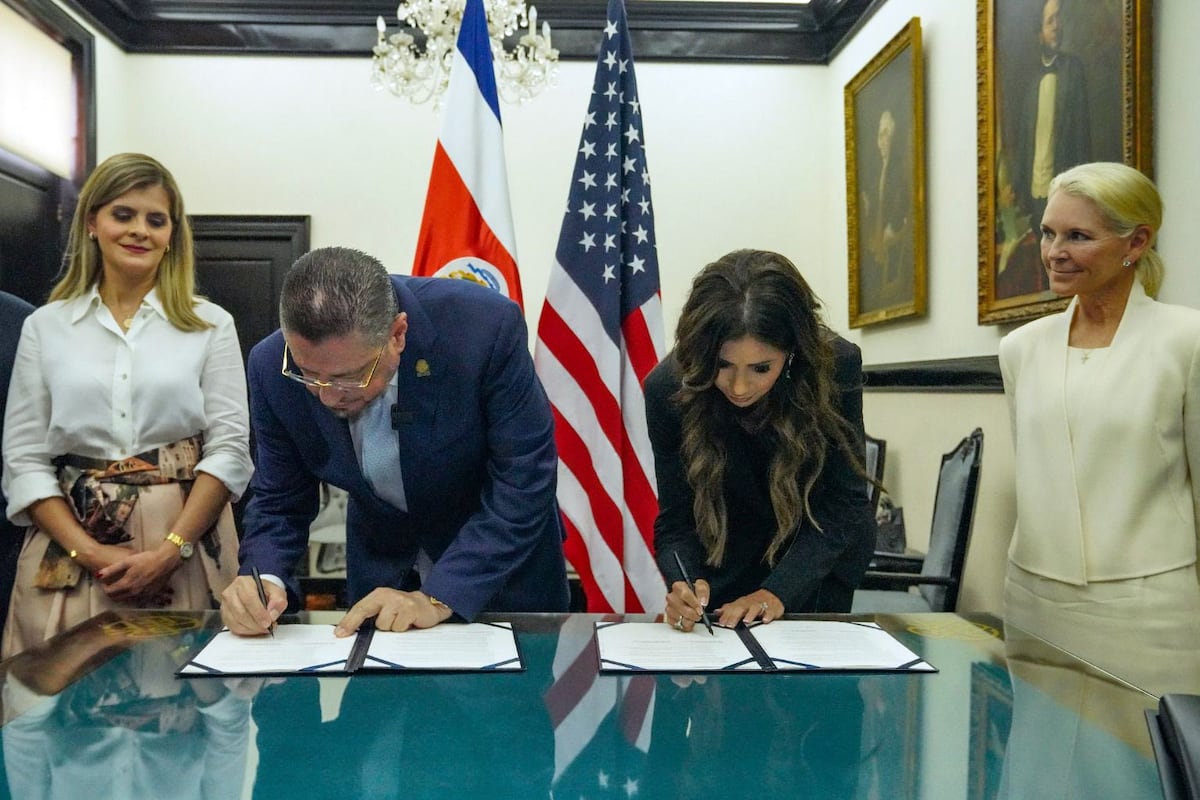 Rodrigo Chaves consolidates his alignment with Trump: Costa Rica will receive more migrants from the US
english.elpais.com
Rodrigo Chaves consolidates his alignment with Trump: Costa Rica will receive more migrants from the US
english.elpais.com
Costa Rica has agreed to receive additional groups of third-country migrants deported from the United States, expanding a practice that already saw nearly 200 people transferred in 2025, according to El País. President Rodrigo Chaves signed the new arrangement alongside US envoy Kristi Noem in San José, but—72 hours later—the text of the agreement and operational details were still not public.
The migration deal sits inside a broader repositioning of Costa Rica’s foreign policy toward Washington under Chaves, who leaves office in May. El País reports that his government has excluded Chinese firms from domestic 5G development, publicly alleged a cyberattack on the state electricity and telecommunications agency by an actor of presumed Chinese origin, and announced the closure of Costa Rica’s embassy in Cuba in front of the US ambassador. Chaves also attended a Miami launch summit for “Shield of the Americas,” a Trump-backed regional initiative framed as anti-drug cooperation.
Accepting deportees is a low-visibility way for a small country to demonstrate usefulness to a larger one. It shifts part of the practical burden of US enforcement—housing, guarding and processing people who are neither Costa Rican nor necessarily able to return quickly to their home countries—onto Costa Rican territory, where costs and political fallout are easier to localise. The lack of a published agreement matters because it determines who pays for what: whether US agencies reimburse Costa Rican ministries, whether private contractors provide accommodation and security, and what legal status detainees hold while they wait.
Chaves’ opponents have framed the move as submission, but the government has treated it as a bargaining chip. El País notes that when Chaves announced Costa Rica’s openness to deportee transfers, he did so amid speculation about new US trade tariffs, invoking a “one good turn deserves another” logic. The same pattern appears in security policy: Chaves has said a US incursion against drug trafficking on Costa Rican soil could be feasible with legislative approval, and an adviser to president-elect Laura Fernández has floated the idea of US bases—an unusually explicit discussion in a country whose constitution enshrines disarmament and neutrality and which has no standing army.
That legislative arithmetic is changing in Chaves’ favour. El País reports that the ruling party is expected to hold 31 of 57 seats from May, a majority that could turn previously theoretical cooperation—foreign deployments, basing rights, expanded policing agreements—into formal authorisations. The institutional constraint in Costa Rica is not military capacity but legal permission; once granted, execution can be outsourced.
For Washington, the attraction is that border policy becomes modular. Deportations do not end at the airport; they require holding facilities, medical care, translators, lawyers and transport. Moving those functions offshore reduces pressure on US detention capacity and makes the human costs harder to see domestically. For Costa Rica, the prize is not only goodwill but access: tariff relief, security cooperation, and the political status of being treated as a preferred partner.
Chaves signed a binding commitment that the public still cannot read. The first visible output will be a plane landing in Costa Rica with people who did not choose to be there.