
Trump floats seizing Iran oil hub
Kharg Island handles most Iranian exports and would require ground forces, war aims drift from deterrence to assets as shipping risk sets the timetable
Images
 <p>US Sailors and Marines aboard USS Tripoli </p>
standard.co.uk
<p>US Sailors and Marines aboard USS Tripoli </p>
standard.co.uk
 standard.co.uk
 President Trump Returns To The White House From Florida
standard.co.uk
President Trump Returns To The White House From Florida
standard.co.uk
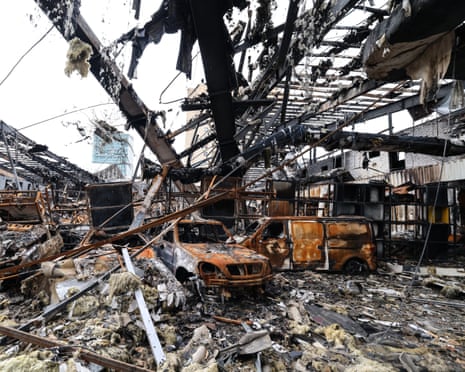 Damage to a car service centre in eastern Tehran hit by a missile strike at the weekend. Photograph: Atta Kenare/AFP/Getty Images
theguardian.com
Damage to a car service centre in eastern Tehran hit by a missile strike at the weekend. Photograph: Atta Kenare/AFP/Getty Images
theguardian.com
Donald Trump told the Financial Times he would like to “take the oil” in Iran and that US forces could seize Kharg Island, the Gulf export hub through which most Iranian crude leaves the country. The remarks came as the Pentagon moved additional forces into the region, including thousands of Marines reportedly arriving aboard the amphibious assault ship USS Tripoli, according to the Standard.
Kharg is not a symbolic target. It is a piece of logistics infrastructure that turns oil in the ground into cash in the treasury, and it sits in a war already priced through shipping lanes: Brent crude was reported above $116 a barrel as markets tried to quantify how long the Strait of Hormuz can remain risky without being fully closed, according to the Guardian’s live coverage. In that environment, a threat to seize the export terminal is a threat to rewrite the flow of dollars and diesel, not just to punish missile units.
The immediate problem for Washington is that saying the quiet part out loud narrows the room for everyone else. In past conflicts, US administrations have tried to keep “deterrence” and “security” as the public rationale even when energy flows were the leverage. Trump’s phrasing hands Tehran a cleaner mobilising story—foreign forces coming for national assets—while complicating the task of persuading allies and insurers that escalation is limited.
It also collides with the administration’s own messaging about talks. Trump said the US and Iran had been meeting “directly and indirectly” and described Iran’s new leaders as “very reasonable,” the Guardian reports, even as Pakistani officials floated hosting “meaningful talks” in coming days. Iran’s parliamentary speaker Mohammad Bagher Ghalibaf answered with a different frame: the US speaks of negotiations in public while preparing ground operations, and Iran is “waiting” for US troops to arrive, the Standard reports.
For markets, the question is not which quote wins but which institutions set the price of passage. Tanker routes, war-risk clauses, and insurance premiums can tighten supply without a single mine being laid. A seizure threat against Kharg pushes that uncertainty from the Strait itself to the infrastructure behind it, forcing shippers and refiners to hedge not only the transit but the source.
And for the war’s tempo, energy becomes the metronome. A campaign that can be paused, extended, or redirected by moving risk premiums up and down invites short deadlines and rolling ultimatums—tools that influence petrol prices at home as much as they pressure adversaries abroad.
Kharg Island is an export terminal with pipelines, storage tanks, and loading berths; it cannot be seized by rhetoric. But the fact that it is being discussed as a prize, while additional Marines arrive within sailing distance, is already being priced into the cost of moving a barrel through the Gulf.