
Office chair Grand Prix rolls through Japan
ISU-1 teams rotate riders in two-hour endurance race for 90 kilos of rice, a touring street event built on unmodified chairs not stadium budgets
Images
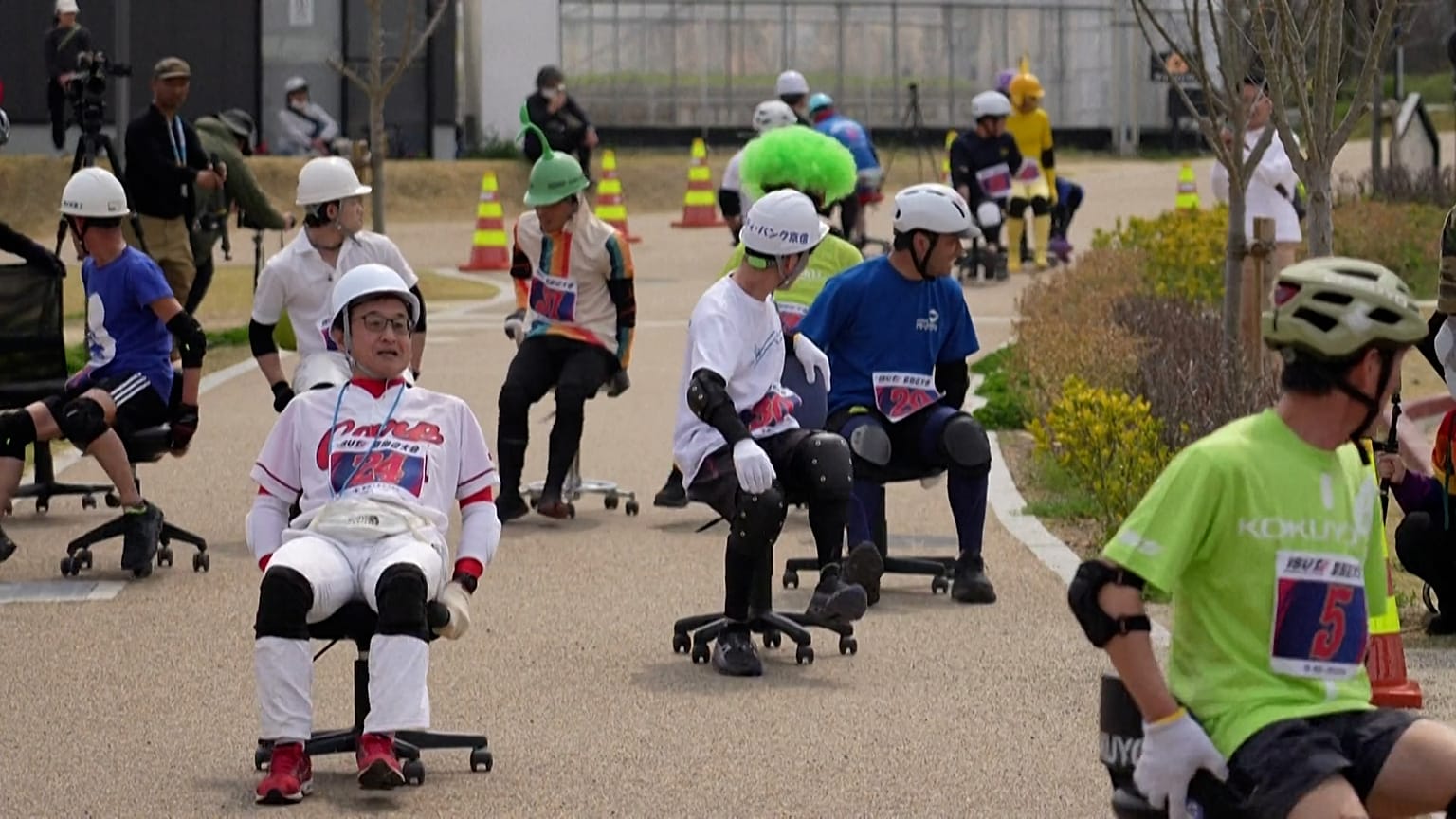 Office chair race in Kyotanabe, Japan, on March 29, 2026.
euronews.com
Office chair race in Kyotanabe, Japan, on March 29, 2026.
euronews.com
Dozens of riders took to Japanese streets this weekend for the ISU-1 Grand Prix, a two-hour endurance race run entirely on office chairs. Teams of three rotate riders, aiming to complete as many laps as possible before time expires, according to Euronews. The prize is not a cup or cash but 90 kilos of rice—an intentionally domestic reward for an event that treats seriousness as optional.
The race has been held since 2010 and now travels across Japan, with competitors using unmodified, store-bought chairs. That constraint matters: it keeps the “equipment arms race” from swallowing the sport, and it makes the spectacle legible to anyone who has ever pushed away from a desk. The format borrows from motorsport—Euronews likens it to Le Mans—without importing motorsport’s capital intensity. A course, a stopwatch, volunteers, and a crowd are enough.
The economics are the point. Many modern “participation events” are packaged as municipal showcases or corporate activations: expensive staging, heavy security, professional marketing, and a long tail of contractors. ISU-1 works in the opposite direction. The infrastructure is ordinary street space and cheap rolling hardware; the entertainment comes from the friction of turning corners on office casters at speed. The audience gets a show, the riders get a shared ordeal, and the organizers do not need to sell a narrative about “urban renewal” to justify the bill.
That kind of low-cost event also changes who bears risk. If the spectacle depends on a bespoke venue and a large payroll, cancellation becomes politically and financially painful, and the incentives shift toward overpromising and underreporting problems. When the core input is time and local coordination, failure is embarrassing but not ruinous. It is easier to iterate, easier to replicate in other towns, and harder for any single institution to capture.
On Sunday, the winners went home with rice, and the rest went back to work on Monday—leaving behind the unusual fact that a street race can be built around office furniture and still draw a crowd.