
Two drones crash in Finland
Authorities point to stray Ukrainian aircraft amid Russian jamming claims, investigation language keeps a border violation below NATO threshold
Images
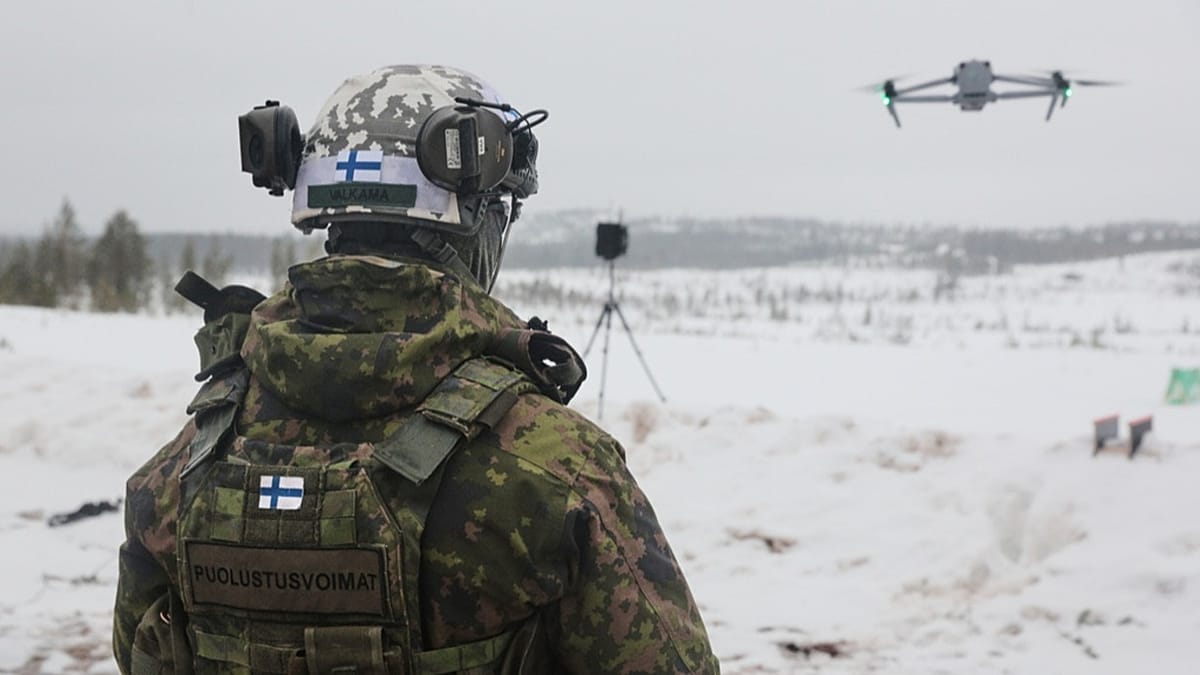 Two unidentified drones crash in Finland, defence ministry says
euronews.com
Two unidentified drones crash in Finland, defence ministry says
euronews.com
Two unidentified drones crashed near Kouvola in southeastern Finland on Sunday morning, prompting police cordons and an F/A-18 Hornet identification flight, according to Euronews. Prime Minister Petteri Orpo told Finnish broadcaster Yle that the drones were “likely” Ukrainian, possibly pushed off course by Russian signal jamming, while Defence Minister Antti Häkkänen called the incident a suspected territorial violation and said an investigation was under way.
Finland’s public messaging followed a familiar script for border incidents: acknowledge seriousness, promise verification, and avoid assigning blame before the evidence is locked down. That caution is not only diplomatic. It is also operational: once a state publicly attributes an intrusion, it inherits the question of what it will do next, and the menu of options—interception, retaliation, escalation—comes with costs that are immediate and visible. Ambiguity, by contrast, buys time and keeps the incident from becoming a test of NATO credibility that no one wants to sit.
Orpo’s explanation—Ukrainian drones straying while Russia jams navigation—also points to the mechanics of modern airspace friction. Cheap unmanned systems can be launched in large numbers; electronic warfare can degrade their guidance; and the resulting “lost” platforms can cross borders without a pilot to interrogate or a clear chain of custody to display. For Helsinki, the cheapest outcome is a technical mishap: it preserves relations with Kyiv, avoids handing Moscow a pretext narrative, and keeps domestic politics from being pulled into a binary choice between escalation and humiliation.
For Ukraine, plausible deniability is not an accident but a feature. If drones can be written off as unintended spillover from a war zone, the operational upside of long-range pressure on Russia remains, while the diplomatic downside is softened. For Russia, jamming that pushes drones into neighbouring airspace spreads uncertainty at low cost, forcing Finland to spend resources on monitoring and response while keeping the incident below the threshold of an overt attack.
The concrete consequence is that each episode trains institutions and publics to treat violations as manageable anomalies rather than as events that require a decisive response. Finland can scramble fighters and open an investigation; it cannot easily invoice the party that caused the scramble.
Police remained at the Kouvola crash sites as officials said further details would be released once information had been verified. For now, two drones are on the ground, and the political value of not knowing exactly whose they were remains unusually high.