
NASA evacuates ISS crew after astronaut falls suddenly ill
Mike Fincke says cause still unknown despite tests, medical privacy limits detail as missions depend on costly redundancy
Images
 newsweek.com
 Iran War Forces Energy-Saving in East Asia, Middle East: ‘Imminent Danger’
newsweek.com
Iran War Forces Energy-Saving in East Asia, Middle East: ‘Imminent Danger’
newsweek.com
 Trump Stronghold Holds Largest Ever ‘No Kings’ Protest
newsweek.com
Trump Stronghold Holds Largest Ever ‘No Kings’ Protest
newsweek.com
 Suspect in Foiled Bank of America Attack Says He Was Recruited on Snapchat
newsweek.com
Suspect in Foiled Bank of America Attack Says He Was Recruited on Snapchat
newsweek.com
 US Recession Odds Rise As Iran War Escalates
newsweek.com
US Recession Odds Rise As Iran War Escalates
newsweek.com
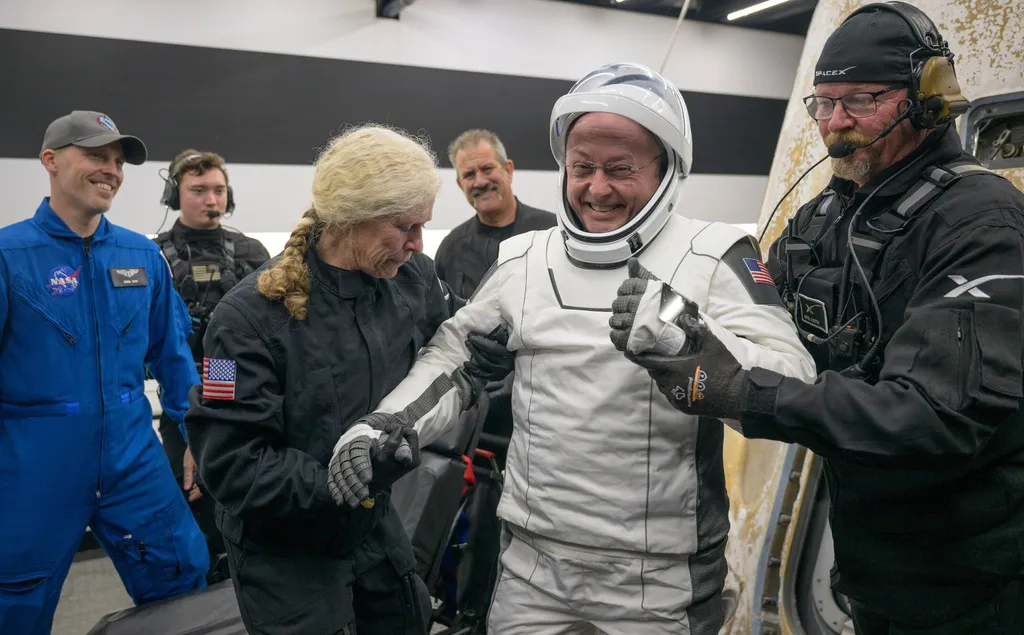
NASA ordered an early return from the International Space Station after astronaut Mike Fincke suffered a sudden medical episode on 7 January that briefly left him unable to speak, according to an Associated Press report republished by Newsweek. The incident lasted around 20 minutes, prompted a cancelled spacewalk, and led SpaceX to bring Fincke and three crewmates back on 15 January more than a month ahead of schedule. Fincke said doctors have ruled out a heart attack and choking, but do not yet know the cause.
The episode is a reminder that a crewed space station is not a laboratory in the usual sense; it is aging critical infrastructure with long supply lines and expensive redundancy. On Earth, a medical emergency triggers an ambulance and a hospital. In orbit, response options are bounded by capsule availability, orbital mechanics, crew workload and what diagnostics happen to be on board. Fincke said the station’s ultrasound was used during the event and that he has undergone extensive testing since returning.
NASA has also chosen to limit detail. Fincke said he could not provide more information because the agency wants astronauts to trust that their medical privacy will be protected if something happens in space. That is a rational institutional concern—crew members need to report symptoms early—but it also means outsiders cannot easily judge the severity of the event, the decision thresholds for evacuation, or whether the station’s environment played a role.
The operational consequences were immediate and collective. A planned spacewalk was cancelled, and a crewmate lost what would have been her first spacewalk, according to the report. The evacuation affected three other astronauts as well, illustrating how tightly coupled ISS schedules are: one person’s health can reorder mission objectives, shift risk to others, and change the timeline for return vehicles.
Fincke said NASA is reviewing other astronauts’ medical records for similar incidents. That search is part safety investigation and part actuarial work: as missions stretch longer and crews skew older or more experienced, rare events become more relevant. In microgravity, even a short-lived neurological or cardiovascular episode is treated as a system risk, because the cost of being wrong is the loss of a crew member and potentially the station.
Fincke, a four-time space flier with 549 days in space, said he felt fine afterward and still does. NASA’s first medical evacuation of the year ended with a mystery intact, and the agency’s most detailed public explanation remains that it happened “out of the blue.”