
Polymarket opens Situation Room pop-up bar in Washington
Prediction market turns news into live odds across politics and culture, opening-night power failure briefly made the screens match the uncertainty
Images
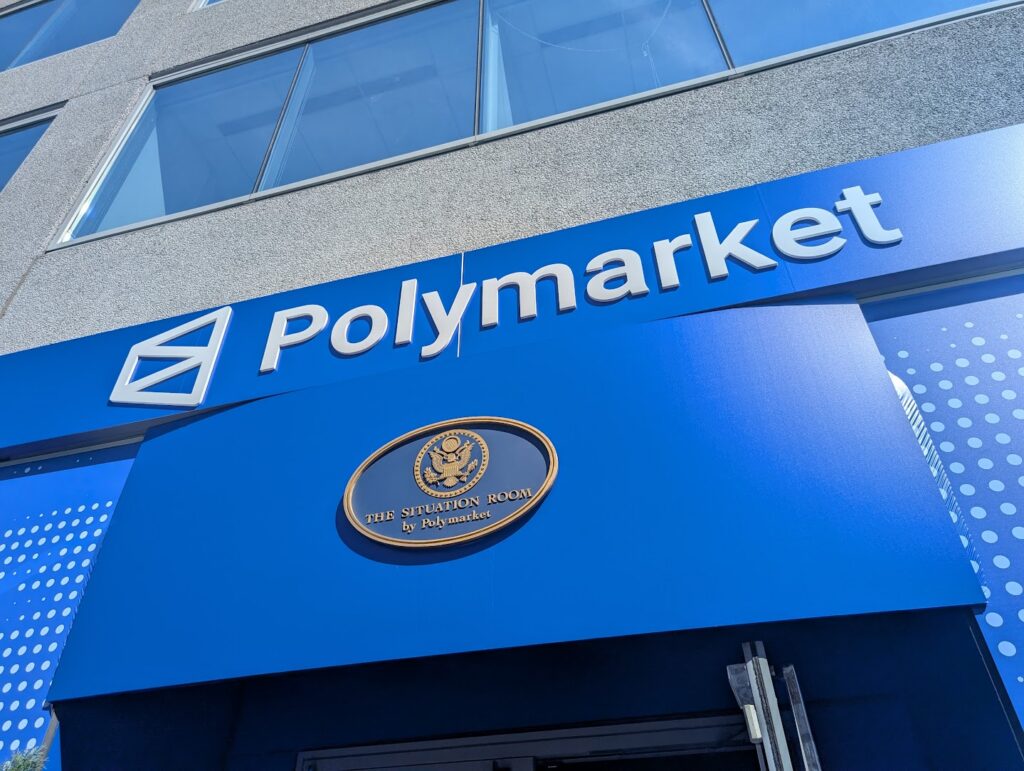 Image of the facade of a building with a blue awning and a Polymarket logo.
arstechnica.com
Image of the facade of a building with a blue awning and a Polymarket logo.
arstechnica.com
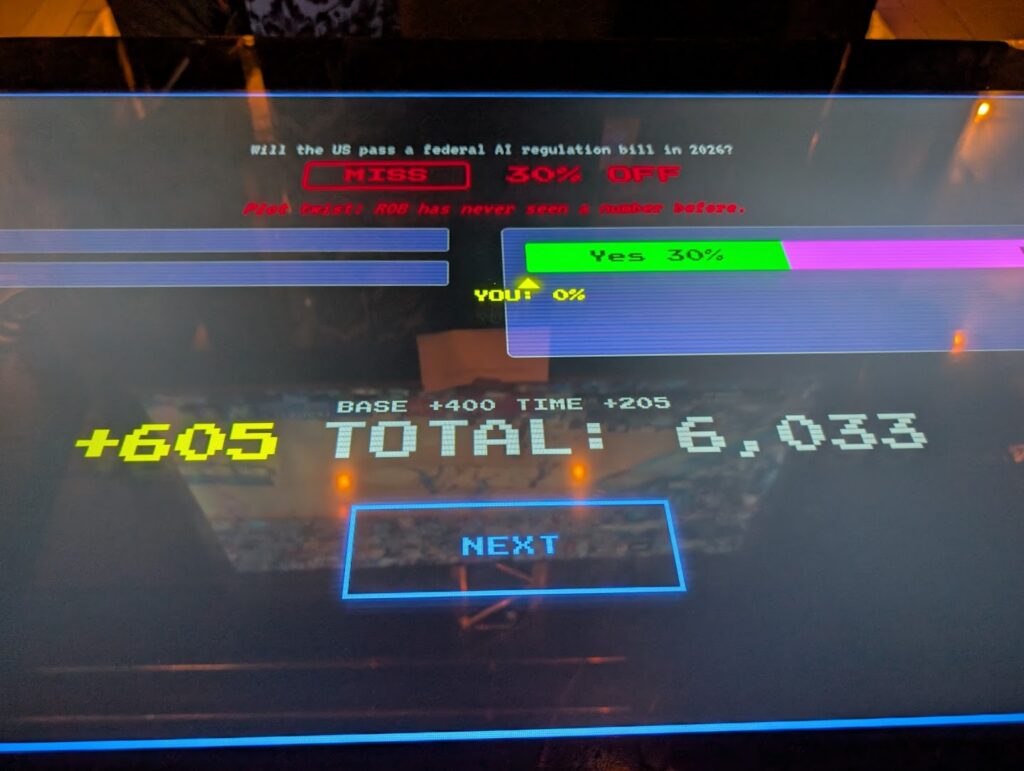 Image of a screen showing a failed guess on the odds of an event.
arstechnica.com
Image of a screen showing a failed guess on the odds of an event.
arstechnica.com
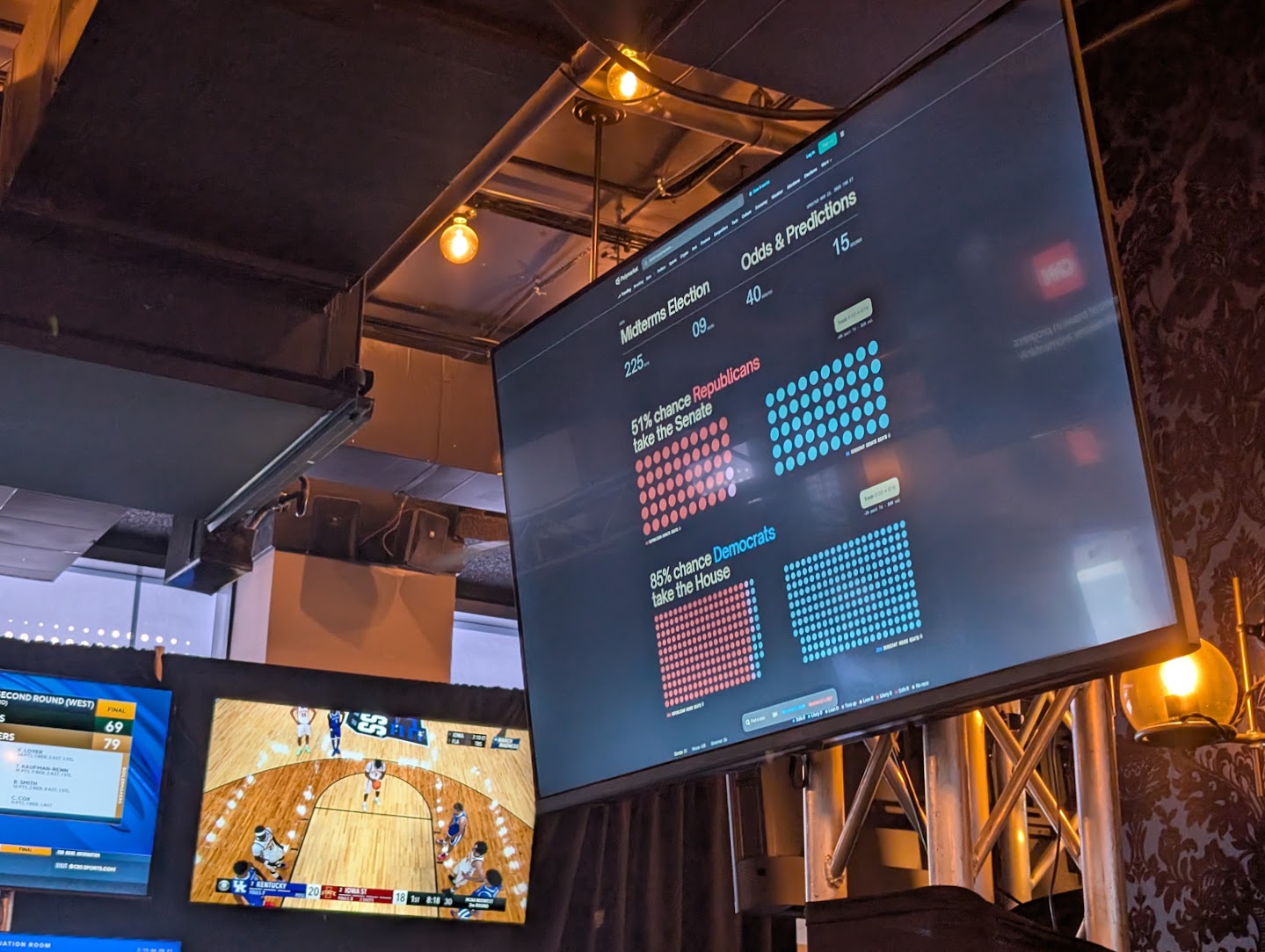 Image of a screen showing seats in Congress, along with the affiliation of their possible occupants.
arstechnica.com
Image of a screen showing seats in Congress, along with the affiliation of their possible occupants.
arstechnica.com
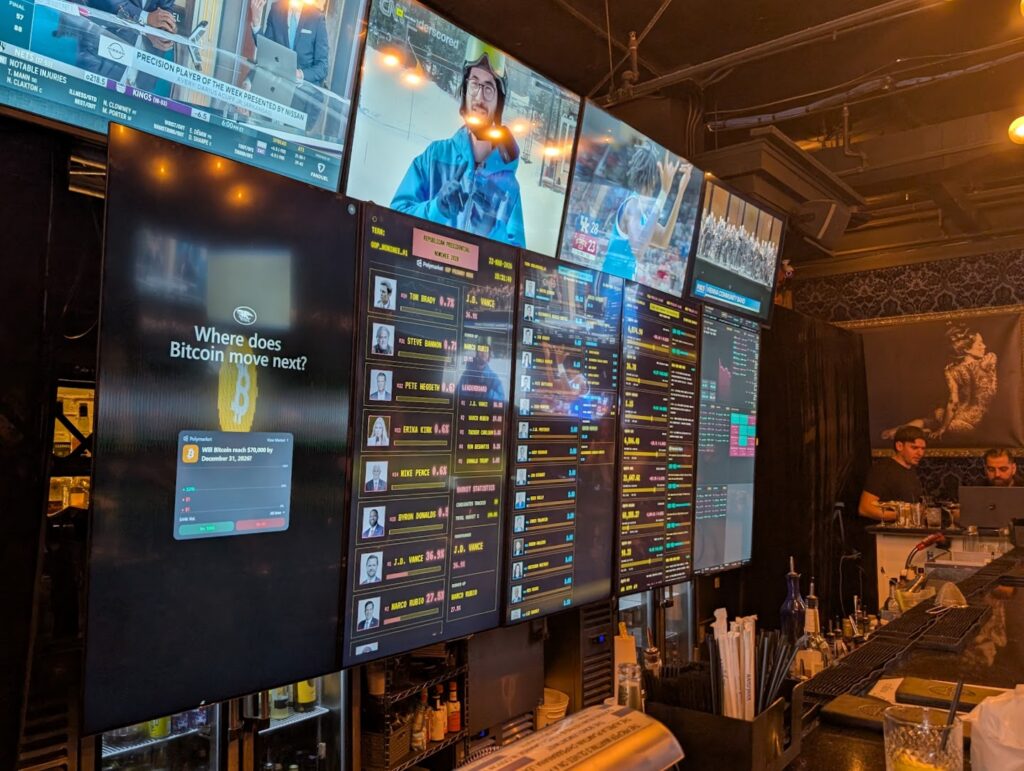 Image of a bar showing multiple large, flat screen TVs behind it showing some decidedly atypical viewing, such as bitcoin futures.
arstechnica.com
Image of a bar showing multiple large, flat screen TVs behind it showing some decidedly atypical viewing, such as bitcoin futures.
arstechnica.com
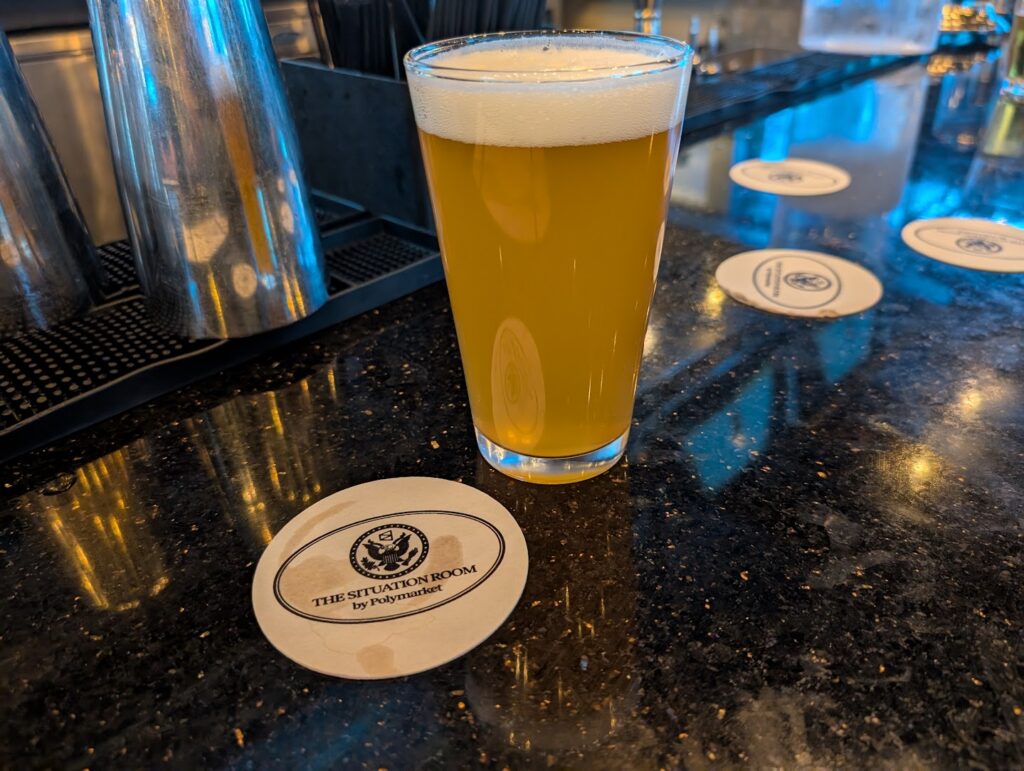 Image of a pint of pale beer, plus a series of coasters on a bar.
arstechnica.com
Image of a pint of pale beer, plus a series of coasters on a bar.
arstechnica.com
Polymarket opens Washington pop-up bar called The Situation Room, prediction markets pitch themselves as real-time news dashboards, screens went dark on opening night due to power and Wi‑Fi problems
Polymarket, the crypto-based prediction market, staged a three-day pop-up in Washington by rebranding a K Street sports bar as “The Situation Room,” according to Ars Technica. The company promoted it as “the world’s first bar dedicated to monitoring the situation,” promising live X feeds, flight tracking, Bloomberg terminals, and Polymarket screens. Early visitors instead found dead displays and unreliable connectivity; Ars reports power and Wi‑Fi problems left screens dark during a press-preview event, with the setup working properly only the next day.
When the screens did come online, the content looked less like a sportsbook and more like a trading floor for politics and cultural trivia. Ars describes dozens of displays rotating between cable news and Polymarket pages, with CNBC and C‑SPAN fitting naturally into the mix. Visitors could browse markets on US politics—control of Congress after the midterms, party nominees for 2028—and on everything from Eurovision winners to the return of Jesus Christ. Even the bar’s interactive tabletop game, “Match the Odds,” was built to train the reflex that watching the news can be immediately monetised.
That shift matters because prediction markets reward not just being right, but being early. A newsroom can publish a correction at no cost beyond embarrassment; a market reprices instantly, transferring money from latecomers to those who moved first. When the same people reading political coverage can take positions in the underlying narrative, rumours, selective leaks and carefully timed “explanations” become tradeable assets. The incentives are especially sharp around questions that hinge on insider information—candidate decisions, regulatory moves, court timing—where a small informational edge can be converted into a visible price signal that then feeds back into public belief.
Ars notes that Polymarket has been signing distribution partnerships designed to embed those price signals into other media surfaces, including Substack posts and Google integrations. That turns odds into a kind of headline: a number that compresses uncertainty into a single figure and can travel faster than the reporting behind it. It also changes what gets covered. Editors decide what is important; markets decide what is liquid. If a topic attracts wagers, it attracts attention, and the attention itself can move the price.
Polymarket did not respond to Ars Technica’s questions about the bar’s operations or whether it met internal success metrics. But the mere choice to build a physical venue in Washington suggests a bid for political normalisation as much as user growth. Ars points out that Donald Trump Jr is an investor and unpaid adviser, and that the Trump administration quickly dropped earlier efforts to rein in Polymarket and rival Kalshi.
For a company selling itself as a new way to “monitor the situation,” the first night’s blackout was an unplanned demo of the dependency chain: the future of news-as-betting still needs electricity, Wi‑Fi, and screens that turn on.