
Suspiciously timed trades shadow Trump policy announcements
Reuters links options and prediction-market bets to Iran and sanctions moves, ethics rules exist but proof is built to fail
Images
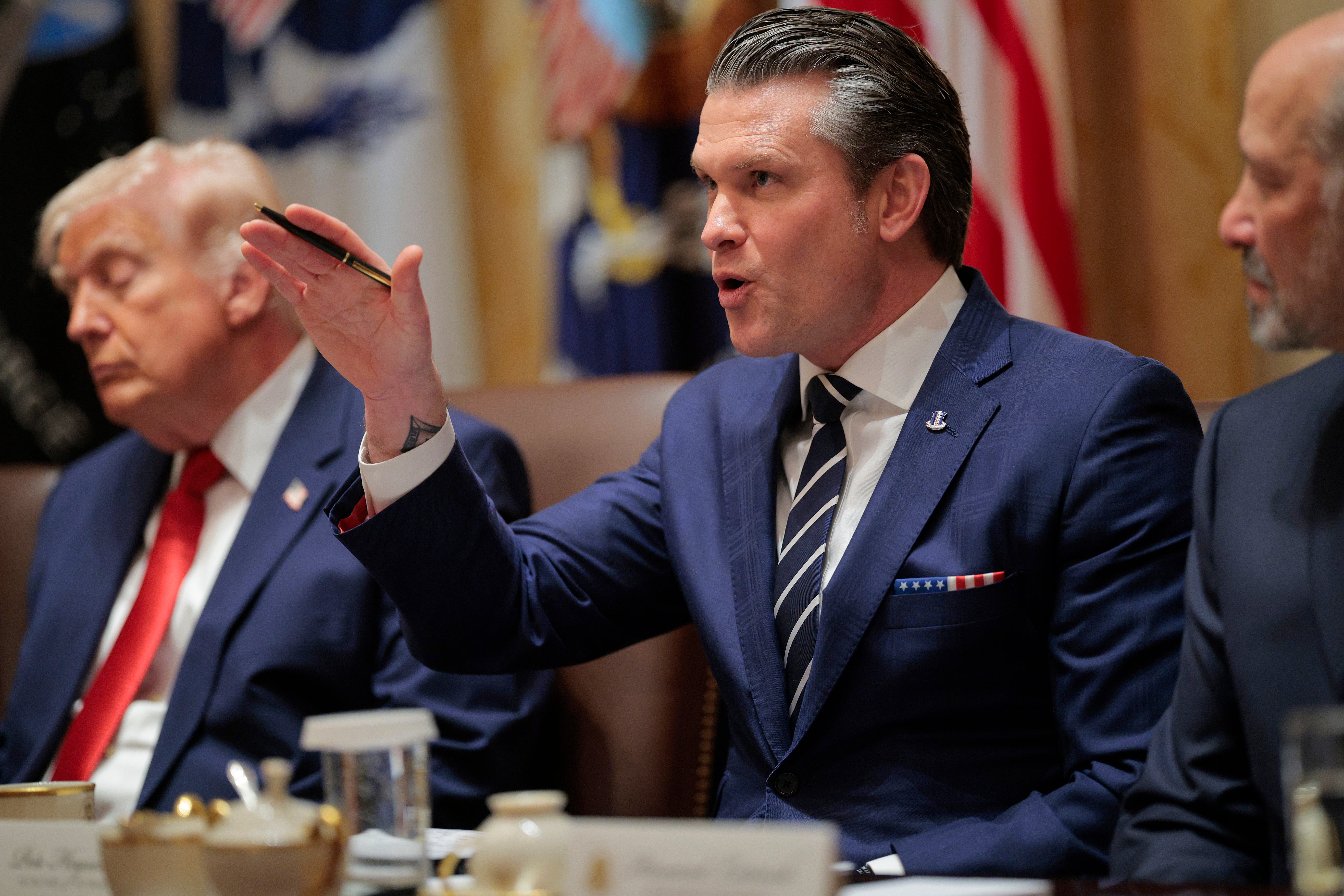 U.S. Secretary of War Pete Hegseth speaks during a Cabinet meeting in the Cabinet Room of the White House on March 26, 2026 in Washington, DC. This is Trump's second Cabinet meeting of 2026 and the first since the United States and Israel began attacking Iran on February 28. (Photo by Chip Somodevilla/Getty Images) (Getty)
Getty
U.S. Secretary of War Pete Hegseth speaks during a Cabinet meeting in the Cabinet Room of the White House on March 26, 2026 in Washington, DC. This is Trump's second Cabinet meeting of 2026 and the first since the United States and Israel began attacking Iran on February 28. (Photo by Chip Somodevilla/Getty Images) (Getty)
Getty
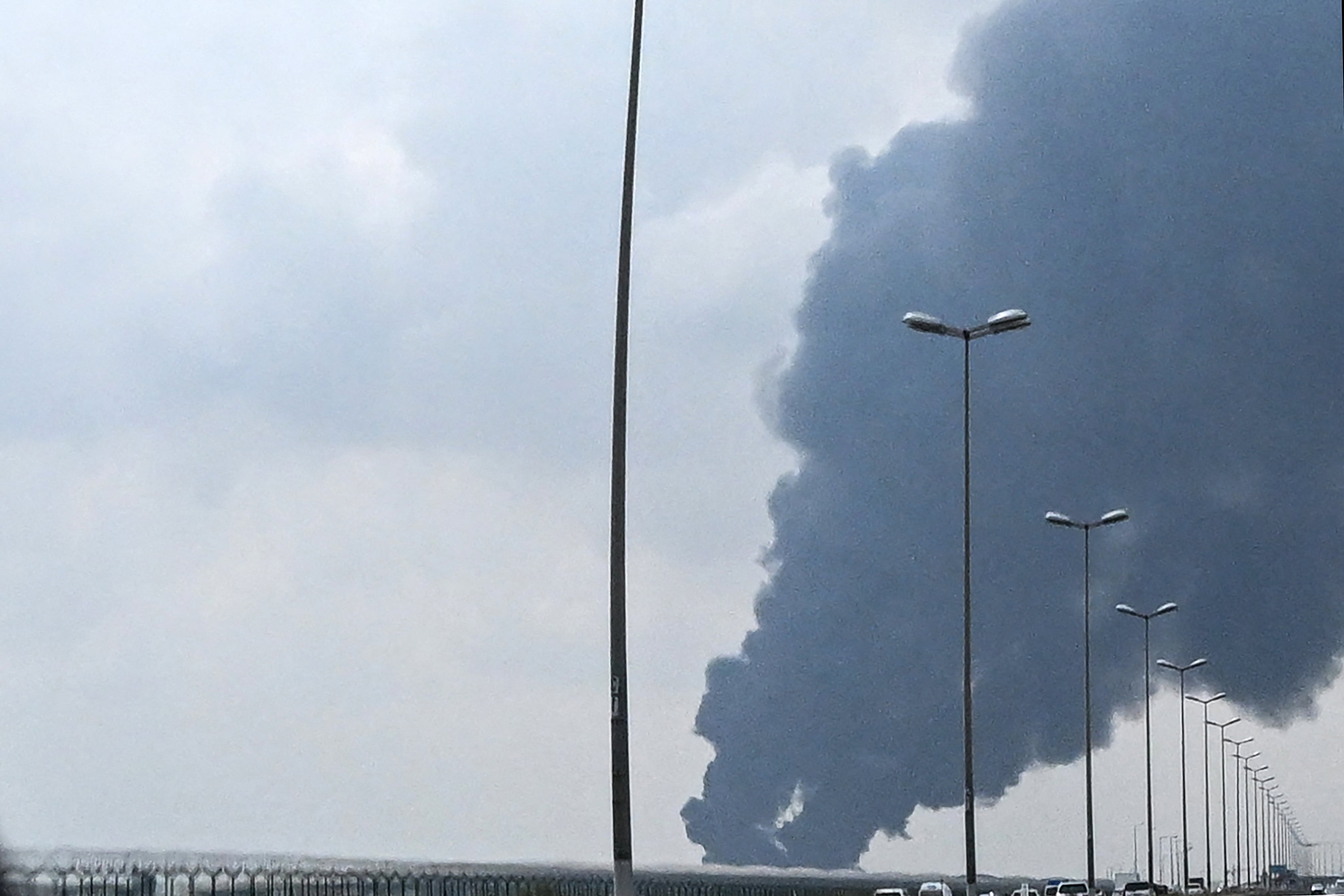 Smoke rises from the area of the Kuwait International Airport after a reported drone strike hit a fuel depot on March 25, 2026 (AFP/Getty)
AFP/Getty
Smoke rises from the area of the Kuwait International Airport after a reported drone strike hit a fuel depot on March 25, 2026 (AFP/Getty)
AFP/Getty
 Reuters (Reuters)
Reuters
Reuters (Reuters)
Reuters
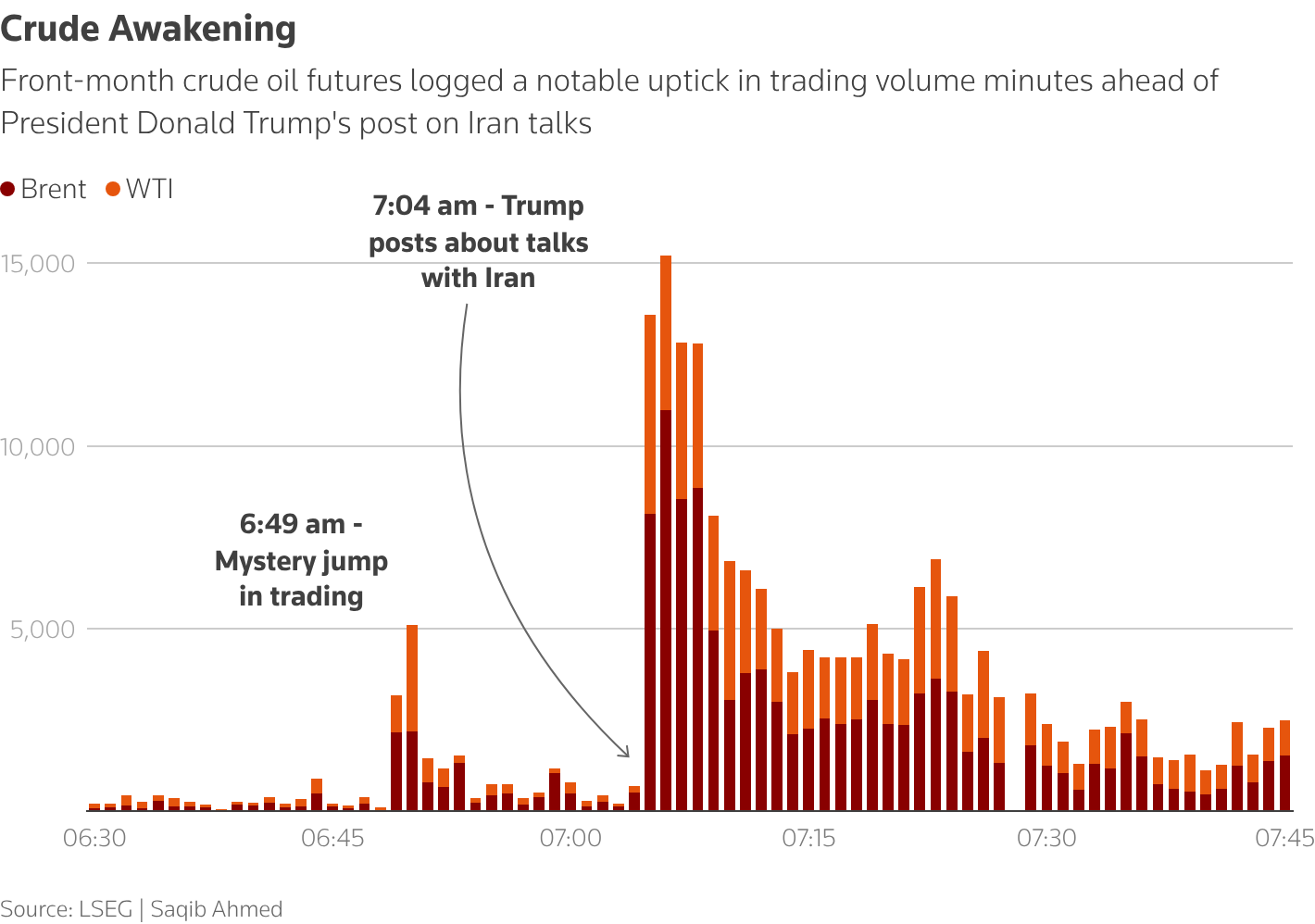
Several unusually well-timed wagers and options trades placed shortly before major Trump administration announcements have prompted calls for regulators to examine whether government information is leaking into markets. Reuters, cited by The Independent, reviewed activity around decisions on tariffs, Venezuela and Iran that moved prices across commodities, equities-linked derivatives and prediction markets.
The pattern matters because war and sanctions policy behave like scheduled volatility events. A handful of people know the decision, the announcement time can be anticipated, and the price sensitivity is extreme: crude, refined products, shipping rates, insurance premia, defence stocks and even short-dated interest-rate expectations can all gap on a single statement. In that setting, “information” does not need to be a classified document; it can be a hint about whether a meeting went well, whether a strike package is on the table, or whether a waiver will be extended. The leverage is built in: options and futures magnify small informational edges into large gains, and prediction markets let participants express directional views without needing a brokerage account or a balance sheet.
Reuters quotes Andrew Verstein of UCLA saying the trades look like the kind of pattern one would expect if informed actors were trading, while cautioning that the sample is limited. Aitan Goelman, a former enforcement director at the Commodity Futures Trading Commission, told Reuters that such trades would normally be “anomalous and interesting” to regulators, but added that commodities insider-trading law is comparatively young and less litigated than its securities equivalent. That gap is part of the attraction. Equity insider trading has decades of case law and surveillance norms; commodities and derivatives enforcement is patchier, and prediction-market oversight is still contested.
The White House response, via spokesman Kush Desai, was to point to ethics rules barring federal employees from profiting from nonpublic information and to call insinuations “baseless” without evidence. That is the practical problem: the trades can be real, the incentives obvious, and the proof elusive. A trader can claim a hedge, a macro thesis, or luck. A friend-of-a-friend can route trades through entities that never touch a government payroll. Even when exchanges flag “red” activity, the path from suspicious timing to a provable duty breach is narrow.
A month into a Middle East conflict that has already repriced freight, fuel and insurance globally, the value of being early is not theoretical. It is measurable in basis points, spreads and margin calls.
Reuters’ review found only a handful of episodes. In markets where one press line can move billions, that is still enough to justify asking who knew what and when.