
Trump birthright citizenship case reaches Supreme Court
Administration cites 1884 Elk v Wilkins ruling on Native Americans, citizenship definition shifts from constitutional guarantee to administrative test
Images
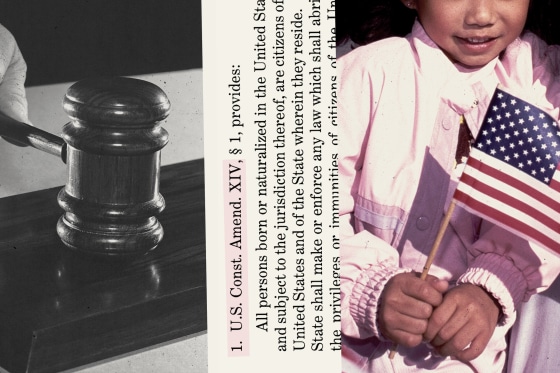 “All persons born or naturalized in the United States, and subject to the jurisdiction thereof, are citizens of the United States," the 14th Amendment states.
nbcnews.com
“All persons born or naturalized in the United States, and subject to the jurisdiction thereof, are citizens of the United States," the 14th Amendment states.
nbcnews.com
 High-stakes Supreme Court cases in 2026
nbcnews.com
High-stakes Supreme Court cases in 2026
nbcnews.com
Trump’s administration will ask the US Supreme Court this week to revisit the meaning of birthright citizenship, leaning in part on an 1884 ruling that denied citizenship to a Native American man, John Elk. According to NBC News, the government cites Elk v. Wilkins as support for President Donald Trump’s executive order limiting automatic citizenship at birth to children with at least one parent who is a US citizen or lawful permanent resident. Lower courts have blocked the order from taking effect.
The legal fight turns on a short phrase in the 14th Amendment: “subject to the jurisdiction thereof.” For more than a century, the dominant reading has treated birth on US soil as the decisive fact, with narrow exceptions such as children of diplomats. The administration’s argument tries to widen the exception by reframing “jurisdiction” as something closer to political membership, not merely the government’s power to regulate or prosecute. In court papers, Solicitor General D. John Sauer argues that the Supreme Court has “squarely rejected” the idea that anyone born in US territory is automatically a citizen simply because the federal government can regulate them.
Elk v. Wilkins is an awkward tool for that job. The case arose after an Omaha election official refused to register Elk to vote because he was Native American; Elk argued he had severed ties with his tribe and submitted himself to US authority. The court ruled he was not a citizen at birth because tribal members were born into a separate political community. As NBC News notes, Native American law experts say that logic is tied to the “quasi-sovereign” status of tribes, not to immigration status. Leonard Fineday of the National Congress of American Indians called the administration’s reliance on Elk “misplaced,” and scholars backing the legal challenge argue the government is lifting a narrow holding out of its original context.
Still, the choice of precedent signals something larger than a courtroom tactic. When policy runs into statutory limits, Congress, or political cost, the executive branch often looks for older doctrines that can be repurposed as administrative gatekeeping. Birthright citizenship is especially vulnerable to this kind of “definition by memo” because the practical machinery of citizenship—birth certificates, passports, Social Security numbers—runs through agencies that can be instructed to treat a category of newborns differently long before the Supreme Court settles the theory. Even when an order is enjoined, the litigation itself becomes a testing ground: which arguments draw sympathetic questions, which agencies can plausibly claim discretion, and how far the government can push before courts impose a bright line.
Notably, NBC News reports that no Native American tribes or major Indigenous organizations filed briefs in the case, leaving the administration to invoke a landmark tribal-status ruling without the communities most implicated weighing in as parties. The case’s immediate target is the children of immigrants, but the legal scaffolding is being built from a precedent about political belonging and exclusion.
Oral arguments are scheduled for Wednesday. Trump’s executive order remains blocked, but the administration is already treating an 1884 voting dispute in Omaha as a template for redefining citizenship in 2026.