
South Africa renames Graaff-Reinet to Robert Sobukwe
Survey finds over 80 percent local opposition as minister approves change, symbolism moves faster than municipal paperwork
Images
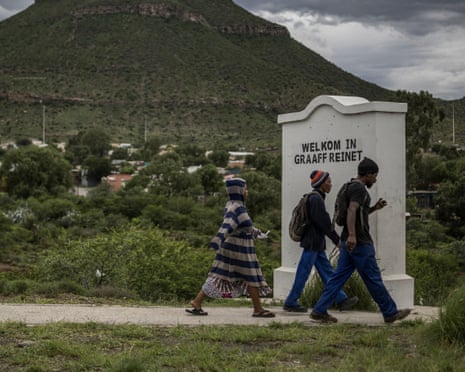 A survey in December 2023 found that over 80% of the town’s residents opposed the name change. Photograph: Marco Longari/AFP/Getty Images
theguardian.com
A survey in December 2023 found that over 80% of the town’s residents opposed the name change. Photograph: Marco Longari/AFP/Getty Images
theguardian.com
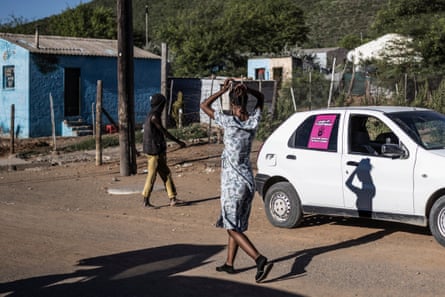 A car in the town displays a poster of the Hands Off Graaff-Reinet group. Photograph: Marco Longari/AFP/Getty Images
theguardian.com
A car in the town displays a poster of the Hands Off Graaff-Reinet group. Photograph: Marco Longari/AFP/Getty Images
theguardian.com
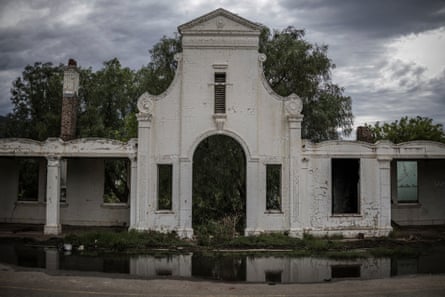 The old train station in the town, whose centre is filled with elegant, white-washed Cape Dutch buildings. Photograph: Marco Longari/AFP/Getty Images
theguardian.com
The old train station in the town, whose centre is filled with elegant, white-washed Cape Dutch buildings. Photograph: Marco Longari/AFP/Getty Images
theguardian.com
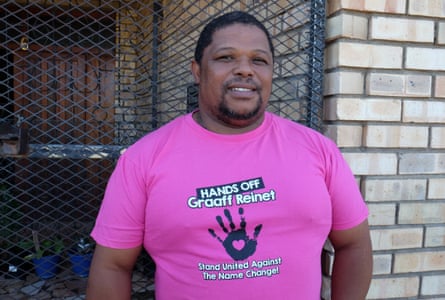 Laughton Hoffman said the name Graaff-Reinet had become ‘a benefit for the people and economy of the town’. Photograph: Rachel Savage/The Guardian
theguardian.com
Laughton Hoffman said the name Graaff-Reinet had become ‘a benefit for the people and economy of the town’. Photograph: Rachel Savage/The Guardian
theguardian.com
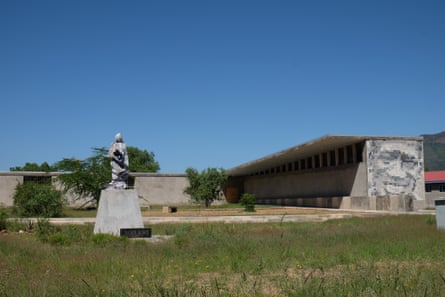 A covered-up statue of Robert Sobukwe, outside the closed Robert Mangaliso Sobukwe Museum in the town. Photograph: Rachel Savage/The Guardian
theguardian.com
A covered-up statue of Robert Sobukwe, outside the closed Robert Mangaliso Sobukwe Museum in the town. Photograph: Rachel Savage/The Guardian
theguardian.com
South Africa’s sports, arts and culture minister Gayton McKenzie has approved changing the name of the town of Graaff-Reinet to Robert Sobukwe, a decision that has triggered petitions, rival marches and formal complaints from residents, The Guardian reports. The town, founded in 1786 and named after the Dutch governor Cornelis Jacob van de Graaff and his wife, would instead honour Sobukwe, the anti-apartheid activist born and buried there who later founded the Pan Africanist Congress and led protests against apartheid pass laws before the Sharpeville massacre of 1960.
Name changes are not new in South Africa: an official database shows more than 1,500 placenames changed between 2000 and 2024, including hundreds of post offices, scores of rivers and several airports. Port Elizabeth became Gqeberha in 2021. The department framed the latest batch of 21 changes, including Graaff-Reinet, as part of “restorative justice” aimed at correcting colonial and apartheid-era naming legacies.
But the fight in Graaff-Reinet highlights a recurring feature of the process: the politics is cheap for decision-makers while the transaction costs land locally. New signage, maps, school and clinic stationery, business registrations, tourism marketing, and the slow grind of updating databases and addresses all take time and money. Those costs are fragmented across households and small firms, which makes them easy to ignore in national announcements.
Local opinion data cited by the paper points to a legitimacy gap. A December 2023 survey by Stellenbosch University geography professor Ronnie Donaldson found 83.6% of residents opposed the change, including 92.9% of Coloured respondents and 98.5% of white respondents; around a third of Black residents supported it. The survey sampled 367 people and reported the town’s demographic mix as 54% Coloured, 27.2% Black and 18.8% white. Donaldson wrote that many residents felt the change would erase part of their identity as “Graaff-Reinetters”.
Supporters argue that keeping colonial names preserves a public landscape built to honour rulers rather than the ruled, and that commemorating Sobukwe is part of completing the post-apartheid transition. Opponents, including residents who stress they are not defending Dutch colonialism as such, describe the existing name as a settled civic brand with economic value. One local non-profit leader told The Guardian that the town’s Cape Dutch architecture and established tourism identity are tied to the name that appears on travel guides and itineraries.
The pattern is familiar across municipalities: consultation becomes a formal ritual, while the final decision is made at ministerial level and the costs are pushed down to residents who must adapt. A national government can bank symbolic credit for “transformation” with a signature on a gazette notice; a small town must then live with the administrative consequences for years.
McKenzie’s decision was approved on 6 February. The dispute since then has played out in petitions, street demonstrations and letters—paperwork that will multiply if the new name becomes the one that banks, insurers and state registries require.