
Sudanese refugees reshape Libya’s Kufra oasis
Desert transit hub becomes labour market and ad hoc welfare system, identity checks replace paperwork when the state is absent
Images
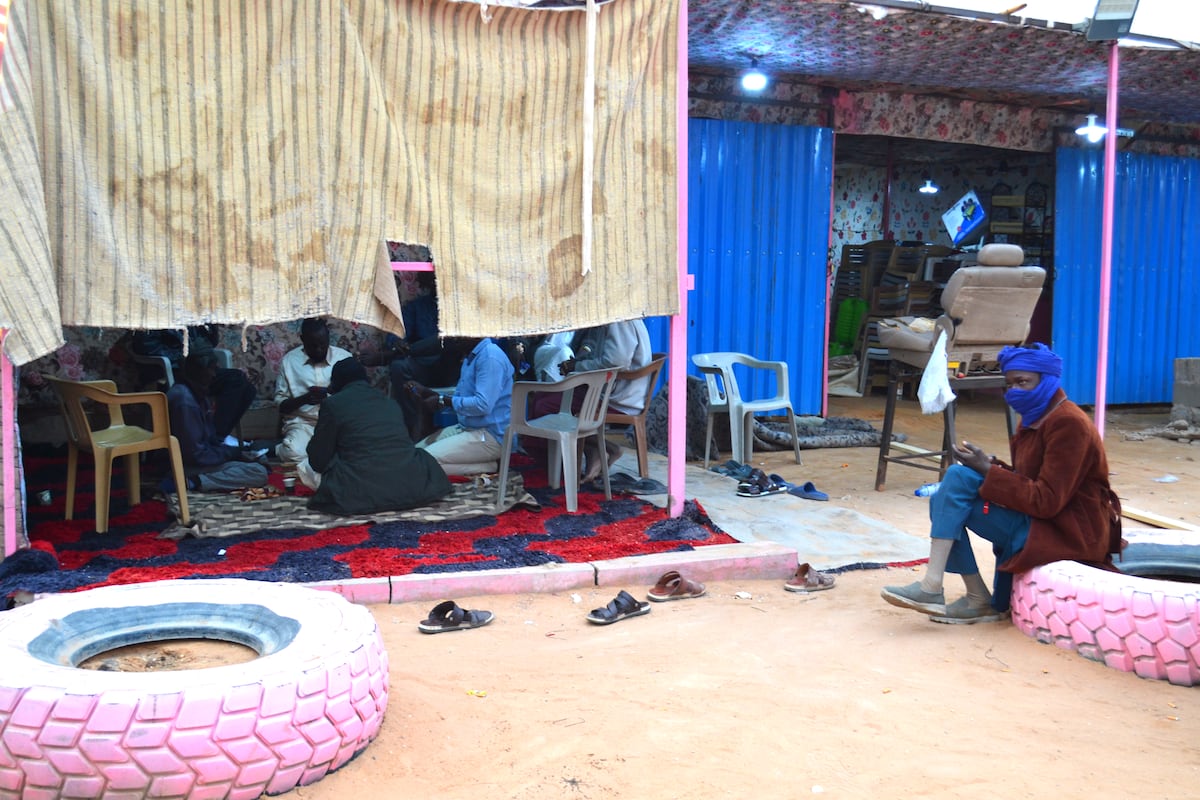 The Libyan desert oasis that welcomes thousands of Sudanese: ‘The refugees are our guests. They are our brothers’
english.elpais.com
The Libyan desert oasis that welcomes thousands of Sudanese: ‘The refugees are our guests. They are our brothers’
english.elpais.com
Thousands of Sudanese refugees have turned Kufra, a remote Libyan desert oasis, into a boomtown of makeshift “farms” and roadside commerce. El País reports that between 40,000 and 60,000 Sudanese are now in the city—close to its usual population—after fleeing a war that UNHCR says has displaced nearly 12 million people inside Sudan and pushed more than three million across borders.
Kufra is not a coastal transit hub or a European-facing embarkation point. It is an inland logistics node: the first Libyan city reachable from the southern borders of Egypt, Sudan and Chad, connected by long desert routes where control depends less on formal institutions than on fuel, cash, and local knowledge. In El País’ account, eight tracts of uncultivated land—called “farms”—have become semi-permanent camps. Around them, an informal economy has appeared with the kind of services that arrive when people stop expecting quick onward movement: grocery stalls built from tarpaulin and sheet metal, phone-charging points, shisha corners, card games, pool tables, and regular truck deliveries.
The arrangement works because Kufra already traded with Sudanese communities and shares religious and social ties. That social proximity becomes a screening mechanism. A local teacher told El País that when Sudanese refugees lose papers, residents “organize a meeting” to question them and verify identity, partly to stop other migrants—Chadians were mentioned—from passing as Sudanese. The same city that treats Sudanese as “brothers” keeps other migrants largely out of sight, often in detention centres.
The most concrete measure of what Kufra is buying with this accommodation is labour. The municipality says more than 70% of Kufra’s medical staff are Sudanese, and El País describes Sudanese working as porters, receptionists, waiters, teachers and day labourers, gathering at roundabouts to be hired by the day. For a marginalised, geographically isolated city that has struggled to staff its hospital, the influx is a workforce import that no national recruitment drive managed to deliver.
But the same dynamic that supplies nurses and doctors also shifts costs onto private households and local gatekeepers. Refugees pay their way into the system—one woman told El País it took a month and a “fortune” to reach Kufra—then compete for housing and casual work in a place with limited infrastructure. When the state cannot expand services quickly, the rationing happens elsewhere: in rents, in who gets verified as “one of us,” and in the informal rules that decide who can trade, work, and stay visible.
Kufra is absorbing a war next door by turning identity checks, day wages, and hospital staffing into its migration policy. The city’s most reliable border control appears to be a community meeting over missing papers.