
Los Angeles No Kings protest ends with tear gas and arrests
Organisers claim 3300 events nationwide, federal officials say video review will drive more arrests
Images
 newsweek.com
 newsweek.com
 Iran War Forces Energy-Saving in East Asia, Middle East: ‘Imminent Danger’
newsweek.com
Iran War Forces Energy-Saving in East Asia, Middle East: ‘Imminent Danger’
newsweek.com
 Trump Stronghold Holds Largest Ever ‘No Kings’ Protest
newsweek.com
Trump Stronghold Holds Largest Ever ‘No Kings’ Protest
newsweek.com
 Suspect in Foiled Bank of America Attack Says He Was Recruited on Snapchat
newsweek.com
Suspect in Foiled Bank of America Attack Says He Was Recruited on Snapchat
newsweek.com
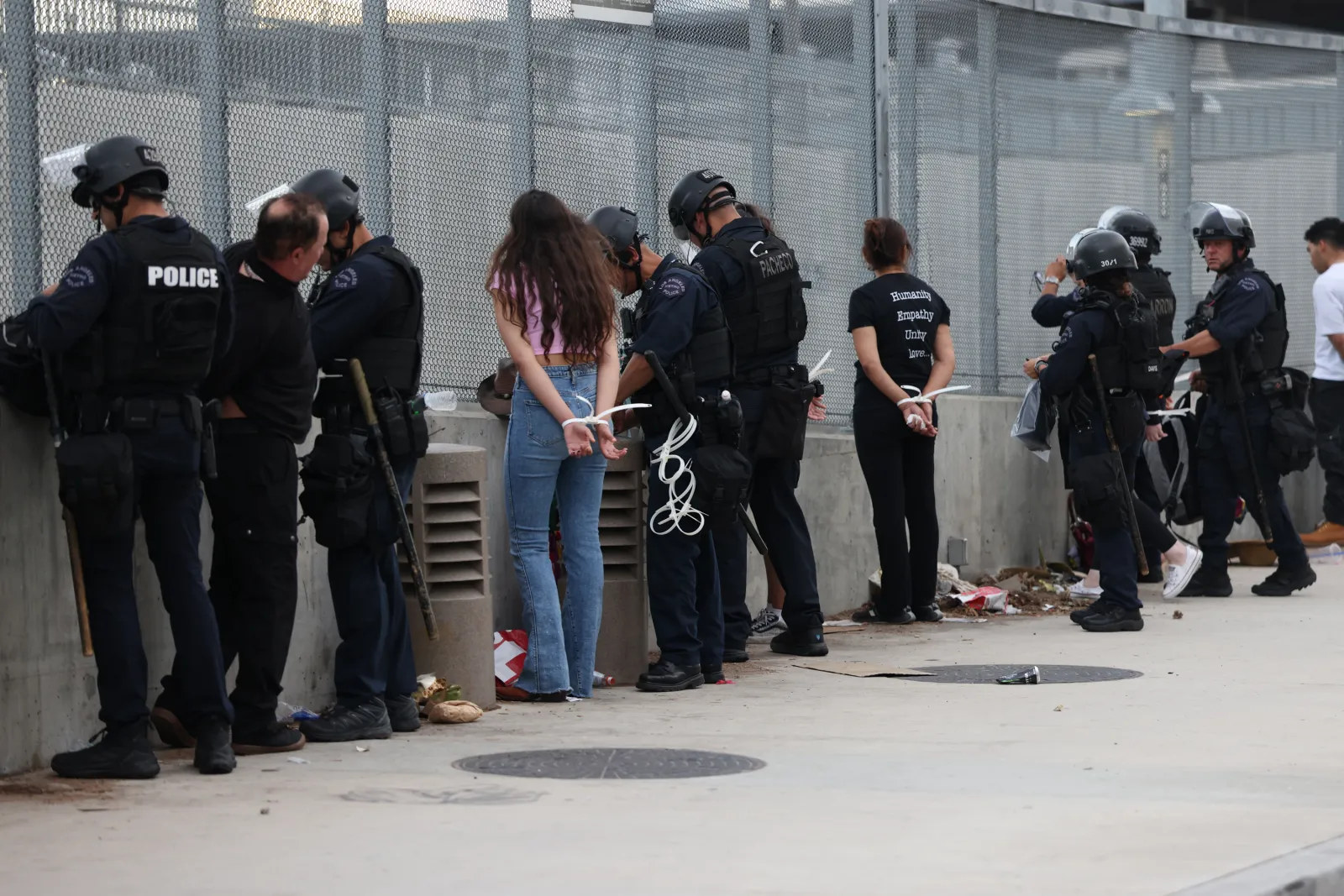
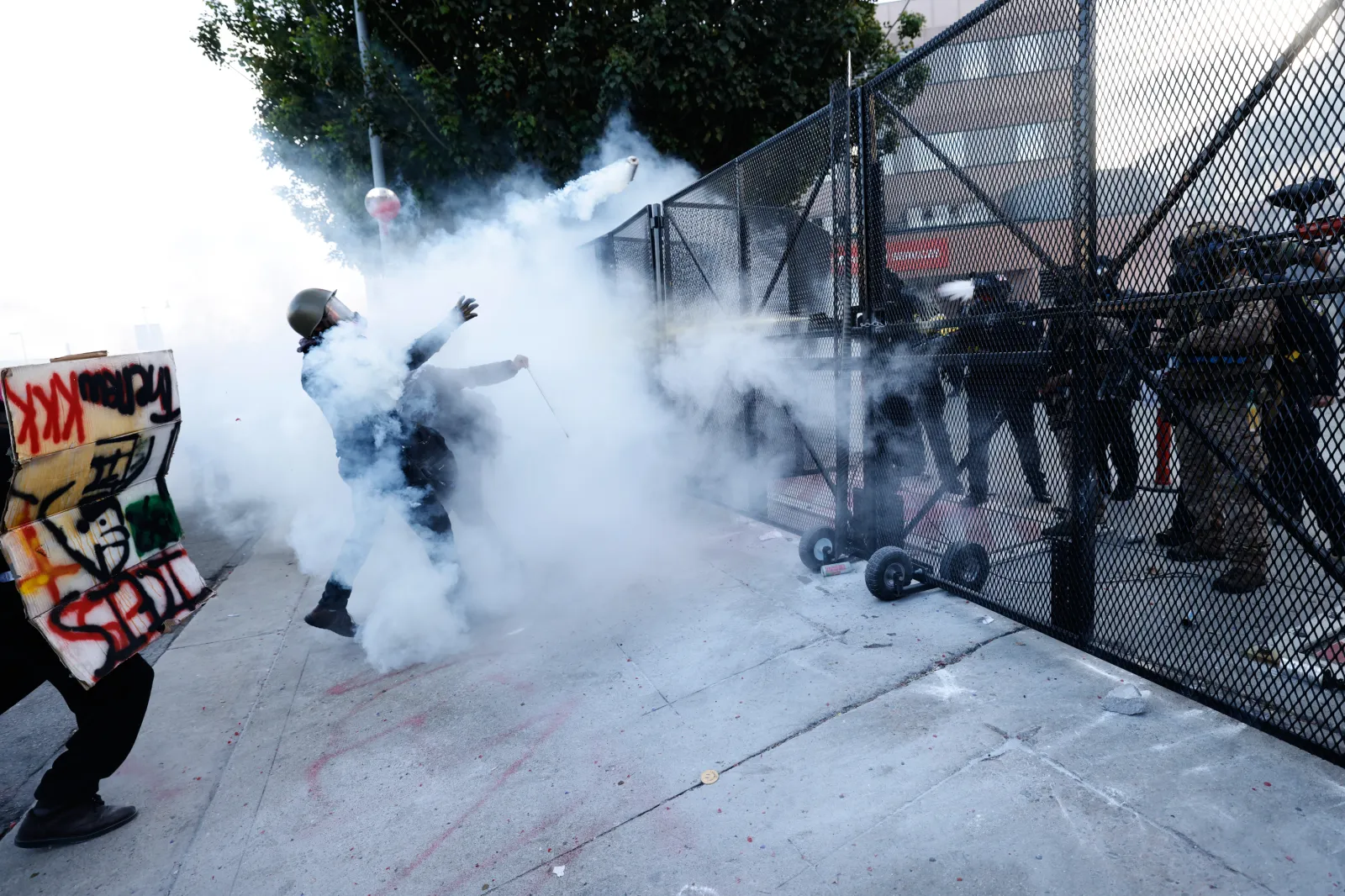
Los Angeles police made multiple arrests and used tear gas and less-lethal rounds near the Metropolitan Detention Center on Saturday night as a “No Kings” protest ended in a standoff. Newsweek reports that officers formed a skirmish line near Alameda and Commercial streets, issued dispersal orders, and then arrested demonstrators who remained.
The confrontation came on a day the organisers described as the largest single-day protest in U.S. history: more than 3,300 events across all 50 states and an estimated 8 million participants. In Los Angeles alone, the Los Angeles Times had reported expectations of more than 100,000 participants spread across multiple locations. The scale matters because it turns protest from a local political act into a repeatable national product: a name, a schedule, a toolkit for local organisers, and a centralised claim about turnout that can be used to solicit attention and money.
Newsweek describes a pattern that has become routine in large demonstrations: a daytime march that remains broadly peaceful, followed by “splinter groups” staying after the main event, creating the conditions for a police operation that produces the night’s defining images. The LAPD said it issued a citywide tactical alert due to “incidents” near the detention centre, while federal officers were reported firing tear gas canisters into the crowd.
Officials on both sides framed the evening as a warning. Mayor Karen Bass urged protesters to stay safe and described peaceful protest as a constitutional right. Bill Essayli, the first assistant U.S. attorney, said federal agents were reviewing video footage and had begun arresting those accused of assaulting personnel, adding: “We have you on video.”
That feedback loop is reliable: mass events generate media coverage and fundraising; the inevitable disorder at the margins generates arrests and surveillance; the promise of more enforcement becomes part of the story that motivates the next mobilisation. Each round also leaves behind a larger archive of faces, footage, and case files than the one before.
By Sunday morning, the most concrete outcome from Los Angeles was not a policy change but a list of arrests near a federal jail and a statement that investigators were working through video.