
US intelligence doubts Iran missile losses
Reuters says only one third certainly destroyed after month of strikes, interceptor stockpiles become the limiting factor
Images
 While about a third of Iran’s missiles are destroyed, another third was likely damaged or buried under underground tunnels and bunkers. Photograph: Sepahnews Handout/EPA
theguardian.com
While about a third of Iran’s missiles are destroyed, another third was likely damaged or buried under underground tunnels and bunkers. Photograph: Sepahnews Handout/EPA
theguardian.com
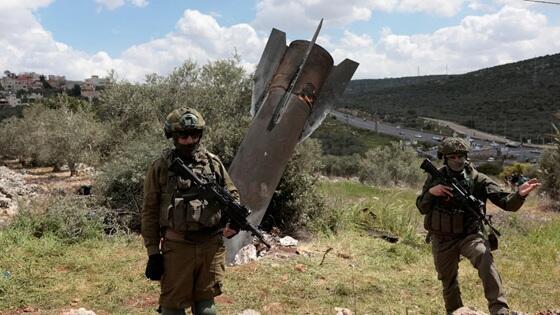 via Reuters
zerohedge.com
via Reuters
zerohedge.com
US intelligence assessments suggest the month-long US-led campaign against Iran has “only” certainly destroyed about a third of Tehran’s missile and drone arsenal, according to Reuters, directly contradicting President Donald Trump’s claim that Iran has “very few rockets left”. Another third of the stockpile is assessed as damaged or buried under tunnels and hardened sites, leaving a remaining portion still usable or at least not confidently accounted for.
The gap between public certainty and intelligence caveats matters because this war is being fought as much in inventories as in airspace. Iran can make a handful of surviving launchers and missiles count if Western and Gulf air defences are forced to expend interceptors faster than they can be replaced. Reuters notes that Israel says it has “neutralised” 335 Iranian missile launchers—about 70% of launch capacity—but also that Iran has dispersed launchers across the country and stored much of its stockpile underground, making precise accounting difficult. A US official told Reuters it may be impossible to ever produce a definitive number.
That uncertainty collides with a second, more mechanical constraint: the West’s own munitions burn-rate. Zero Hedge, citing reporting from The Washington Post, says the US has fired more than 850 Tomahawk cruise missiles in four weeks, while only a few hundred are produced annually. Even if Tehran’s missiles are degraded, the exchange rate can still favour the side that forces the other to spend expensive rounds on cheap threats or to keep high-end systems on station for weeks.
The operational logic is visible in Trump’s own framing. He argued that even “1%” of Iranian missiles remaining is unacceptable if it means a single hit on a billion-dollar ship in the Strait of Hormuz. That standard effectively commits the US and its partners to near-perfect defence over a wide area, for an open-ended period, while Iran’s goal can be narrower: occasional penetrations that raise insurance costs, disrupt schedules and push commercial shipping into political bargaining.
Iran’s leadership has long treated its missile programme as a deterrent compensating for conventional inferiority against the US and Israel, Reuters reports. If a meaningful fraction of the arsenal is merely buried rather than destroyed, Tehran can treat time as an ally—digging out, relocating, or waiting for interceptor stocks to thin. Markets and shipping insurers respond to the risk that remains, not to the claims made at the podium.
On Thursday, Iran fired 15 missiles and 11 drones at the United Arab Emirates, according to the UAE defence ministry. The sortie was small by earlier-war standards, but it demonstrated that “very few rockets left” still looks like enough to keep air defences working overtime.