
Zelenskyy says Russia scouted Saudi US air base before Iranian strike
Kyiv argues Moscow shares targeting intelligence with Tehran, one war narrative competes for the same US interceptors
Images
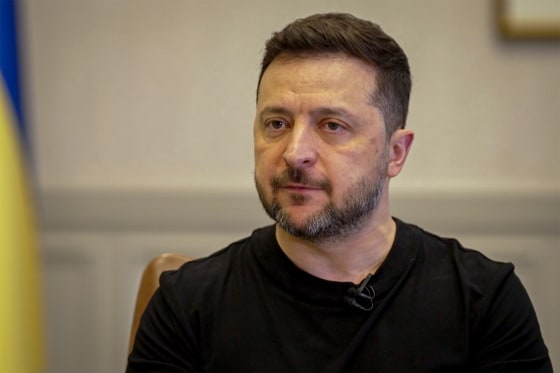 Volodymyr Zelenskyy.
nbcnews.com
Volodymyr Zelenskyy.
nbcnews.com
Ukrainian President Volodymyr Zelenskyy says Russian satellites photographed a US air base in Saudi Arabia three times in the week before Iran struck it on March 26, wounding American service members. Speaking to NBC News in Doha on March 28, Zelenskyy said he was “100%” confident Moscow shared targeting intelligence with Tehran, and described repeated imaging as a signature of attack planning.
If true, the claim does more than add another line to the long list of Russia–Iran military links. It offers a ready-made storyline European capitals can use to treat the Ukraine war and the Middle East escalation as one connected theatre: the same drones, the same missiles, the same adversary network, the same “rules-based” response. Zelenskyy is explicit about the practical dividend he wants from that framing. He is touring Gulf states to sell “battle-tested” Ukrainian air-defence know-how and says Saudi Arabia and Qatar have signed defence agreements that pair Ukrainian technical assistance with “billions” of dollars of investment in Ukraine’s defence industry.
The overlap is real. Iran’s Shahed drones have been used extensively by Russia against Ukraine, and NBC notes earlier reporting that Russia was providing Iran intelligence on US force locations in the region. Russia’s foreign minister Sergey Lavrov has denied sharing intelligence while acknowledging equipment transfers under a “long-standing military alliance.” But the political utility of a single meta-conflict does not depend on courtroom-grade proof. It depends on whether leaders can keep domestic coalitions aligned behind sanctions, procurement and industrial policy while the costs—energy, credit, and supply-chain insurance—arrive in household bills.
The trade-offs are already visible. Zelenskyy says he is “very worried” that US interceptors and other munitions could be diverted from Ukraine to the Middle East as American-made missile defence stocks are drained by daily Iranian attacks. That is the kind of zero-sum constraint Europe’s own rhetoric often obscures: the continent can describe itself as a strategic actor while remaining dependent on US production lines, US inventories and US political priorities.
Zelenskyy also links the Middle East war to Russia’s budget via oil prices and sanctions enforcement. He argues that higher prices and any easing of restrictions on Russian oil translate into more money for weapons. The mechanism is straightforward: battlefield narratives travel faster than supply curves, but commodity revenues settle accounts.
Zelenskyy’s briefing summary says Russian satellites imaged Prince Sultan Air Base on March 20, 23 and 25. Iran hit the base on March 26, and NBC reports that US officials said the injuries were not life-threatening.