
BBC defends BBC Arabic role in Gaza coverage
World Service chief says service brings Israeli perspective to Arabic audiences, impartiality case rests on being the outlier
Images
 Yasmine Abu Khadra of BBC Arabic. The service reaches nearly 40 million people in the region each week. Photograph: BBC
theguardian.com
Yasmine Abu Khadra of BBC Arabic. The service reaches nearly 40 million people in the region each week. Photograph: BBC
theguardian.com
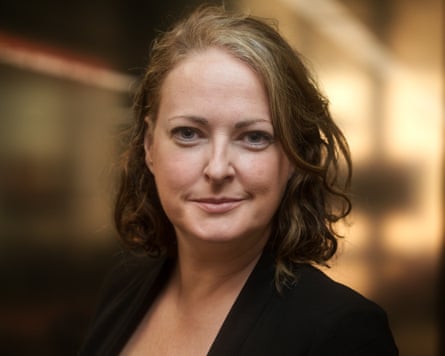 Fiona Crack: ‘Where there have been mistakes, we have said there have been mistakes.’ Photograph: Giovanni Bello
theguardian.com
Fiona Crack: ‘Where there have been mistakes, we have said there have been mistakes.’ Photograph: Giovanni Bello
theguardian.com
BBC World Service director Fiona Crack has defended BBC Arabic as a rare outlet in the region that puts Israeli voices and internal Israeli politics on Arabic-language airwaves, according to an interview with the Guardian. The service reaches nearly 40 million people a week, she said, and without it “we wouldn’t have heard Israeli perspective” during the Gaza war. Her comments come after sustained criticism of BBC Arabic’s editorial choices and guest bookings, including contributors whose past social-media posts contained antisemitic statements.
Crack’s defence is striking because it shifts the argument for a publicly funded broadcaster away from neutral procedure and toward strategic positioning: BBC Arabic is presented as valuable because it carries content that other Arabic broadcasters—many of them state-linked Gulf channels—will not. In the Guardian interview, Crack cited examples from early in the regional conflict involving the US, Israel and Iran, including a Saudi oil-refinery fire and downed jets, where she said BBC Arabic reported incidents that other channels avoided. The implied benchmark is not a single BBC output standard but a competitive media landscape in which access, risk tolerance, and political ownership shape what becomes reportable.
That framing sits uneasily alongside the BBC’s insistence that it is “independent and impartial”. If a service is justified as a “lone voice” supplying a particular national or political perspective, it invites audiences to treat it as a counter-propaganda instrument rather than a referee. It also creates a measurable incentive problem: the more BBC Arabic is attacked in its target markets for being “pro-Israeli”, the more that hostility can be repurposed in the UK as proof of balance and necessity. A public broadcaster that must periodically defend its budget and remit can end up selling its existence through geopolitical distinctiveness—something closer to a foreign-policy asset than a news product.
The BBC has tried to address a different set of incentives as well: the risk that a high-volume, fast-moving service will cut corners on contributor vetting to maintain output. The Guardian reports that BBC Arabic has been overhauling editorial oversight for 18 months, including deeper checks on guests and tighter standards supervision, after criticism in the UK and a memo to the BBC board from Michael Prescott, a former external adviser to the BBC’s editorial guidelines and standards committee. The memo cited, among other cases, a contributor who had previously written online that Jews should be burned “as Hitler did” and another who described Jews as “devils”; the BBC has said one should not have been featured as he was and that the other has been barred from appearing again.
BBC Arabic is now being defended simultaneously as a uniquely positioned broadcaster in a hostile information environment and as a service that required an internal compliance rebuild to keep extremists off air.
In the Guardian’s telling, the BBC’s answer to both problems is the same: more oversight, more sourcing, and a clearer story about why the service exists.