
Humpback whale strands again in Germany
Rescue channel frees animal at Timmendorfer Strand but it reappears stuck near Wismar, repeated interventions test what counts as a successful wildlife response
Images
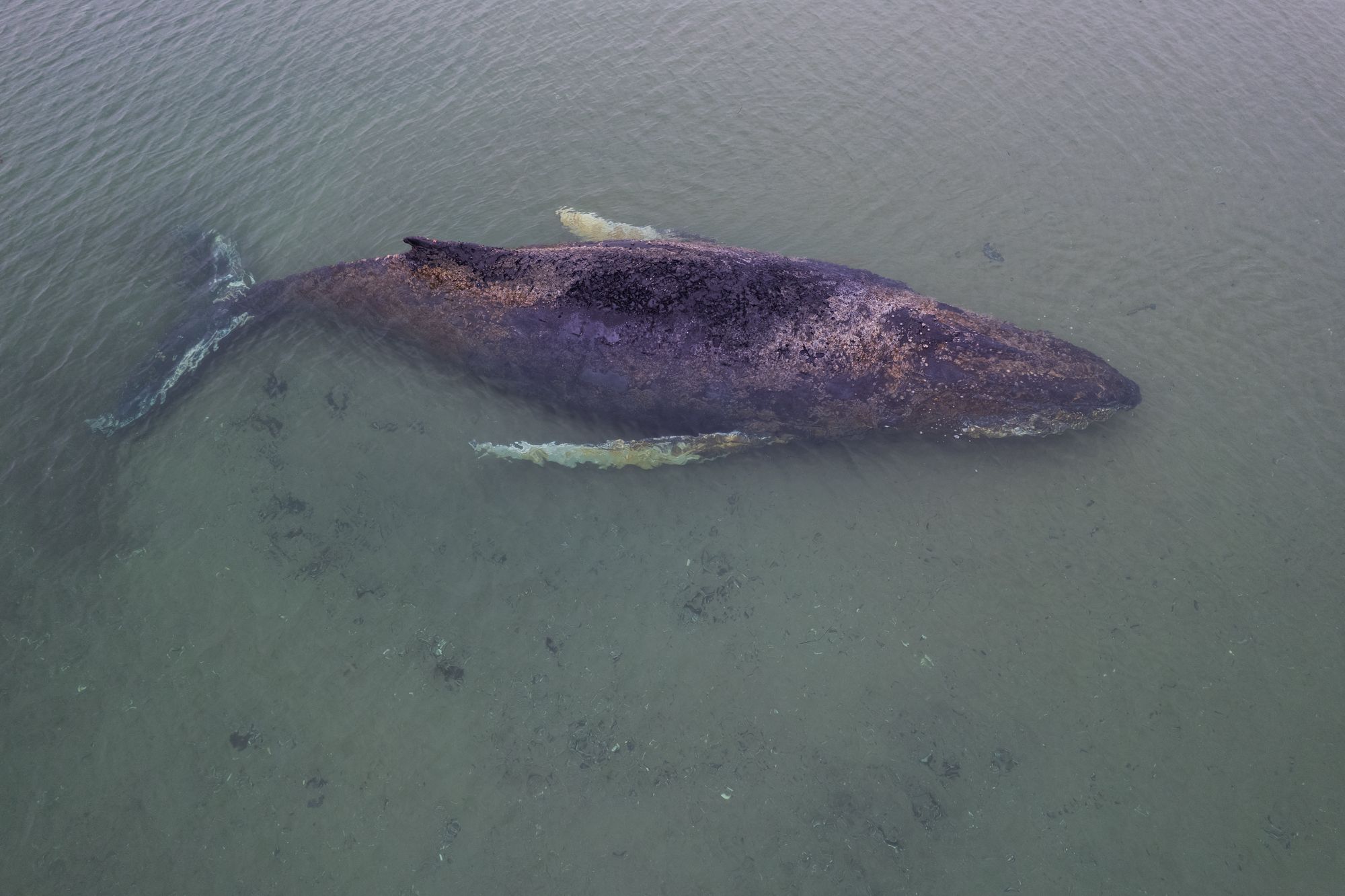 his aerial view taken on March 24, 2026 and handed out by Sea Shepherd Deutschland shows a standed humpback whale off the Baltic Sea coast of Timmendorfer Strand near Luebeck, northern Germany (AFP/Getty)
AFP/Getty
his aerial view taken on March 24, 2026 and handed out by Sea Shepherd Deutschland shows a standed humpback whale off the Baltic Sea coast of Timmendorfer Strand near Luebeck, northern Germany (AFP/Getty)
AFP/Getty
A humpback whale measuring roughly 12 to 15 metres was freed from a sandbank off Timmendorfer Strand on Germany’s Baltic coast and then stranded again a day later in Wismar Bay, according to The Independent citing German news agency dpa and confirmations from Greenpeace.
The episode is a reminder that “rescue” for a large marine mammal is not a single event but a sequence of decisions made under uncertainty: about the animal’s condition, about why it entered the Baltic in the first place, and about whether intervention reduces the chance of a repeat stranding. The first operation reportedly involved an excavator cutting a channel through a sandbank and boats attempting to create waves to push the whale into deeper water. The animal eventually swam through the man‑made channel, after which rescuers lost track of it until it was spotted further east.
For scientists, repeated strandings point back to navigation and orientation rather than brute strength. Baleen whales rely on a mix of cues—coastline geometry, currents, sound, and, in some species, sensitivity to Earth’s magnetic field—to stay on migratory routes. The Baltic is a shallow, semi‑enclosed sea with heavy vessel traffic and complex coastal acoustics; a whale that enters it may find fewer reliable “exit” signals than in the open North Sea. Local experts quoted by The Independent floated a prosaic trigger: the whale may have followed a shoal of herring into waters that are easy to enter but hard to leave.
The practical question for wildlife authorities is what success means. A dramatic extraction can satisfy public pressure while leaving the underlying problem—disorientation, exhaustion, or illness—untouched. The Independent reports the whale already showed signs of a skin disease and that the Baltic’s lower salinity and different prey base make long‑term survival unlikely. That shifts the calculus: repeated attempts to refloat an animal could keep it alive long enough to reach the Danish straits and the Atlantic, or they could impose additional stress and injury, producing the same outcome after more effort.
Germany now faces a familiar dilemma in marine mammal response: whether to mount another complex intervention, or to treat the second stranding as evidence that the animal cannot navigate out under its own power.
The whale that drew nationwide live streams when an excavator carved it an escape route has, within days, ended up on another shallow Baltic bay.