
Trump says Cuba is next
Miami speech mixes Iran war bravado with a walk-back, negotiations run alongside public threats
Images
 newsweek.com
 Erika Kirk Feels the Heat
newsweek.com
Erika Kirk Feels the Heat
newsweek.com
 DHS Shutdown Crisis Continues As House GOP Rebukes Senate: What To Know
newsweek.com
DHS Shutdown Crisis Continues As House GOP Rebukes Senate: What To Know
newsweek.com
 Yemen Enters Iran War For First Time In Major Escalation
newsweek.com
Yemen Enters Iran War For First Time In Major Escalation
newsweek.com
 Donald Trump Reacts to Tiger Woods’ Rollover Crash: ‘Feel So Badly’
newsweek.com
Donald Trump Reacts to Tiger Woods’ Rollover Crash: ‘Feel So Badly’
newsweek.com
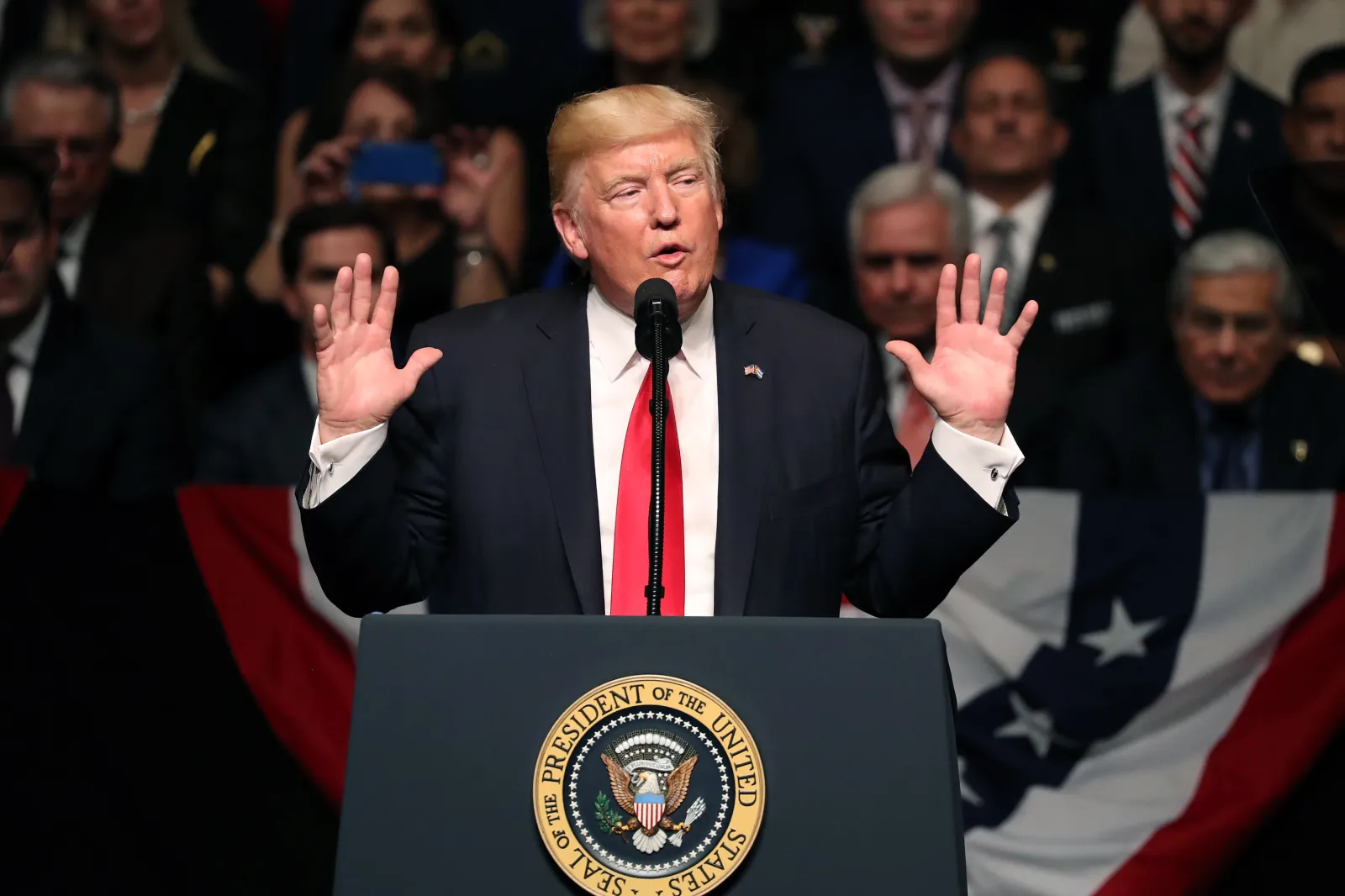
Donald Trump told an investment forum in Miami on Friday that “Cuba is next,” then immediately asked the media to “pretend I didn’t say that,” according to video cited by Al Jazeera and reported by Reuters. The remark came as Trump praised what he described as successful U.S. military operations in Venezuela and Iran, without offering any operational details about Cuba.
The line matters less as a war plan than as a public commitment that narrows room to manoeuvre. Once a president names a target, even jokingly, bureaucracies and allied interest groups begin treating the statement as a signal to prepare options, draft talking points, and test reactions. Newsweek notes that the administration has simultaneously opened talks with Cuban officials in recent weeks, with President Miguel Díaz-Canel confirming negotiations aimed at avoiding confrontation. That combination—private diplomacy paired with public menace—creates a familiar pattern in U.S. foreign policy: a negotiating track that depends on restraint, and a domestic political track that rewards escalation.
Miami is not a neutral venue. The city is a hub for exile politics, and Trump’s comment was delivered to an audience primed to hear Cuba as an unfinished project. A pro-Trump commentator quoted by Newsweek framed the moment as overdue “pressure” on the communist government and credited Secretary of State Marco Rubio with leading the push—an indication of how quickly rhetorical gestures become packaged as a coherent campaign. In that environment, ambiguity is not a bug: it allows hawkish donors and activists to hear a promise, while officials can later insist it was theatre.
Cuba’s own vulnerability also makes threats cheap to issue. Newsweek points to a deepening economic crisis and fuel shortages, worsened by the loss of Venezuelan oil shipments after Nicolás Maduro’s removal. When an economy is already constrained, additional U.S. pressure can be presented as decisive even if it merely compounds existing shortages. For European governments, the practical question is not whether Washington invades Havana, but whether a new Cuba confrontation triggers another round of sanctions compliance, financial de-risking, and diplomatic alignment demands—costs that land on European firms and institutions regardless of whether they supported the policy.
Cuba’s deputy foreign minister, Carlos Fernández de Cossío Domínguez, told NBC in comments cited by Newsweek that the U.S. has spent nearly seven decades trying to destroy Cuba’s system and failed. That is the other side of the “Cuba is next” slogan: the threat is easy to announce, but hard to cash out without committing resources and accepting second-order consequences.
Trump’s statement contained no timeline, no policy document, and no described military objective. It was delivered as a punchline in a room built to treat it as a pledge.