
Putin asks oligarchs to donate to Russia’s budget
Financial Times reports wartime finances shift from taxes to informal extraction, private capital becomes a loyalty test
Images
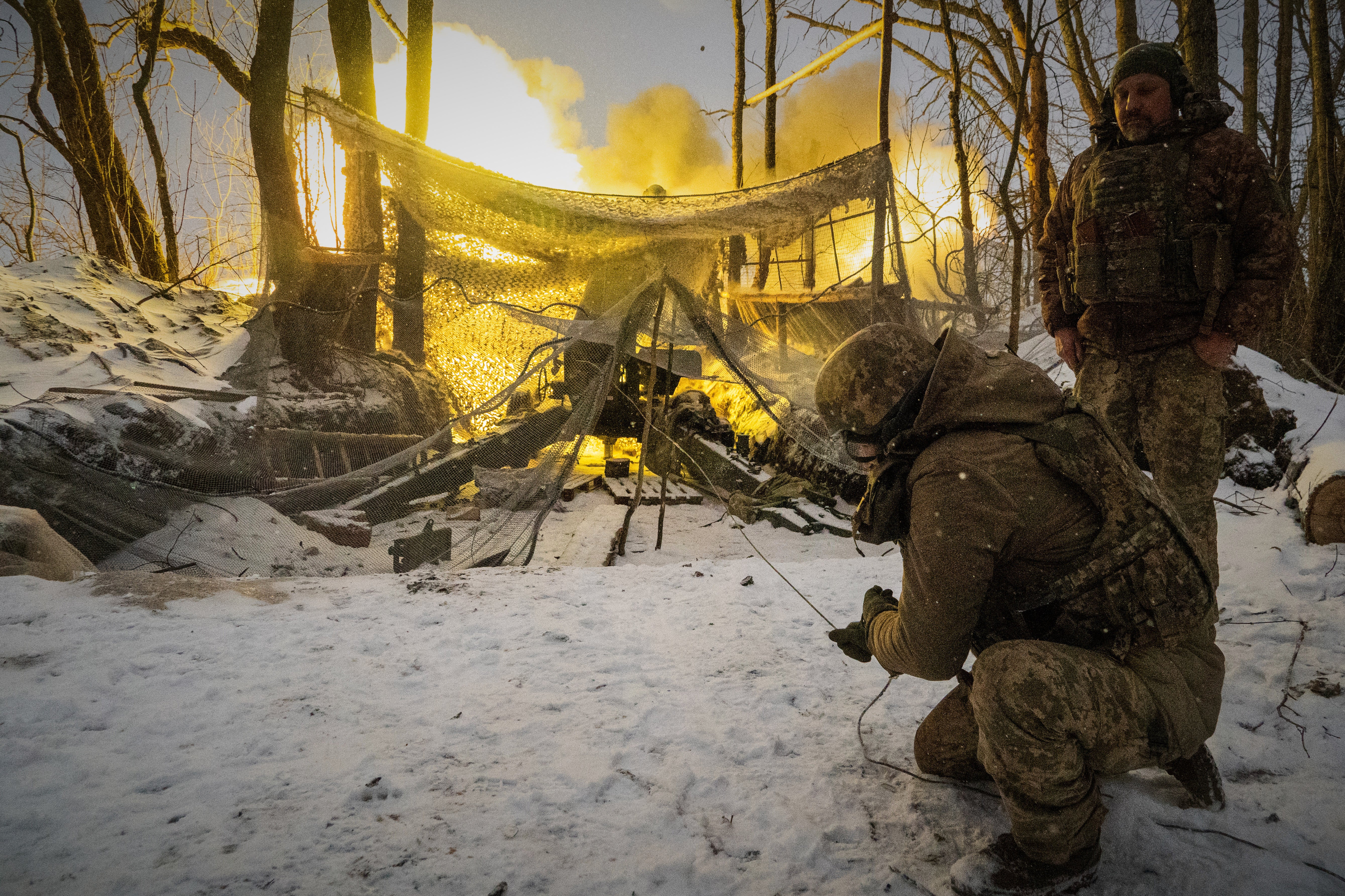 Ukrainian soldiers fire at Russian positions on the front line in the Kharkiv region of Ukraine (AP)
independent.co.uk
Ukrainian soldiers fire at Russian positions on the front line in the Kharkiv region of Ukraine (AP)
independent.co.uk
Vladimir Putin has asked some of Russia’s richest businessmen to make “donations” to the state budget as wartime spending grinds on and conventional financing becomes harder to extend.
The request, reported by the Financial Times and carried by Reuters, signals a shift from formal revenue tools—taxes, borrowing and inflation—toward something closer to political fundraising, where access and safety can be priced in cash transfers. The Independent, citing the same reporting, described the move as an attempt to stabilise state finances as the Kremlin continues its campaign in Ukraine.
Russia has spent years insulating its public finances from sanctions by building reserves, redirecting trade flows and leaning on domestic banks. But a war economy has a habit of turning every balance sheet into a state asset. When budgets tighten, the easiest money is often the money already inside the system: oligarchs with domestic holdings, regulated businesses and limited exit options. A “donation” is also faster than a tax bill. It avoids parliamentary procedure, legal appeals and the political cost of admitting that the state needs a new levy.
For the businessmen receiving the call, the calculation changes. Capital that might have gone into investment, dividends or offshoring is recast as a loyalty payment, and the price of noncompliance becomes unknowable. That tends to produce defensive behaviour: less long-term investment, more short-term cash extraction, and more effort spent on political protection rather than productivity. It can also widen the gap between insiders—who can negotiate their contribution—and everyone else, who pays through higher prices, inflation or forced mobilisation.
The Kremlin has used similar tactics before, from pressure on large firms to “voluntary” regional contributions and quasi-mandatory sponsorship of state priorities. What is new is the context: a prolonged war, sanctions that complicate foreign borrowing and trade finance, and a domestic economy increasingly organised around state procurement and security demands. When the state starts treating private fortunes as a contingency reserve, it is also telling markets that the rulebook is conditional.
The report says Putin also told oligarchs Russia would keep fighting until it controls the whole Donbas region. The budget, in other words, is being asked to fund an objective defined in territorial terms rather than in fiscal ones.