
Airgas declares force majeure on helium shipments
Qatar LNG disruption cuts supply for MRI and chipmaking, rationing starts with contract clauses not scarcity headlines
Images
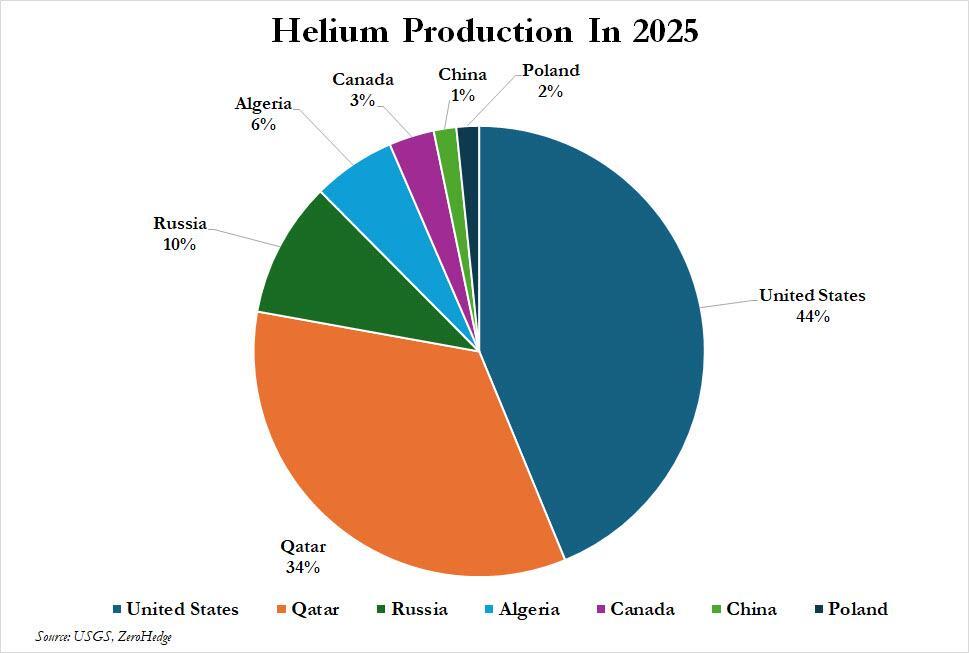 zerohedge.com
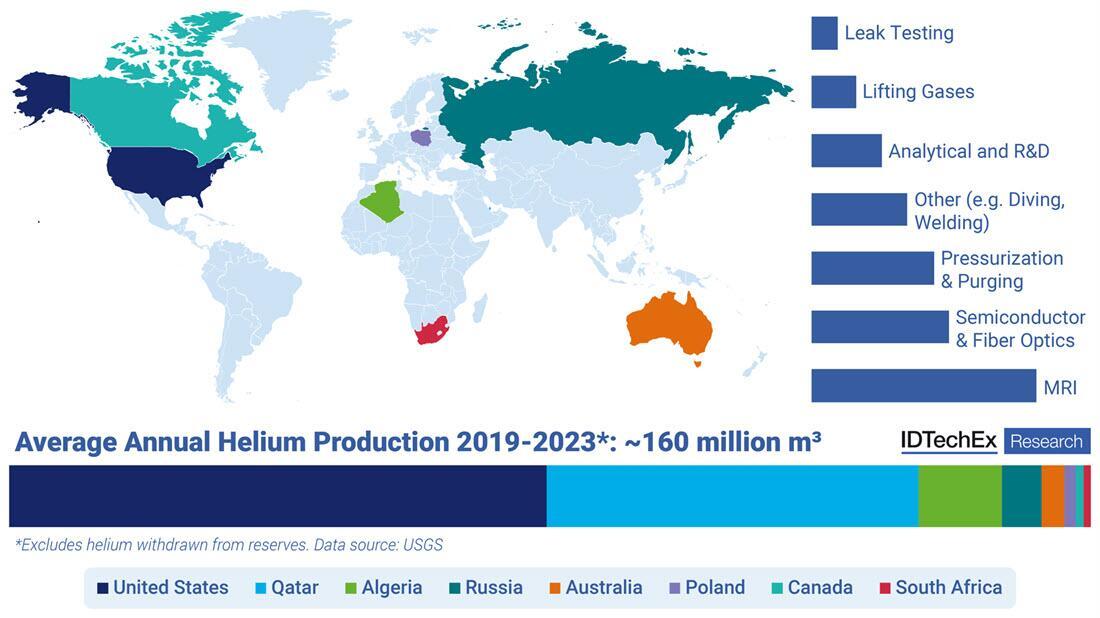 zerohedge.com
Airgas, the US industrial-gases supplier owned by Air Liquide, has declared force majeure on helium deliveries after production in Qatar was disrupted, according to Bloomberg documents cited by ZeroHedge. Customers are being told to expect as little as half their normal monthly volumes, alongside a new surcharge of $13.50 per 100 cubic feet. The interruption follows damage to Gulf energy infrastructure during the Iran war that has hit LNG operations—where much of Qatar’s helium is recovered as a byproduct.
Helium is traded like a novelty until it isn’t. Hospitals use it to keep MRI machines operating and for certain respiratory applications; semiconductor manufacturers use it in high-end chip production; and aerospace firms need it for pressurisation and testing. When supply tightens, the immediate question is not global demand in the abstract but who physically holds inventory, who has priority clauses, and who can pay to move cylinders and dewars across a stressed shipping and insurance market. The first visible response in the current disruption is triage: a purchasing advisory reviewed by Bloomberg and referenced by ZeroHedge says Airgas is prioritising healthcare customers. That protects patient throughput in the short run, but it also pushes the shortage outward—into chip fabs, research labs, and industrial users that cannot easily substitute.
The episode also shows how “strategic materials” become, in practice, credit and contract products. Helium is rarely bought spot; it is allocated through long-term supply agreements, distributor networks, and take-or-pay arrangements that assume steady upstream flows. Force majeure shifts the loss from the producer and distributor to the customer, who must either accept reduced volumes or scramble for replacement supply at whatever price and freight terms are available. In a war-risk environment, the binding constraint can be logistics and working capital as much as molecules: cylinders must be shipped, insured, and financed, and inventories become balance-sheet items. Large buyers with diversified suppliers and on-site storage can ride out a disruption; smaller hospitals and mid-tier manufacturers often cannot.
For Europe, the vulnerability is structural. Qatar’s role is not marginal—it is one of the world’s key sources, and helium production is tied to LNG processing rather than a stand-alone industry that can ramp quickly. If LNG output is curtailed, helium supply drops even if demand is unchanged. That linkage means a regional strike or shipping disruption can propagate into European healthcare procurement and electronics supply chains without any direct shortage of oil or gas on the continent.
Airgas’ letter sets a timetable—March 17, 12:01 a.m. Eastern—at which normal commercial obligations were replaced by emergency allocation. The gas that keeps balloons afloat is now being rationed by contract language and delivery schedules.