
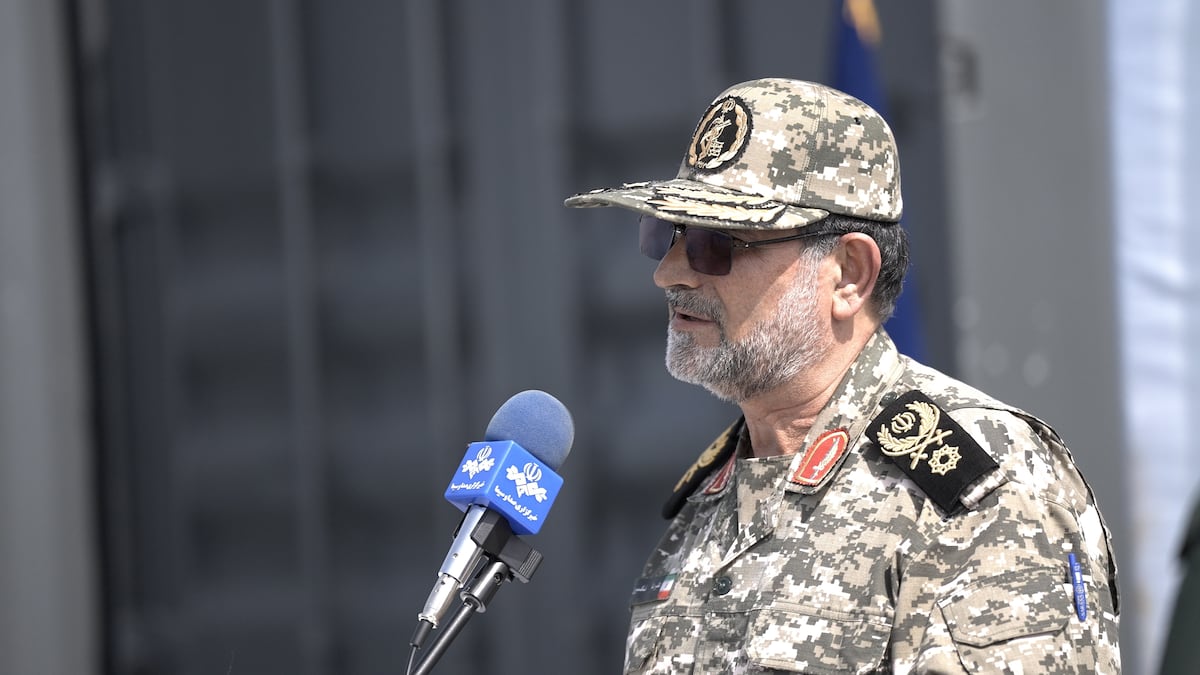
Israel kills IRGC naval commander Alireza Tangsiri
Trump extends Hormuz deadline by 10 days as talks continue, shipping risk shifts from blockade fears to insurance pricing
Images
 Donald Trump: ‘They now have the chance, that is, to permanently abandon their nuclear ambitions and to join a new path forward.’ Photograph: Chip Somodevilla/Getty Images
theguardian.com
Donald Trump: ‘They now have the chance, that is, to permanently abandon their nuclear ambitions and to join a new path forward.’ Photograph: Chip Somodevilla/Getty Images
theguardian.com
 Israel kills head of Revolutionary Guard’s naval forces as Trump urges Iran to reach a deal ‘before it’s too late’
english.elpais.com
Israel kills head of Revolutionary Guard’s naval forces as Trump urges Iran to reach a deal ‘before it’s too late’
english.elpais.com
Israel said it killed Alireza Tangsiri, the Revolutionary Guards’ naval commander, in a strike on Iran’s port city of Bandar Abbas, as Donald Trump extended his deadline for Iran to “open” the Strait of Hormuz by 10 days to 6 April. The killing comes in the fourth week of the Israel-Iran war, with missile salvos still reaching Israel and US and Israeli strikes reported around Isfahan, according to El País and the Guardian.
The immediate military headline is decapitation: Israel is targeting the people associated with Iran’s ability to threaten shipping, rather than attempting to physically seal the waterway. Israel’s defence minister, Israel Katz, said Tangsiri had been “directly responsible” for mining and blocking operations in Hormuz, while Adm Brad Cooper, head of US Central Command, described Iran’s navy as heading toward “irreversible decline”, according to the Guardian. But the market question has shifted from whether Iran can close the strait to how quickly insurers, shipowners, and cargo financiers can price a transit regime that now looks less like a chokepoint and more like a political toll gate.
Trump’s 10-day “pause” on “Energy Plant destruction” is presented as a concession “as per Iranian Government request”, and he claimed talks were “going very well”, again on Truth Social. Yet the same post is framed as a clock: the deadline is not removed, only moved. In practice, such time windows create tradeable expectations. Ship operators can decide whether to rush cargo through while cover is still available, insurers can re-rate risk day by day, and Tehran can choose disruption methods that raise costs without triggering the full retaliation implied by a formal closure.
That logic helps explain why the war’s leverage increasingly sits outside the strait’s physical geography. Iran can make passage expensive by signalling unpredictability—through mines, drones, small-boat harassment, or proxy fire—while letting enough traffic through to avoid a clean casus belli. Trump, meanwhile, uses deadlines and selective restraint as bargaining chips: a pause on strikes is also a reminder that strikes can resume on a schedule.
Diplomacy is running in parallel, but with fewer familiar interlocutors. El País reports that Pakistan’s foreign minister said Islamabad—alongside Turkey and Egypt—is trying to broker a meeting, and Reuters has reported Israel removed Iran’s foreign minister Abbas Araqchi and parliament speaker Mohammad Baqer Qalibaf from a target list at Pakistan’s request. The same reporting notes that Iran’s leadership bench has been thinned by assassinations, leaving fewer figures able to negotiate and more incentive for hardliners to treat continued disruption as proof of strength.
In Bandar Abbas, Israel says it killed the man it blamed for Hormuz planning. The shipping market now has 10 more days to decide what “open” means when it depends on political clearance and war-risk premiums.