
European Parliament backs EU return hubs
New deportation law expands detention and lifetime bans, offshore outsourcing grows while oversight questions multiply
Images
 Manfred Weber (left), the president of the EPP Group, attends the vote at the European parliament in Brussels, Belgium, on Thursday Photograph: Olivier Hoslet/EPA
theguardian.com
Manfred Weber (left), the president of the EPP Group, attends the vote at the European parliament in Brussels, Belgium, on Thursday Photograph: Olivier Hoslet/EPA
theguardian.com
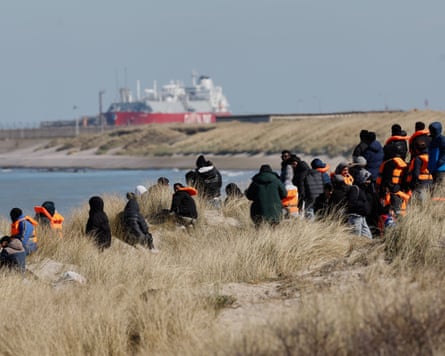 Migrants in Gravelines, northern France, last week. Photograph: Jean-François Badias/AP
theguardian.com
Migrants in Gravelines, northern France, last week. Photograph: Jean-François Badias/AP
theguardian.com
The European Parliament on Thursday backed plans that would allow EU countries to send rejected asylum seekers to “return hubs” outside the bloc, a move adopted by 389 votes to 206, with 32 abstentions, according to The Guardian.
The draft law is designed to raise deportation rates from the current level—EU officials estimate only about one in five return orders results in an actual removal—by widening detention powers and making non-compliance more punishable. MEPs added provisions that would allow detention for up to two years for people deemed a security risk or likely to abscond, and supported criminal sanctions for obstructing a return decision. The text also makes it easier for authorities to impose lifetime entry bans and expands powers to conduct age checks to determine whether a person is under 18.
In practice, the headline innovation is the “return hub”: a third-country site where people denied asylum could be held while awaiting onward return to their country of origin. Several governments—Germany, the Netherlands, Austria, Greece and Denmark—are already working on the concept, The Guardian reports. Unlike the UK’s abandoned Rwanda plan, the hubs would apply to people after their asylum claim has failed, not to those arriving to claim asylum.
The proposal shifts the hardest part of migration policy away from domestic politics and into contracting, diplomacy and litigation. Member states that struggle to detain and remove people at home gain a new lever: move the person out of the national system and into an offshore facility, where local courts, NGOs and media have less access. But the same move creates a new supply chain of operators, transport providers, security contractors, medical services, and legal intermediaries—each with a different incentive and a different liability boundary.
Oversight is the obvious weak point. The Council of Europe’s human rights commissioner has warned that offshore hubs risk becoming “human rights black holes”, because monitoring conditions and ensuring access to remedies is harder when detention is outsourced to non‑EU territory. For governments, the attraction is that the reputational and administrative cost of prolonged limbo can be exported along with the detainee. For the host country, the attraction is revenue and leverage: a facility that can be expanded, slowed down, or threatened with closure becomes a bargaining chip in broader negotiations.
The parliamentary vote now opens negotiations with EU governments in the Council to settle the final text.
In Brussels, Sweden Democrat MEP Charlie Weimers framed the result as the start of “the era of deportations”. The legal architecture still depends on third countries agreeing to host the hubs—and on someone being paid to run them.