
Sudan drone strikes shadow El Fasher evacuation
Guardian reports up to 10000 killed as RSF takes city, remote warfare scales faster than diplomacy
Images
 El Fasher 2026
theguardian.com
El Fasher 2026
theguardian.com
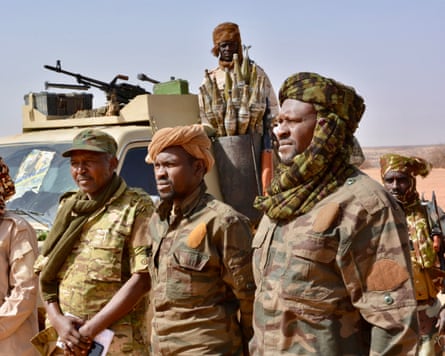 Gen Aboud Khater, right, in north Darfur with other joint forces personnel. Khater led the doomed attempt to protect the people of El Fasher from the RSF
theguardian.com
Gen Aboud Khater, right, in north Darfur with other joint forces personnel. Khater led the doomed attempt to protect the people of El Fasher from the RSF
theguardian.com
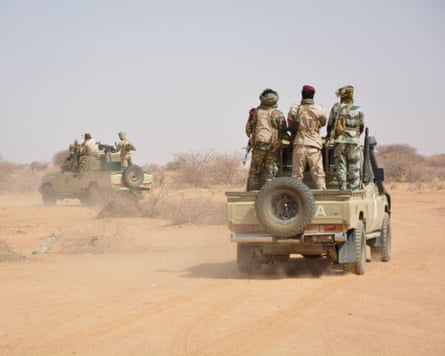 The final evacuation convoy leaves El Fasher after the city was overrun by the Rapid Support Forces at the end of an 18-month siege
theguardian.com
The final evacuation convoy leaves El Fasher after the city was overrun by the Rapid Support Forces at the end of an 18-month siege
theguardian.com
 General Aboud Adam Khater in El Fasher
theguardian.com
General Aboud Adam Khater in El Fasher
theguardian.com
 Dr Mustafa Ibrahim, wearing his ‘lucky’ cream sweater, who witnessed the slaughter in the city. ‘That moment I lost my soul,’ he says
theguardian.com
Dr Mustafa Ibrahim, wearing his ‘lucky’ cream sweater, who witnessed the slaughter in the city. ‘That moment I lost my soul,’ he says
theguardian.com
Up to 10,000 people were believed to have been killed over two days in late October 2025 as Sudan’s Rapid Support Forces overran El Fasher after an 18-month siege, with another 40,000 civilians still unaccounted for, according to a Guardian investigation published this week. The report describes drones tracking the final evacuation convoys and the use of “kamikaze drones” and bombs as fighters and civilians tried to escape the North Darfur capital.
El Fasher is often reported as a humanitarian catastrophe — siege, starvation, massacres — but the Guardian’s account also reads like a production story: fewer infantry assaults, more remote targeting, and a growing reliance on supply chains that can deliver airframes, explosives, communications links and trained operators. Drones lower the operational barrier to violence. They extend the reach of a force that may be short of disciplined troops, and they compress the time between identifying a target and striking it. They also change the politics of attribution. A drone strike can be executed without a visible frontline, and responsibility can be blurred by the distance between sponsor, supplier, operator and commander.
The Guardian reports that US and UK warnings about the risk of mass atrocities were sidelined, with intelligence assessments “buried” or not updated as the siege continued. That matters because prevention is not only about moral urgency; it is about whether any institution will pay the cost of acting early. A siege that lasts 561 days, as the Guardian describes, creates repeated opportunities to decide that intervention is too expensive, too complicated, or too politically risky. Delay is not neutral: it reallocates costs onto civilians trapped inside the perimeter.
The investigation also returns to the question of external support. The UAE is described as the RSF’s “principal backer,” and the Guardian says it made “extraordinary attempts” to conceal alleged involvement in El Fasher’s takeover — an allegation the UAE denies. Even without definitive public proof of specific shipments, the logic of the battlefield is straightforward: drones and loitering munitions require parts, maintenance, and replacement. Unlike a militia’s small arms, they tie combat effectiveness to logistics and finance.
That linkage is where leverage exists, and where accountability tends to dissolve. Sanctions lists can name commanders, but the war’s throughput depends on intermediaries: procurement agents, front companies, transport routes, and the states that look away. The Guardian’s reporting suggests Western governments anticipated the fall of El Fasher in detail; the city fell anyway.
On 27 October 2025, as the last convoy tried to flee at dawn, drones appeared overhead. The route out of El Fasher had already been mapped — including the trenches locals called the “pits of hell.”