
Trump attacks Supreme Court justices he appointed over tariff ruling
IEEPA decision blocks sweeping import duties, trade policy now runs through judges as much as through Congress
Images
 newsweek.com
 Iran War Updates: Trump Is Prepared to 'Unleash Hell' as Operation Advances
newsweek.com
Iran War Updates: Trump Is Prepared to 'Unleash Hell' as Operation Advances
newsweek.com
 5 Reasons Democrats Should Stop Writing Off Trump
newsweek.com
5 Reasons Democrats Should Stop Writing Off Trump
newsweek.com
 USPS Plans New Shipping Surcharge As Postmaster Warns of Cash Crunch
newsweek.com
USPS Plans New Shipping Surcharge As Postmaster Warns of Cash Crunch
newsweek.com
 Meta, YouTube Lose Groundbreaking Child Safety Jury Trial: What to Know
newsweek.com
Meta, YouTube Lose Groundbreaking Child Safety Jury Trial: What to Know
newsweek.com
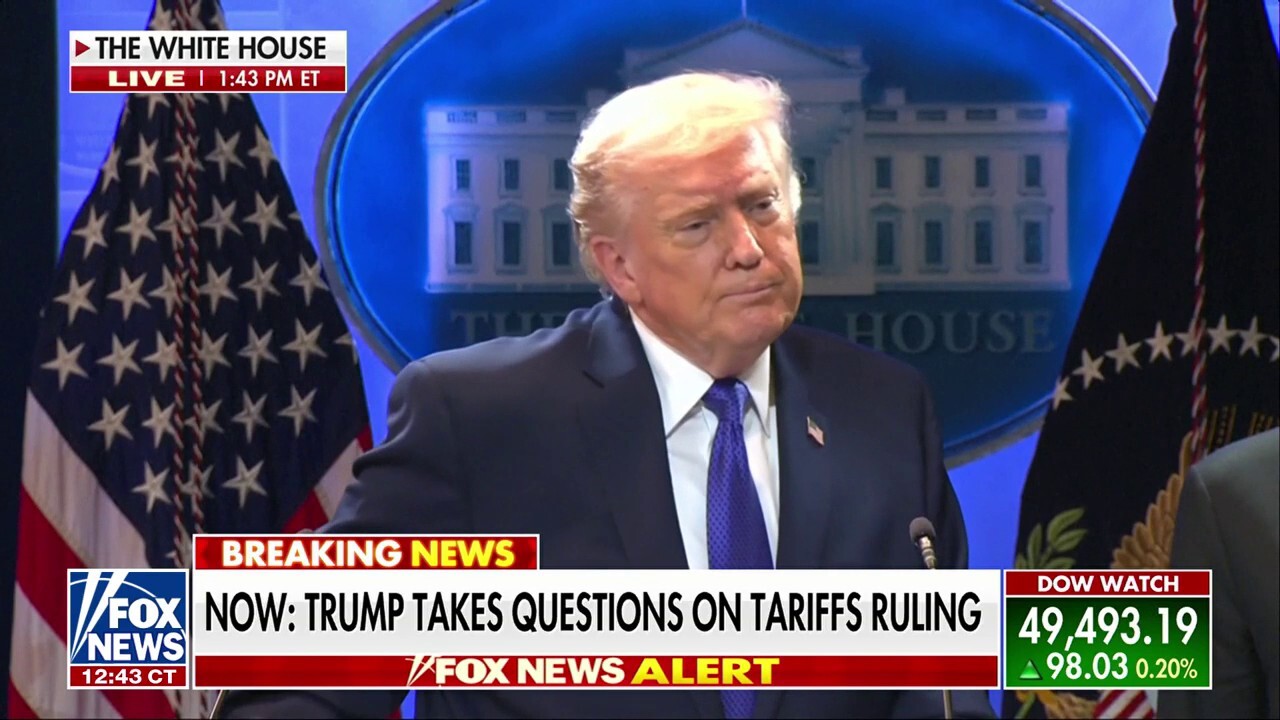 President Donald Trump addresses the Supreme Court ruling striking down sweeping tariffs.
foxbusiness.com
President Donald Trump addresses the Supreme Court ruling striking down sweeping tariffs.
foxbusiness.com
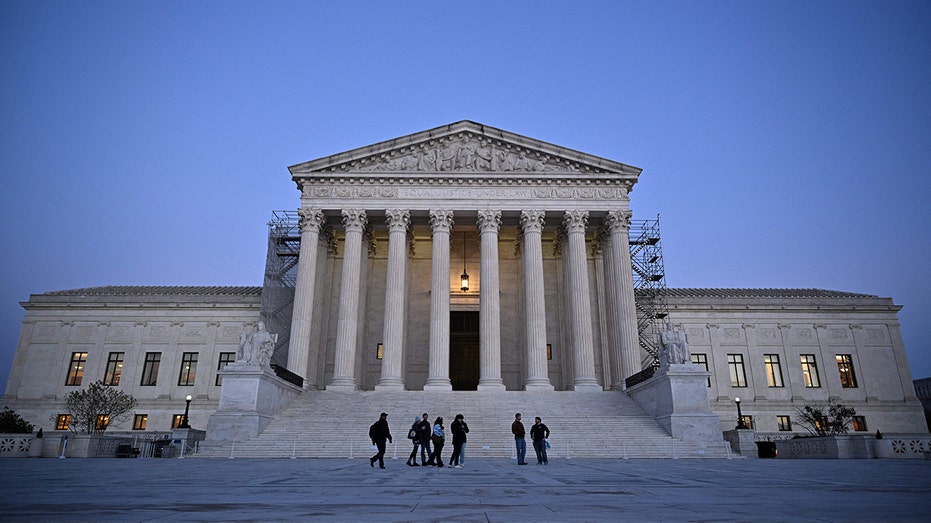 People walk past the US Supreme Court in Washington, DC
foxbusiness.com
People walk past the US Supreme Court in Washington, DC
foxbusiness.com
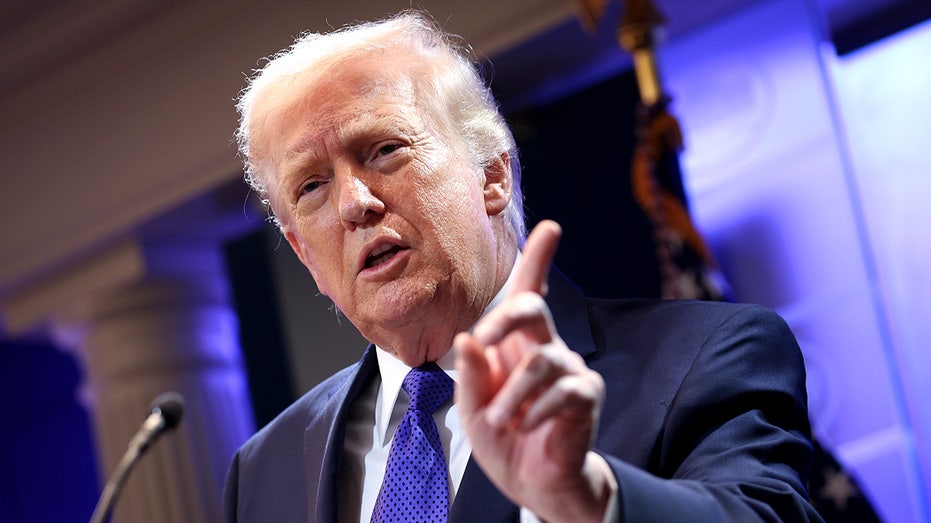 President Trump speaks during White House press briefing.
foxbusiness.com
President Trump speaks during White House press briefing.
foxbusiness.com
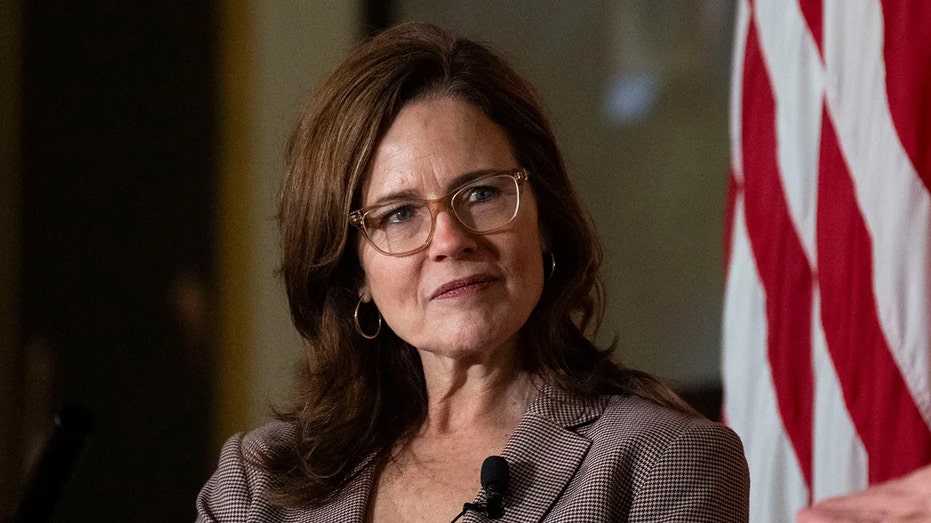 Justice Amy Coney Barrett at the Nixon Library
foxbusiness.com
Justice Amy Coney Barrett at the Nixon Library
foxbusiness.com
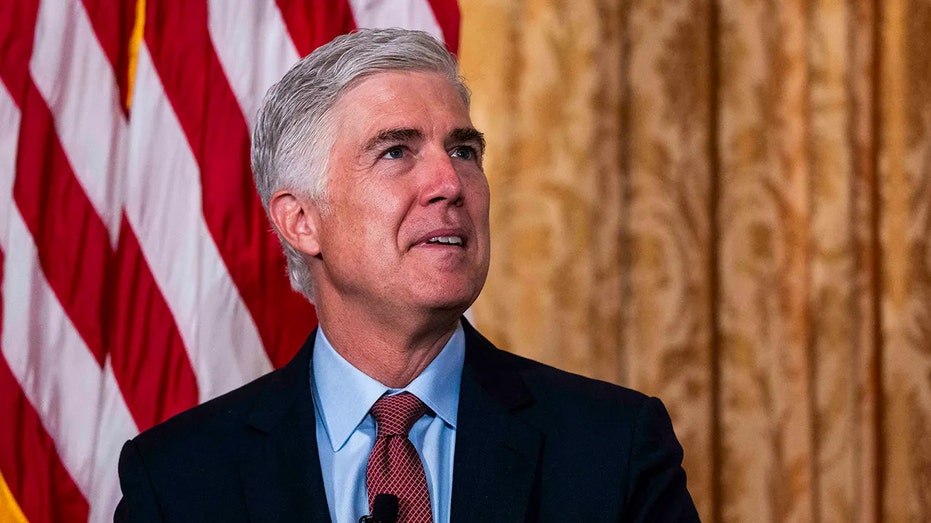 Neil Gorsuch
foxbusiness.com
Neil Gorsuch
foxbusiness.com
President Donald Trump attacked two Supreme Court justices he appointed after the court struck down his broad tariff program, calling them “bad for our country” at a National Republican Congressional Committee dinner in Washington.
According to Newsweek and Fox Business, Trump’s remarks followed a 6–3 Supreme Court decision that blocked his attempt to impose sweeping import duties under the International Emergency Economic Powers Act (IEEPA). The majority held that the statute “does not authorize the President to impose tariffs,” a ruling that undercut a signature element of Trump’s trade agenda.
The episode shows how US trade policy has shifted from negotiated schedules and sector carve-outs toward emergency-law improvisation—then immediately into litigation. When tariffs are justified as a national-security response, the question of who sets the price of imports becomes a separation-of-powers fight: the president claims speed and leverage; the court insists Congress has to speak clearly. In this case, the court’s reading of IEEPA did not just constrain a legal theory—it erased a revenue stream and a negotiating tool at once.
Fox Business notes that tariff receipts had risen sharply after Trump’s “Liberation Day” package last April, citing duties increasing from $9.6 billion in March to $23.9 billion in May. That kind of fiscal swing is precisely what turns judicial review into a macroeconomic event. A single statutory interpretation can change the effective tax rate on imports, shift supply chains, and reprice consumer goods—without a new vote in Congress.
The political spillover is now directed inward. Trump’s decision to single out Justices Neil Gorsuch and Amy Coney Barrett—both Republican appointees—highlights the limits of appointment politics when the court faces a dispute that affects hundreds of billions of dollars. Chief Justice John Roberts, speaking at a separate event cited by Fox Business, warned that criticism can move from legal analysis to personal attacks and become “quite dangerous,” a sign the judiciary is bracing for more direct pressure.
The fight also exposes a practical constraint on “tariffs-first” strategy: if the executive branch relies on emergency authorities to move faster than Congress, the policy’s durability depends on judges who may not share the president’s reading of broad statutes.
Trump’s complaint was that the court “all they needed was a sentence” and still cost the country vast sums. The court’s sentence was that IEEPA does not authorize what he tried to do.