
NASA shifts Moon program toward permanent base by 2030
Gateway paused and Artemis III re-scoped into Earth-orbit test, deadline politics turns architecture into messaging
Images
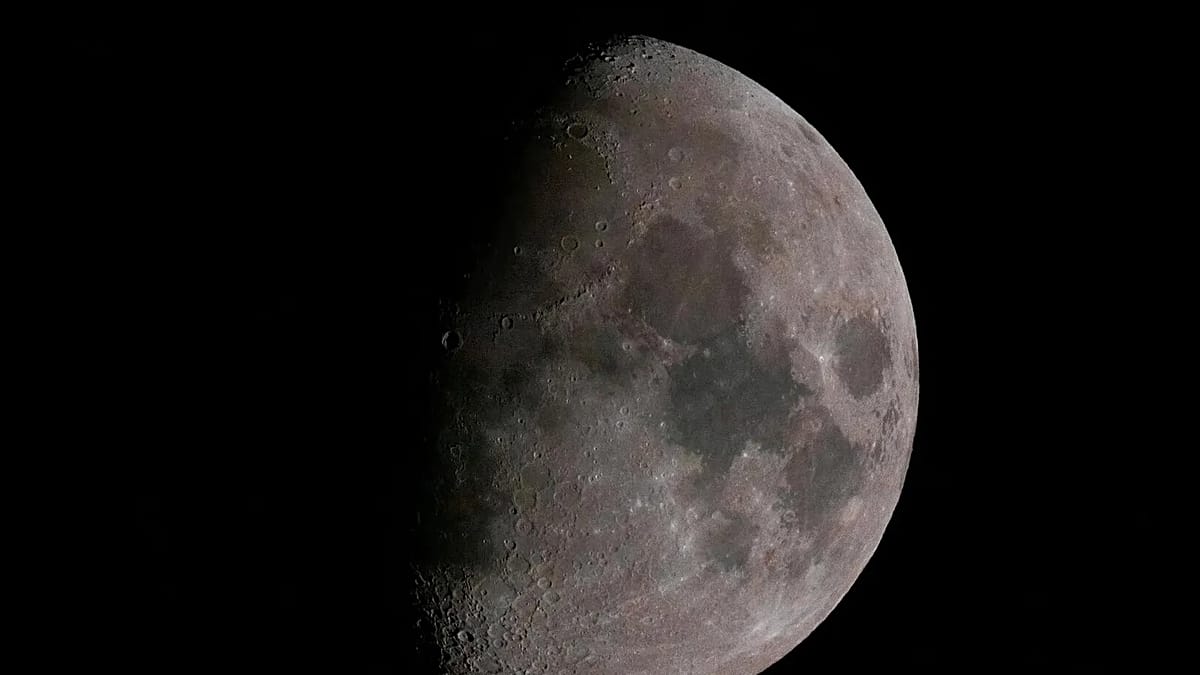 NASA unveils plan to build President Trump’s permanent ‘Moon base’
euronews.com
NASA unveils plan to build President Trump’s permanent ‘Moon base’
euronews.com
NASA used a Washington-stage “Ignition” event this week to roll out a phased plan for a permanent lunar base by 2030, a deadline set in a December executive order by President Donald Trump. According to Euronews, the agency will pause work on the Gateway space station, re-scope Artemis III into an Earth-orbit systems test, and aim for a crewed lunar surface mission with Artemis IV in 2028. NASA Administrator Jared Isaacman framed the shift as a race measured “in months, not years,” while also touting a nuclear-electric propulsion demonstrator slated to fly to Mars before the end of 2028.
The plan reads like a reallocation of narrative capital as much as a reallocation of engineering effort. Gateway was conceived as a staging node for repeated lunar sorties and eventual Mars missions; shelving it frees near-term budget and managerial bandwidth, but it also removes a concrete intermediate deliverable that could be audited against timelines. In its place, NASA offers a ladder of milestones—robotic scouting, partially livable structures, regular deliveries, then a “continuous human presence”—with international contributions promised across “habitation, surface mobility, and logistics,” including Japan’s pressurised rover.
That is a familiar pattern for large public programmes: the coalition is built first, the hardware later. Every new partner agreement spreads political ownership across more capitals and, in the US, across more congressional districts tied to prime contractors and subcontractors. A target like “Moon base by 2030” gives legislators a slogan to defend appropriations and gives suppliers a calendar to justify long-lead contracts, even when the critical path remains undefined or shifts between architectures.
NASA’s simultaneous announcement of a Mars-bound nuclear-electric propulsion craft—Space Reactor-1 Freedom—adds another layer. Nuclear propulsion is technically plausible and strategically attractive, but it also comes with regulatory choreography, launch approvals, and safety casework that can consume years. Packaging it alongside the lunar base roadmap and headline science missions such as the Nancy Grace Roman Space Telescope and Dragonfly is a way to keep the agency’s portfolio looking busy, diversified, and inevitably forward-moving.
The risk is not that NASA cannot build impressive machines; it is that the accountability for missed dates is diffuse by design. When schedules slip, the story can be rewritten as a prudent “strategy overhaul,” the milestone can be relabelled as a “test,” and the next budget can be defended as necessary to preserve leadership in the “Moon race.”
NASA says Artemis missions after Artemis III will fly every six months, with at least one lunar landing each year. The first visible consequence of the 2030 promise is that the Moon landing planned for 2027 is now an Earth-orbit rehearsal.