
Chevron warns California fuel shortages as diesel tops $7 a gallon
Iran war and Hormuz risk squeeze imports into an energy island, emergency waivers substitute for refinery capacity
Images
 zerohedge.com
 Source: AAA
zerohedge.com
Source: AAA
zerohedge.com
 UAE official: We’ve tried the diplomatic channel with Iran for decades
foxnews.com
UAE official: We’ve tried the diplomatic channel with Iran for decades
foxnews.com
 Iran's foreign minister Abbas Araghchi speaks with Fox News' Bret Baier.
foxnews.com
Iran's foreign minister Abbas Araghchi speaks with Fox News' Bret Baier.
foxnews.com
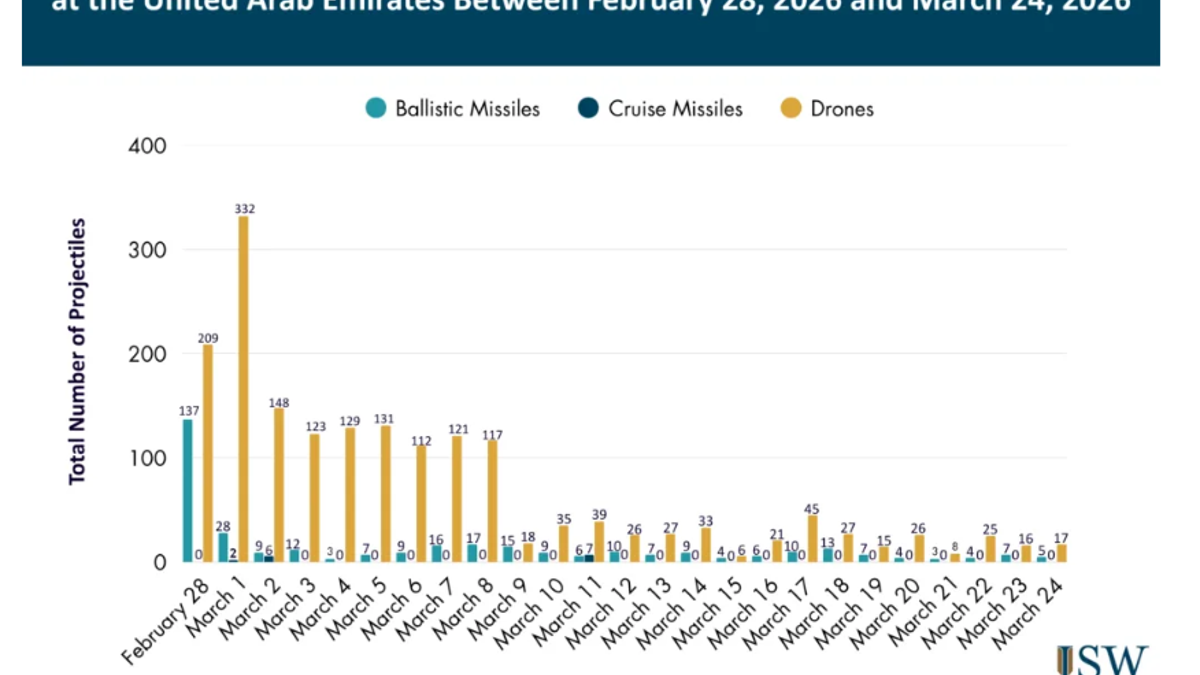 A chart shows the number of Iranian attacks on the United Arab Emirates from February 28, 2026 to March 24, 2026.
foxnews.com
A chart shows the number of Iranian attacks on the United Arab Emirates from February 28, 2026 to March 24, 2026.
foxnews.com
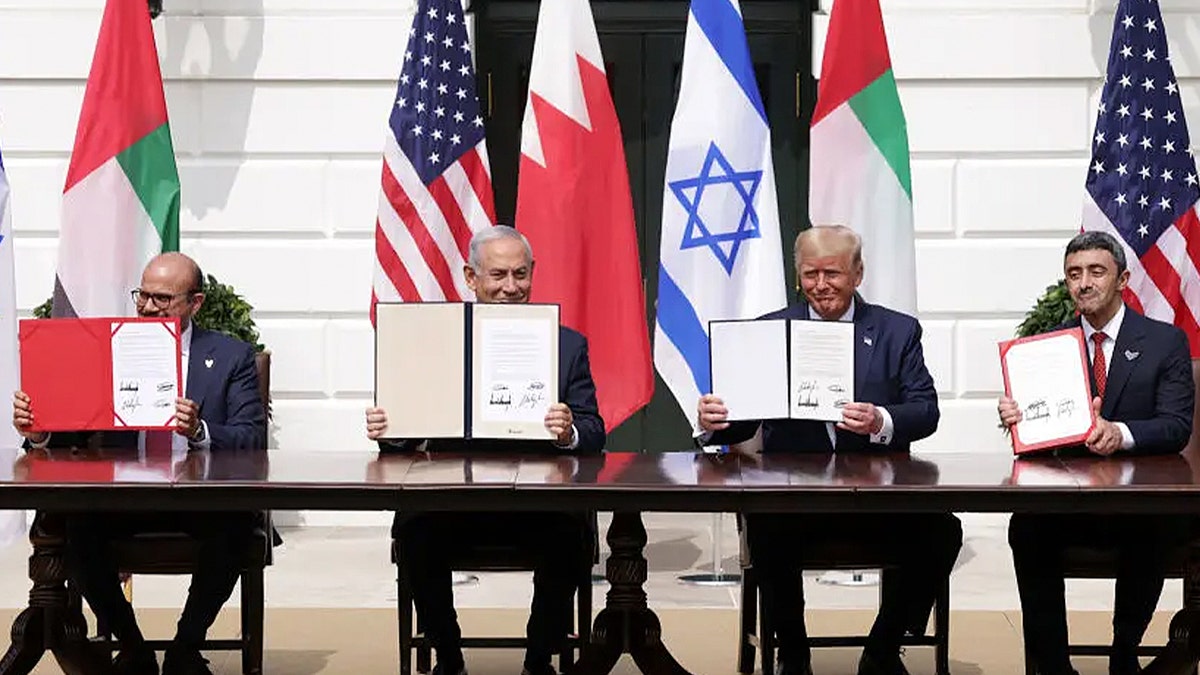 Abraham Accords signing in 2020
foxnews.com
Abraham Accords signing in 2020
foxnews.com
 White House says attacks on Iran will continue if Tehran refuses to reach deal
foxnews.com
White House says attacks on Iran will continue if Tehran refuses to reach deal
foxnews.com
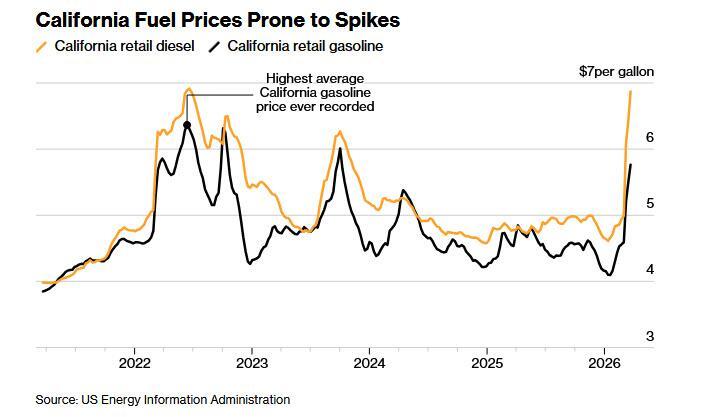
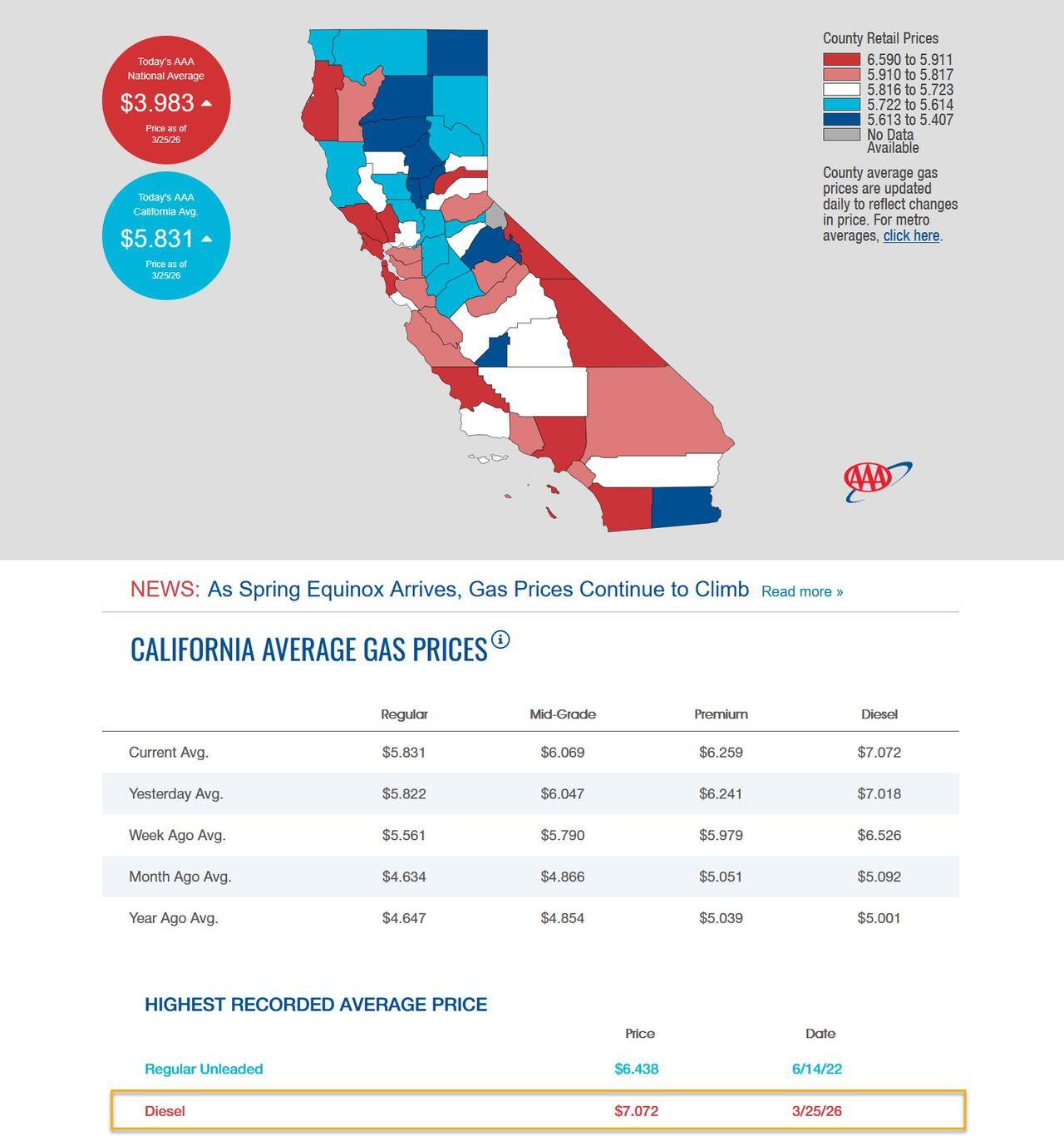
Chevron warned this week that California could face fuel shortages as diesel prices in the state climbed above $7 a gallon, a record that topped the previous peak set in June 2022. Speaking from the CERAWeek conference in Houston, Chevron downstream executive Andy Walz said the company’s “worst fear” is disruptions that leave airports short of jet fuel or cities short of gasoline, as supply chains tighten amid the Iran war and shipping risks around the Strait of Hormuz.
According to ZeroHedge, California imports roughly a fifth of its refined fuels from Asia, making it unusually exposed when Asian refineries cut runs or keep product at home. The state is also structurally isolated from the U.S. Gulf Coast refining hub; moving fuel from Texas and Louisiana is constrained by logistics, shipping rules, and capacity. That geography turns a global shock into a local price spike quickly, and it does so in a market where many businesses run on thin margins and cannot hedge like an oil major.
The mechanism is not just the crude price. War-risk insurance, longer routes, and tighter trade finance can choke deliveries even when barrels exist somewhere on paper. When that happens, “fixed price” retail and public-sector contracts stop functioning as intended: either the supplier demands renegotiation, the service is cut, or the cost is shifted into emergency surcharges and taxpayer support. California’s experience is a clean illustration of how price controls and politically directed energy policy can suppress investment for years, then discover—during a crisis—that the missing capacity cannot be summoned with press releases.
Walz argued that California has “decided that they’re going to rely on imports,” calling it “a dangerous game,” and urged officials to declare an energy emergency and roll back taxes and climate rules. The state’s response, via Governor Gavin Newsom’s office, was to accuse oil companies of “cashing in” and to frame pump prices as a political fight with Donald Trump, rather than a supply problem.
The federal government has already started using extraordinary tools: ZeroHedge notes the Trump administration has invoked emergency wartime powers to restart offshore production via Sable Offshore and temporarily waived the Jones Act to ease coastal shipping constraints. Those moves can move molecules around, but they do not reverse years of refinery closures, permitting friction, and regulatory uncertainty.
California’s diesel price printed a number that looks like a headline. The more important detail is that the state is now negotiating with physics and shipping schedules, not campaign messaging.